
01 · Sexuality
Introduction
Yes, that is possible. Many people with a fetish report that it has ‘always been there.’ Sexual preferences often develop as early as adolescence, but they can still change in adulthood, shift in a new direction, or only then become conscious at all. I have experienced myself that my fetish changed significantly even in my early fifties.
02 · Sexuality
‘Always there’ is not the only story
In my book, I describe that many men experience their fetish as something that has always belonged to them. This narrative is widespread, but it is not the only one. Some people discover only late what attracts them, for example through a new female partner, through new experiences, or because they allow themselves for the first time to look more closely.
Furthermore, one does not always recognise a fetish as such immediately. Some people have dismissed a preference for years as something secondary or repressed it. Only when shame becomes less or life circumstances change does the role it actually plays become visible.
Many people learn early to filter their sexuality and to allow only what seems innocuous to them. This filter often also works inwardly. What one does not admit to oneself is not consciously noticed either. When this filter becomes less strict in adulthood, for example in a trusting relationship, something that was previously barely perceptible can suddenly come to light.
03 · Sexuality
What can still change in adulthood
From my own life, I know several changes, all of which occurred only in adulthood.
In my early twenties, simple, inexpensive high heels appealed to me. Through my work as a fashion photographer, they gradually became high-quality designer shoes, and the cheap ones lost their appeal. Later, during a video shoot, riding boots suddenly aroused me, although flat boots did not fit my inner schema at all. And in my early fifties, I discovered my dominant side, along with cowboy boots on my own feet.
The core of my fetish has remained. But exactly what arouses me and in which role has shifted time and again over the decades.
04 · Sexuality
What the research says
There have not yet been any longitudinal studies that follow people over many years and observe when a foot fetish develops. What we know comes predominantly from retrospective accounts. However, the most well-founded theories on the emergence of unusual sexual interests assume that several processes interact, including learning processes. Such processes do not end with adolescence.
In my book, I describe this with the image of the Libidose, a kind of can in which everything that arouses us accumulates. In early adolescence, we have no influence on what gets into it. As adults, however, through repetition and enactment, we can influence which contents gain weight. New contents can therefore be added later as well.
05 · Sexuality
Is a later onset a cause for concern?
No, not in itself. Whether a fetish becomes a problem does not depend on when it appears. Since 2022, the World Health Organization has no longer listed fetishism as a separate diagnosis. Distress, risks, and the consent of others are decisive.
There is, however, one exception that should be taken seriously. If very strong, unfamiliar sexual impulses suddenly emerge in adulthood, feel alien, or are difficult to control, it can be advisable to have this medically assessed. Sometimes medication, neurological changes, or other health-related causes are behind them. This is rare, but it is worth keeping in mind.
06 · Sexuality
How you can deal with a new discovery
If you notice in adulthood that feet or shoes suddenly appeal to you more strongly, you do not have to rush into anything. Calmly observe what arouses you and in which situations. Talk to your female partner about it if you are in a relationship, and do so sooner rather than later. And if the discovery unsettles you, a conversation with a professional in sex therapy can bring clarity.
07 · Sexuality
What remains
Your sexuality is not a finished picture painted in youth. It continues to develop with your life. A fetish that appears later is no more a flaw than one that has always been there.
Sources
Sources
- Markus M. Mey: BIN ICH NORMAL? Fuß- und Schuhfetisch verstehen. Erste Edition, meybrands, Berlin 2026. ISBN 9798247074557.
- Schippers, E. E., Hoogsteder, L. M. & de Vogel, V. (2025): Theories on the Etiology of Deviant Sexual Interests: A Systematic Review. Sexual Abuse 37(1). doi:10.1177/10790632241271308
- World Health Organization: ICD-11 for Mortality and Morbidity Statistics, Paraphilic disorders (6D30–6D36), Release 2025-01. icd.who.int
Explore further in the book
From the question to your own story.
“Am I Normal?” combines clear context with personal experience and perspectives for relationships.
View the English book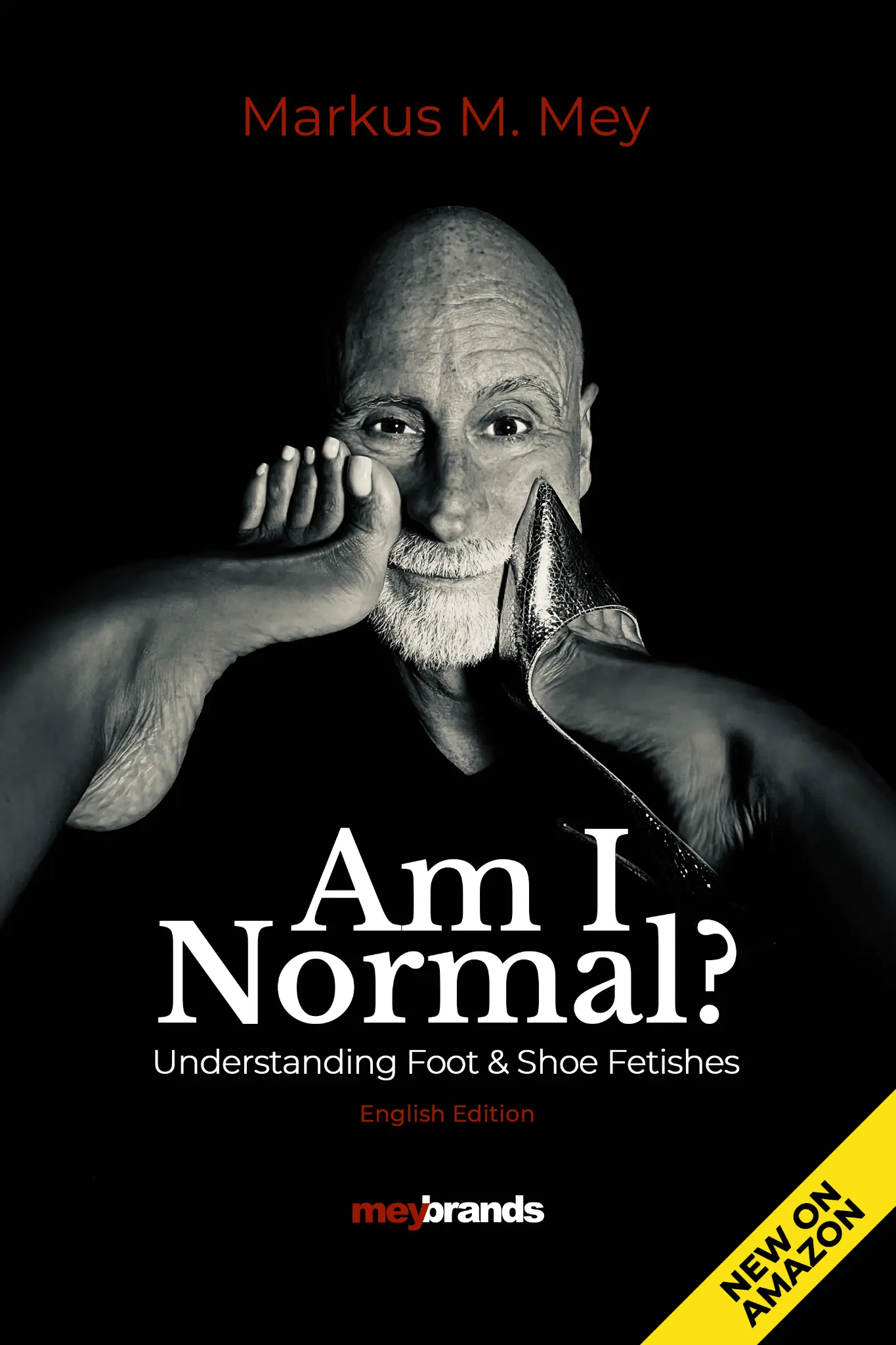
Let this article travel
Good knowledge grows stronger when it is shared.
Link to this original article as a further source — one click copies its permanent address.