
01 · Sexuality
Introduction
Yes, it can, and it has done so for me several times. The fetish itself has remained, but its expression has shifted again and again over the decades. New influences have been added, while older ones have lost importance. Its intensity can also fluctuate, depending on the phase of life. The best way for me to tell this is through four stages from my own life.
02 · Sexuality
Stage one: inexpensive high heels
In my early twenties, I was attracted to high heels of the kind that could then be bought for little money in any shoe store. Brands did not matter. At 23, I began photographing my then wife in high-heeled shoes, and shoes were simply a natural part of our sexuality. At that time, my fetish was clearly defined: high heels.
03 · Sexuality
Stage two: the world of fashion photography
Then photography became my profession. For more than twenty years, I worked as a professional photographer, including in fashion and advertising photography. Suddenly I was dealing with shoes by Gucci, Prada or Casadei, shoes of the kind one knew from VOGUE or ELLE. The cheap high heels gradually lost their appeal. At some point, only high-quality, expensive shoes aroused me. Today I am a big fan of Christian Louboutin, Jimmy Choo or Giuseppe Zanotti. The environment therefore plays a major role: what one sees and experiences every day shapes what arouses one.
From this period comes an insight that I still share today: a fetish does not disappear, but with what one lives and sees, new influences are continually added and displace what already exists.
04 · Sexuality
Stage three: a surprising moment on set
For a long time, my internal pattern was clear: high heels, no flat boots. During a video shoot, a young woman came across as so convincingly dominant that I was suddenly strongly aroused by the desire to kiss her riding boots, even though objectively they did not fit my fetish at all. In that moment, it was not the shoe that produced the arousal, but the person wearing it and her attitude. This showed me how flexible an apparently fixed pattern can be.
05 · Sexuality
Stage four: a change of role in my early fifties
The greatest change came late. For decades, I had lived my fetish from a rather submissive role. During a difficult phase in our relationship, an experienced psychologist advised me to try out my dominant side, which I had long suppressed. I was sceptical, but I did it anyway. It aroused me, my wife liked it, and shortly afterwards I discovered cowboy boots for myself, this time on my own feet.
The fetish remained. Its direction changed. For me, that was not a loss, but an expansion.
06 · Sexuality
What remains and what changes
In my book, I describe sexuality using the image of the Libidose, a kind of can in which everything that arouses us collects. Some contents remain stable for years; others lose importance or disappear entirely on their own. Fantasies and people that occupied me in my youth no longer play any role at all today. I did not consciously replace them. They simply faded.
A fetish cannot be consciously erased. As adults, however, we can influence which contents gain weight through repetition and acting them out. Research also considers learning processes in the formation of sexual preferences plausible, even though they can hardly be directly demonstrated in humans. However, there are still no longitudinal studies that follow people with a foot or shoe fetish over many years. What we know about changes comes above all from personal experiences such as mine.
07 · Sexuality
Why intensity can fluctuate
Besides its direction, its strength can also change. Stress, illness, age, a new relationship or a crisis can cause sexuality overall to take up more or less space, and the fetish with it. Anyone who defines themselves exclusively through their fetish quickly experiences such phases as a loss. Anyone who sees it as part of a larger whole can deal with it more calmly.
So if you notice that your fetish is changing, that is no cause for concern. It is rather a sign that your sexuality is alive. Fetishes are not rigid. They develop along with life. This can be unsettling, but it can also be a great opportunity to rediscover your own sexuality again and again.
Sources
Sources
- Markus M. Mey: BIN ICH NORMAL? Fuß- und Schuhfetisch verstehen. Erste Edition, meybrands, Berlin 2026. ISBN 9798247074557.
- Pfaus, J. G. et al. (2020): Conditioning of Sexual Interests and Paraphilias in Humans Is Difficult to See, Virtually Impossible to Test, and Probably Exactly How It Happens. Archives of Sexual Behavior 49(5). doi:10.1007/s10508-020-01739-2
- Schippers, E. E., Hoogsteder, L. M. & de Vogel, V. (2025): Theories on the Etiology of Deviant Sexual Interests: A Systematic Review. Sexual Abuse 37(1). doi:10.1177/10790632241271308
Explore further in the book
From the question to your own story.
“Am I Normal?” combines clear context with personal experience and perspectives for relationships.
View the English book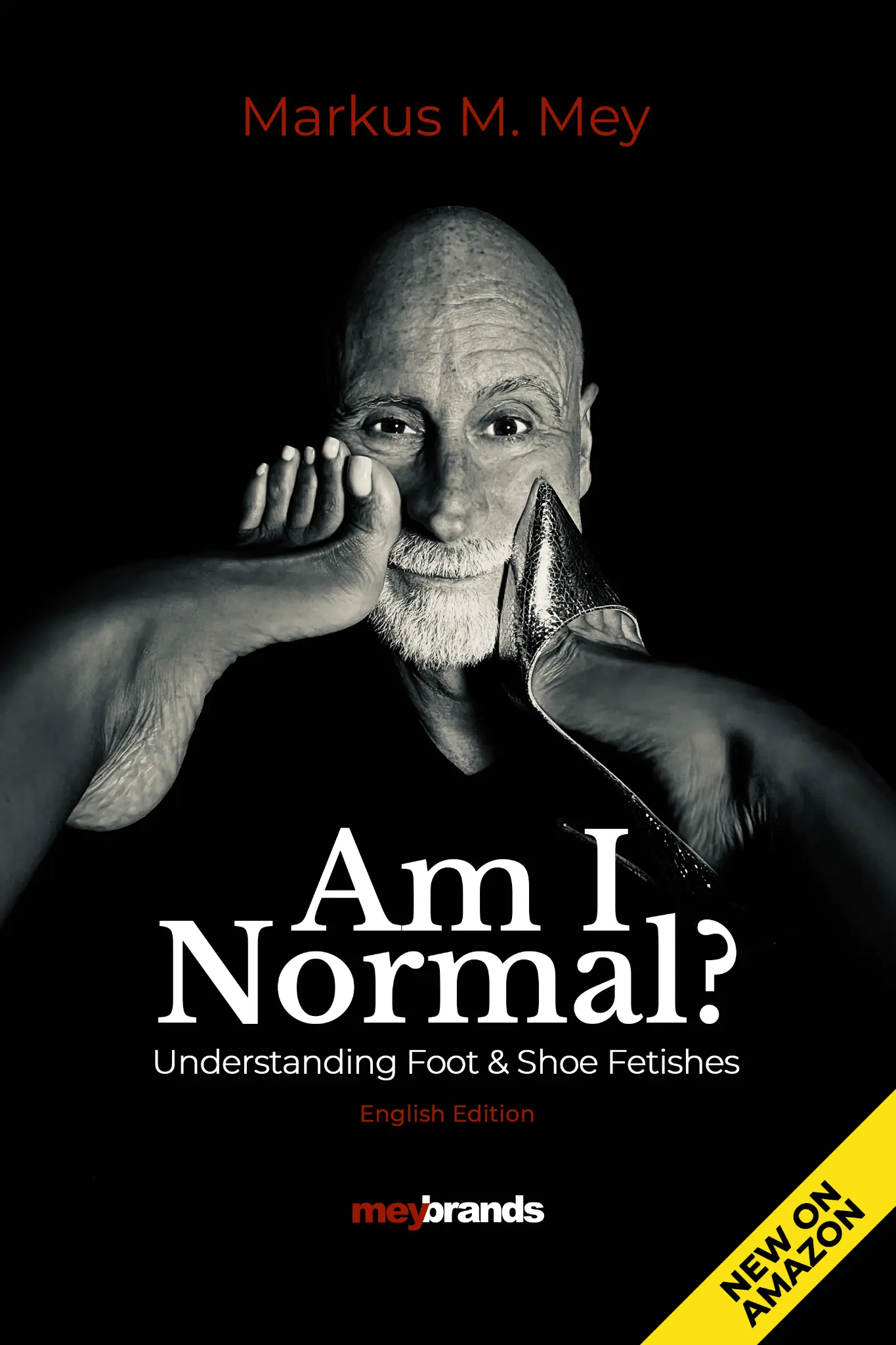
Let this article travel
Good knowledge grows stronger when it is shared.
Link to this original article as a further source — one click copies its permanent address.