
01 · Fetishism
Introduction
That is possible, but it is not proven for foot or shoe fetishes. What can be said: repetition affects how much weight certain stimuli get in our sexuality, and online content offers a great deal of repetition. Whether it strengthens a fetish or merely makes an existing fetish more visible is an open question. If you notice your focus shifting, it is worth taking an honest look at it.
02 · Fetishism
What the internet has changed
When I was young, people with a fetish had hardly any ways to inform themselves or exchange ideas. In the early nineties you had to read books if you wanted to learn something about other people’s fantasies. Today, images, videos, forums and communities are reachable with a few clicks.
That has brought a lot of good. Many people only learned through the internet that they are not alone with their preference. Fetishism has become more visible, in communities, in pop culture, in fashion. How large and networked this world is is shown by an analysis of the fetish platform FetLife: at the beginning of 2014 it counted over 500,000 European profiles there alone. That says nothing about prevalence in the population, but it says a lot about the size of the offerings. It is easy to get lost in it.
03 · Fetishism
What repetition does
In my book I describe sexuality with the image of the Libidose, a kind of can in which everything that arouses us collects. What once lies in it cannot be consciously removed. As adults, however, we can influence which content gains weight through repetition and acting it out.
I experienced this myself. What I saw daily for years as a photographer changed my taste noticeably. In research, too, learning processes are considered a plausible way in which sexual preferences form, even if they are hardly directly demonstrable in humans. It therefore seems plausible that intensive consumption of certain contents can also shift one’s own focus.
04 · Fetishism
The chicken-or-egg question
However, there is an important catch. Someone who has a foot fetish will also actively look for matching content. Whether the content strengthened the fetish or whether an existing fetish simply found its way to the content is hard to disentangle in retrospect.
I am not aware of studies that examine exactly this question for foot or shoe fetishes. That is why I do not believe in simple explanations like “The internet made you a fetishist.” Many men describe their fetish as something that has always been there, often long before the internet even existed.
05 · Fetishism
How you can notice a shift
If you wonder whether your focus has changed through online use, these observations can help you:
None of these points proves anything. If several of them apply, however, it is a signal to take a closer look.
- The content that arouses you becomes increasingly specific or extreme.
- You need more or more intense stimulation to become aroused.
- Sex with your female partner feels comparatively less appealing.
- You spend significantly more time on it than you really want to.
- You hide your consumption more and more.
06 · Fetishism
Finished images and your own imagination
After more than forty years with my fetish I am convinced that the real arousal is created in imagination, in the little story that unfolds in the head around a foot or a shoe. Online content supplies these stories ready-made. That can be appealing. But it can also take space away from one’s own imagination and keep raising the bar.
I speak from experience. My wife and I produced photos and videos on this topic together for years. In a phase in which the topic determined our love life and our work at the same time, my head was so full of images that I could hardly switch off even in the bedroom.
07 · Fetishism
What you can do
If you notice that consumption is not good for you, small steps often help. Take deliberate breaks and observe what changes. Give your own imagination more room again. Talk with your female partner about what is good for both of you. And if you feel you are losing control, or if your consumption burdens you, a conversation with a professional in psychotherapy or sex therapy is the right next step.
Sources
Sources
- Markus M. Mey: BIN ICH NORMAL? Fuß- und Schuhfetisch verstehen. Erste Edition, meybrands, Berlin 2026. ISBN 9798247074557.
- Pfaus, J. G. et al. (2020): Conditioning of Sexual Interests and Paraphilias in Humans Is Difficult to See, Virtually Impossible to Test, and Probably Exactly How It Happens. Archives of Sexual Behavior 49(5). doi:10.1007/s10508-020-01739-2
- Schippers, E. E., Hoogsteder, L. M. & de Vogel, V. (2025): Theories on the Etiology of Deviant Sexual Interests: A Systematic Review. Sexual Abuse 37(1). doi:10.1177/10790632241271308
- Fay, D. et al. (2016): An Exploration of Fetish Social Networks and Communities. Advances in Network Science. doi:10.1007/978-3-319-28361-6_17
Explore further in the book
From the question to your own story.
“Am I Normal?” combines clear context with personal experience and perspectives for relationships.
View the English book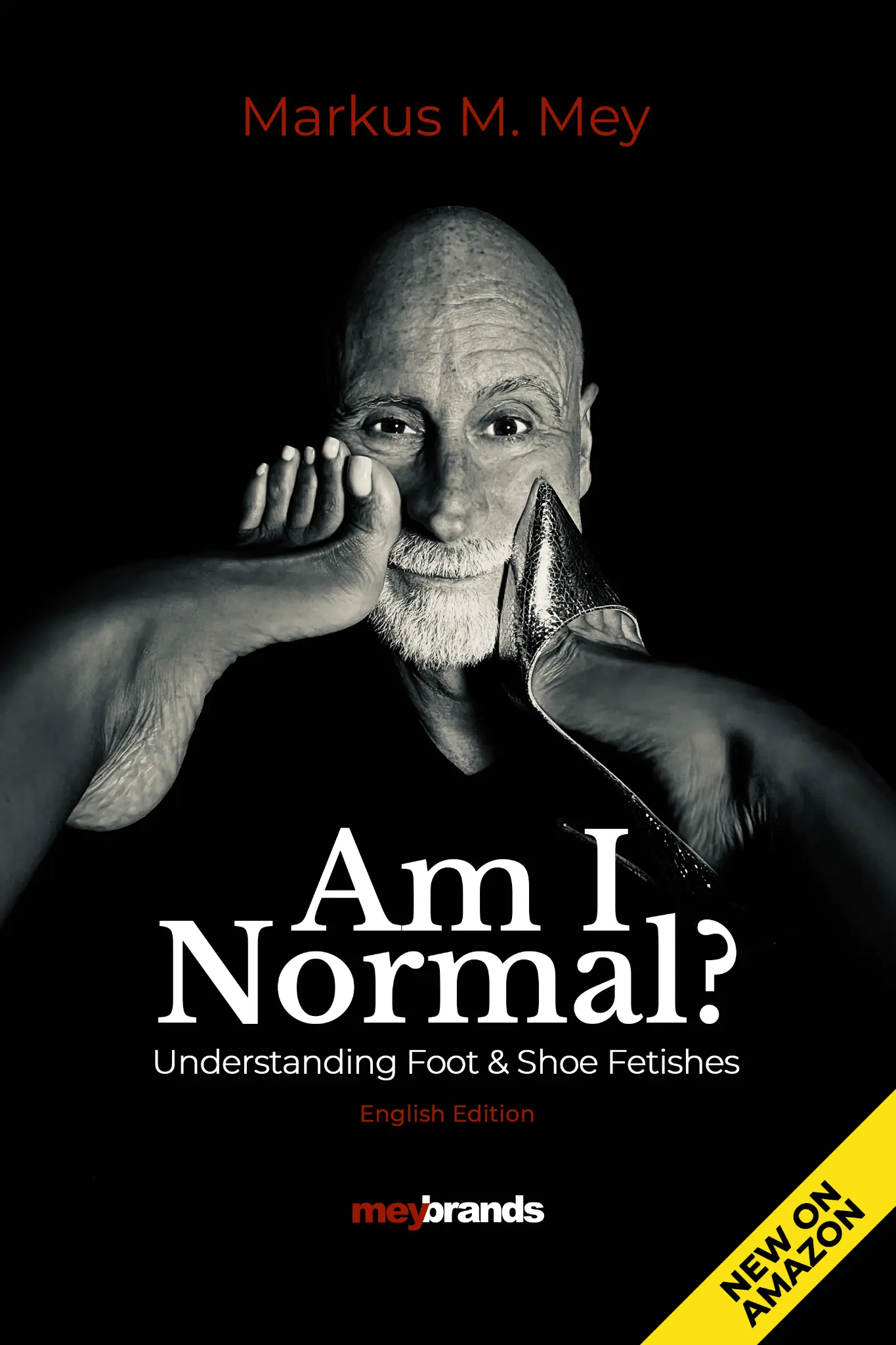
Let this article travel
Good knowledge grows stronger when it is shared.
Link to this original article as a further source — one click copies its permanent address.