
01 · Fetishism & Self-Image
Introduction
You cannot control what other people think. But you can decide how much power you give their judgment. That sounds easier than it is, because the image of the ‘weird fetishist’ runs deep. It is all the more helpful to understand where it comes from and what you can do to keep it from shaping your own self-image.
02 · Fetishism & Self-Image
Where the image comes from
When fetishism is mentioned in everyday life, images immediately arise: exaggeration, fixation, loss of control. These images rarely derive from personal experience. They come from films, media reports, and from what is not talked about. Whatever is left out automatically seems suspicious.
The tricky part is this: Anyone who views their fetish only through these images adopts other people’s judgments and turns them against themselves. Other people’s judgment then becomes an inner judgment that one no longer even recognizes as foreign. Female partners, too, often react not to the fetish itself but to the image of it that they have in mind.
On top of that, there is a long history. Anyone who wants to understand why sexuality in Western culture is still so often associated with shame and guilt cannot avoid the sexual morality of the church. For centuries, the body was considered suspect and pleasure something that distracted from what was essential. This way of thinking still has an effect today, even among people who do not consider themselves religious at all.
03 · Fetishism & Self-Image
What ‘weird’ actually means
If someone finds a foot fetish ‘weird’, they are measuring it against a social norm. Such norms are unwritten rules about what is considered appropriate. They differ from culture to culture and are constantly changing. What was considered offensive thirty years ago is often taken for granted today.
Science has long moved away from many of these judgments. Since 2022, the World Health Organization has no longer listed fetishism as a separate diagnosis. The judgment ‘weird’ is therefore not a fact about you. It is an opinion that often rests on old ideas.
04 · Fetishism & Self-Image
My experience of how others see me
I have never really hidden my shoe fetish. As a photographer, I published high-heel series for years, magazines reported on me, and in the 1990s I appeared on various talk shows. There, I clearly felt how much fetishism was still treated as a curiosity. It was important to me to remain calm and not allow myself to be pushed into the role some people may have expected.
That composure helped me more than any defensive speech. Anyone who speaks about their fetish matter-of-factly and without shame deprives others of much of their mockery. But that does not mean you have to do it in exactly the same way. As an artist, I had a freedom not everyone has.
05 · Fetishism & Self-Image
You owe no one an explanation
Handling your own fetish with confidence does not mean telling everyone about it. You may decide who knows and who does not. Your female partner, a good friend, a professional: that can be enough. Colleagues, neighbours, or distant acquaintances need not know anything about your sexuality, just as you need not know anything about theirs.
06 · Fetishism & Self-Image
What can strengthen your self-image
In my experience, the following things are especially helpful:
- Knowledge instead of assumptions. Anyone who knows how science categorizes fetishes today is less unsettled by prejudice.
- Do not make the fetish your whole person. It describes how your arousal works, not who you are. Those who do not define themselves only by their fetish are also less vulnerable when others judge it.
- Find people who understand. The internet has made it possible for many people to experience that they are not alone with their preference. That alone can bring enormous relief.
- Do not compare yourself. Neither with others nor with idealized images of what sexuality is supposedly meant to be.
- Seek support if shame becomes too great. Talking to a professional is not a sign of weakness.
07 · Fetishism & Self-Image
The stigma is real, but it is not yours
You are not imagining that people with unusual sexual preferences experience devaluation. In a survey of people with kink and fetish interests from the San Francisco area, participants reported how important treatment without shaming was to them. This shows that stigma plays a role even where one actually seeks help.
The stigma says more about society than it does about you. You do not have to convince everyone. It is enough if you yourself know that there is nothing wrong with you.
Sources
Sources
- Markus M. Mey: BIN ICH NORMAL? Fuß- und Schuhfetisch verstehen. Erste Edition, meybrands, Berlin 2026. ISBN 9798247074557.
- World Health Organization: ICD-11 for Mortality and Morbidity Statistics, Paraphilic disorders (6D30–6D36), Release 2025-01. icd.who.int
- Waldura, J. F. et al. (2016): Fifty Shades of Stigma: Exploring the Health Care Experiences of Kink-Oriented Patients. Journal of Sexual Medicine 13(12). doi:10.1016/j.jsxm.2016.09.019
Explore further in the book
From the question to your own story.
“Am I Normal?” combines clear context with personal experience and perspectives for relationships.
View the English book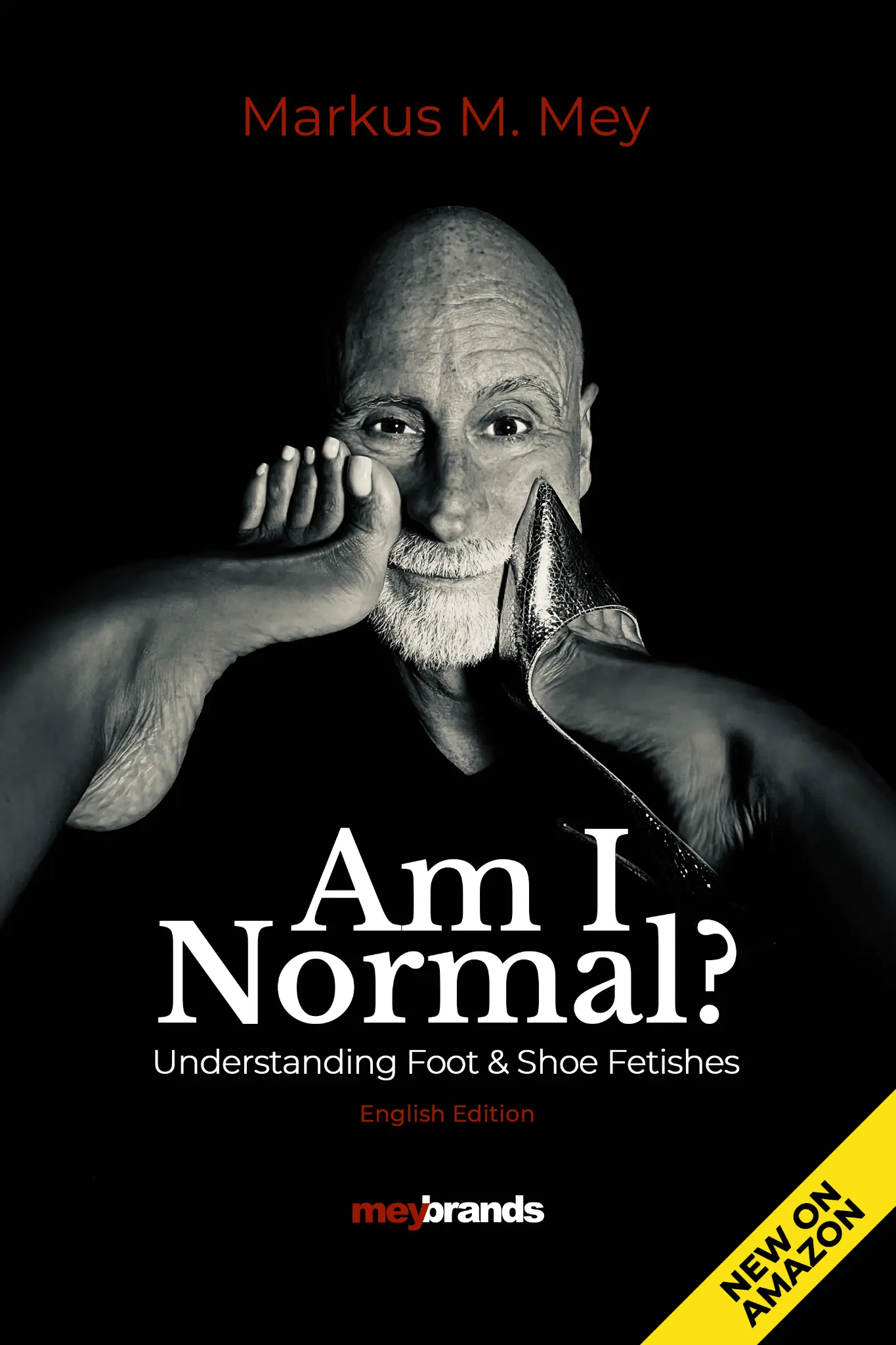
Let this article travel
Good knowledge grows stronger when it is shared.
Link to this original article as a further source — one click copies its permanent address.