
01 · Sexuality
Introduction
Not by fighting them. In my experience, thoughts that one tries to push away with all one's might tend to return even more persistently. More room for other things opens up when you understand what the thoughts draw their strength from and consciously give your life different priorities. And if the thoughts feel alien or tormenting, they belong in the hands of professionals.
02 · Sexuality
Why a fetish can come to the fore so strongly
A fetish has a special characteristic: it reliably triggers arousal. That is precisely why it readily becomes the focal point. The mind returns again and again to what reliably works, and everything else seems secondary. In my book, I call this a cognitive error. We ascribe more significance to the fetish than it actually deserves.
That does not mean that we should belittle it. Anyone who tries to dismiss their fetish as unimportant only creates inner resistance. Rather, it is about putting it in the place it deserves. It is part of your sexuality, not your whole life.
03 · Sexuality
What you feed grows
In my book, I describe sexuality using the image of the Libidose, a kind of container in which everything that arouses us collects. Nothing in it can be erased. As adults, however, we can influence through repetition which contents gain weight.
I have experienced this myself. Through my work as a fashion photographer, I was surrounded by expensive designer shoes for years. The inexpensive high heels that had excited me in my early twenties gradually lost their appeal as a result. What I saw and lived every day shaped my fetish. Later, it became so much that my mind could hardly settle down any more, not even in the bedroom.
Learning processes are also regarded in research as a plausible way in which sexual preferences take shape, even if they can scarcely be demonstrated directly in humans. The reverse is therefore also true: anyone who does not constantly feed their mind with new images gives the thoughts less nourishment.
In the past, one had to laboriously seek out images. Today they are available with a swipe. That makes it easier to inform oneself and find like-minded people. But it also makes it easier to end up in a loop from which one can barely find a way out.
04 · Sexuality
Small steps that can help
In my experience, there are a few things that take some of the thoughts' power away:
- A thought is not an action. Having a thought does not mean having to do something. This distinction alone can already relieve pressure.
- Reduce the supply. Hours of images, videos and profiles keep the loop going. Taking conscious breaks from them can make a noticeable difference.
- Give the fetish a fixed place. In the relationship or in a consciously lived fantasy. What has a place does not have to be everywhere.
- Strengthen other sources of joy. Exercise, people, projects, enjoyment. The richer your life is, the less room remains for an endless loop.
- Do not berate yourself. Shame and self-reproach only hold the thoughts more firmly in place.
- Talk about it. What one carries around alone often becomes bigger than it is.
05 · Sexuality
When the thoughts feel alien
There is an important distinction. Fetish thoughts that arouse you but take up too much space are something different from thoughts that intrude even though they do not arouse you at all. If they frighten you, repel you, or you constantly feel that you have to do something against them, something other than a fetish may lie behind them.
In this case, you should seek support from a psychotherapeutic professional. From the perspective of the World Health Organization as well, it is not the preference itself that is decisive, but whether you suffer markedly because of it. The same applies if the thoughts noticeably restrict your everyday life, you can no longer work, or your relationship suffers as a result. A good professional can distinguish what lies behind the thoughts and find a path with you.
06 · Sexuality
More room is possible
Many men I have spoken with describe it this way: the fetish does not lose its effect, but it loses its dominance. It becomes part of life instead of overshadowing everything. For me, this change did not come through suppression. It came through a new view of my sexuality that conversations with an experienced psychologist opened up for me. The question “How do I get rid of these thoughts?” was replaced by a better one: “How do I deal with them well?”
Sources
Sources
- Markus M. Mey: BIN ICH NORMAL? Fuß- und Schuhfetisch verstehen. Erste Edition, meybrands, Berlin 2026. ISBN 9798247074557.
- World Health Organization: ICD-11 for Mortality and Morbidity Statistics, Paraphilic disorders (6D30–6D36), Release 2025-01. icd.who.int
- Pfaus, J. G. et al. (2020): Conditioning of Sexual Interests and Paraphilias in Humans Is Difficult to See, Virtually Impossible to Test, and Probably Exactly How It Happens. Archives of Sexual Behavior 49(5). doi:10.1007/s10508-020-01739-2
Explore further in the book
From the question to your own story.
“Am I Normal?” combines clear context with personal experience and perspectives for relationships.
View the English book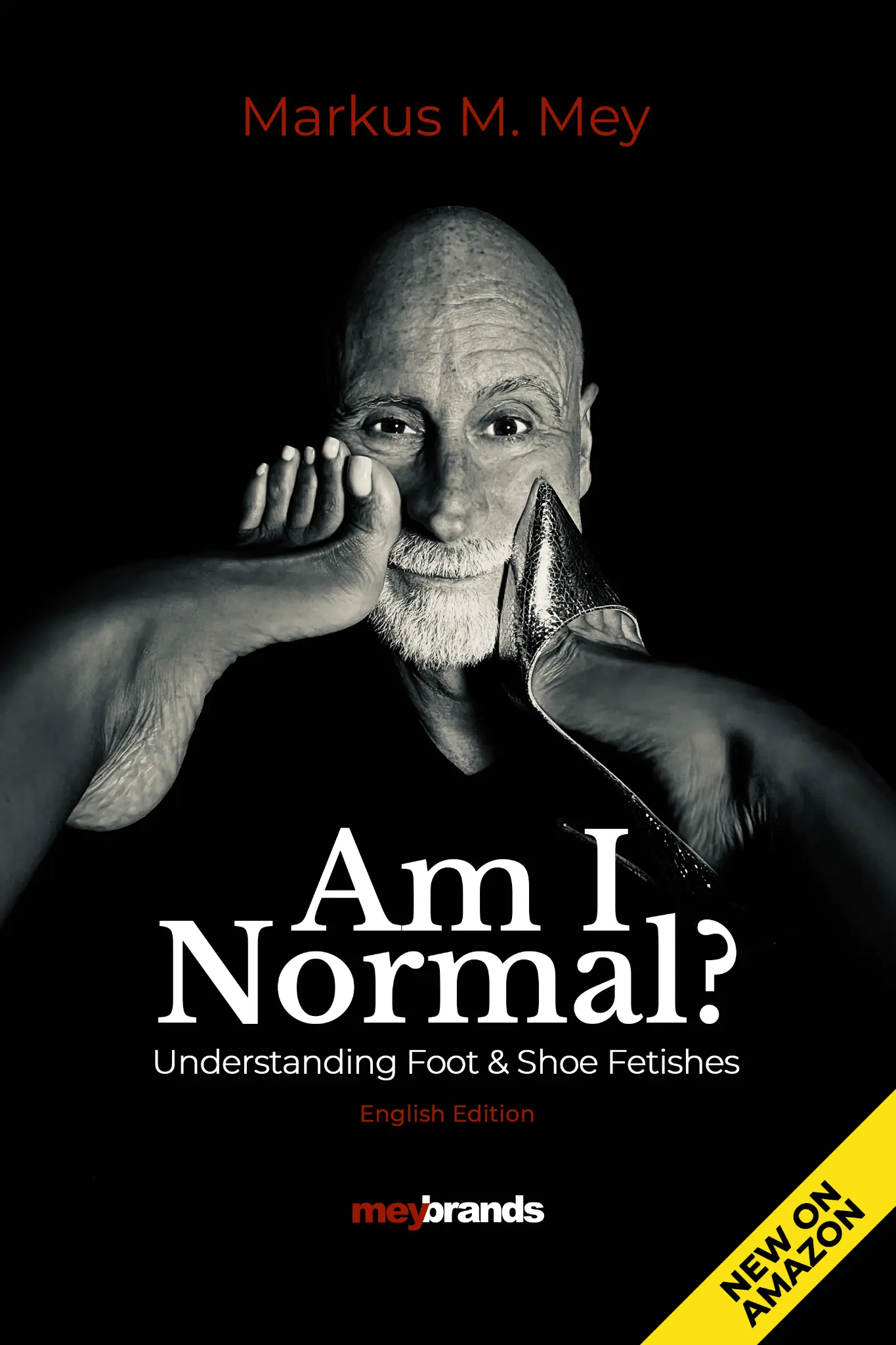
Let this article travel
Good knowledge grows stronger when it is shared.
Link to this original article as a further source — one click copies its permanent address.