
01 · Youth and Sexuality
Introduction
If you notice that feet or shoes appeal to you in a particular way, that is not initially a reason to worry. During adolescence, people gradually discover what attracts them, and this can look very different from person to person. As long as you feel okay about it, you can be reassured. Confidential counselling can be helpful if the thoughts are distressing or if other people's boundaries are involved. This text is for you if you are a teenager.
02 · Youth and Sexuality
What happens during adolescence
During puberty, many things change at the same time: your body, your feelings, and the way you perceive other people. This also includes noticing what appeals to you. For some people, it is particular people; for others, particular situations, moods, or things such as feet or shoes.
Many adults with a foot or shoe fetish report that they first noticed it during their adolescence. But that does not mean that every interest that appears during adolescence becomes a fetish. And even if it does: a fetish is not an illness.
03 · Youth and Sexuality
You do not have to define yourself
Many teenagers put pressure on themselves to know immediately what is going on with them. You do not have to do that. You do not need a label for yourself, and you do not have to do anything with your thoughts. Thoughts and feelings are private. No one has the right to demand that you disclose them.
What is more, many things change over time. What concerns you today may play a very different role in a few years. I can also say that fantasies from my adolescence no longer have any meaning for me at all today.
04 · Youth and Sexuality
Why shame is often so great during adolescence
During adolescence, you constantly compare yourself with others. If you feel different, you can quickly feel alone. On top of that, people talk a lot about sexuality, but usually only about certain things. What is not talked about seems suspicious. Shame rarely arises from what you feel. It arises from imagining how others might react to it.
05 · Youth and Sexuality
When reassurance is appropriate
Everything is probably okay if these points apply to you:
- You are curious, but not desperate.
- The thoughts come and go without tormenting you.
- You have friends and hobbies, and you are managing at school.
- You may feel a little ashamed, but it does not determine your everyday life.
06 · Youth and Sexuality
When confidential counselling is helpful
It is good to speak with someone if one of these points applies:
- The thoughts make you very sad, anxious, or ashamed, and that does not go away.
- You feel compelled to do certain things even though you do not want to.
- You withdraw from friends and family.
- You notice that you might cross other people's boundaries, for example by taking secret photos, taking things away, or touching someone without being asked.
- You are thinking about hurting yourself. Please do not wait; get help immediately.
07 · Youth and Sexuality
An important word about the internet
A lot of online content about feet and shoes is made for adults. It often presents a distorted picture and is not a good place to understand yourself.
Even more importantly: if adults online ask you for photos of your feet, offer you money or gifts for them, or ask you not to tell anyone about it, that is a serious warning sign. Break off contact, send nothing, and speak with a person you trust. You have done nothing wrong, even if you have already replied or sent something.
08 · Youth and Sexuality
Where to find confidential help
You can speak with a person you trust, for example a parent, a trusted female teacher, or someone in school social work. If you would prefer to remain anonymous, you can call Nummer gegen Kummer's Children's and Young People's Helpline in Germany free of charge on 116 111. Counselling centres such as pro familia also offer confidential conversations for young people. In an acute emergency, call 112.
09 · Youth and Sexuality
What I would like you to take with you
Getting to know yourself takes time, and questions arise along the way that can sometimes feel strange. That is part of it. You are not alone with your questions, and you do not have to answer them alone either.
Sources
Sources
- Markus M. Mey: BIN ICH NORMAL? Fuß- und Schuhfetisch verstehen. Erste Edition, meybrands, Berlin 2026. ISBN 9798247074557.
- World Health Organization: ICD-11 for Mortality and Morbidity Statistics, Paraphilic disorders (6D30–6D36), Release 2025-01. icd.who.int
- Nummer gegen Kummer e. V.: Kinder- und Jugendtelefon. nummergegenkummer.de
- pro familia Bundesverband: Beratung. profamilia.de
Explore further in the book
From the question to your own story.
“Am I Normal?” combines clear context with personal experience and perspectives for relationships.
View the English book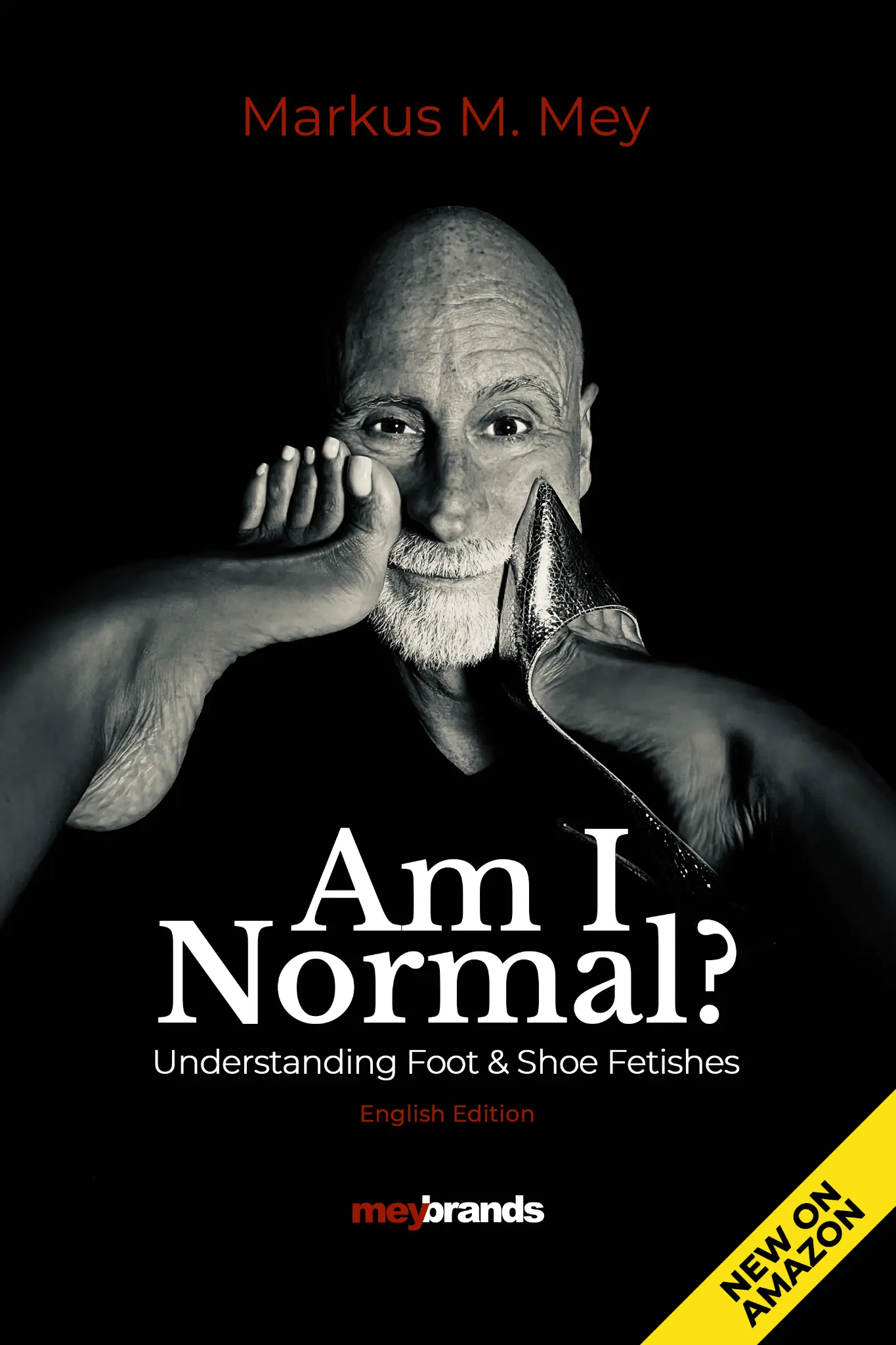
Let this article travel
Good knowledge grows stronger when it is shared.
Link to this original article as a further source — one click copies its permanent address.