
01 · Sexuality
Introduction
No. Your sexuality is your private matter, and the sexuality of your relationship belongs to both of you. Parents, siblings, or other relatives do not need to know about it, just as you do not need to know about their love lives. Whether you nevertheless confide in a family member is your free decision, and there are good reasons for either path.
02 · Sexuality
What concerns the family—and what does not
A foot fetish is part of your sexuality. It concerns you and, if you are in a relationship, your female partner. It may be important for her to know about it because it affects your shared sexuality. That is why I advise talking about it early in a relationship.
This does not apply to your parents, siblings, or other relatives. They are not in your relationship and are not part of your sexuality. In most families, there are unspoken boundaries as to which topics one talks about and which one does not, and for many people sexuality belongs in the latter category. That is not a sign of secrecy, but of privacy.
03 · Sexuality
Privacy is not the same as hiding
Many men with a fetish feel that they are concealing something if their family does not know about it. This feeling is understandable, especially when the shame is already great. Nevertheless, there is a difference. Hiding means concealing something out of fear that actually concerns someone. Privacy means deciding for yourself who shares in which parts of your life.
Your mother probably does not know what fantasies your siblings have either. And that is okay.
04 · Sexuality
Good reasons to tell them anyway
There may nevertheless be situations in which being open with family is worthwhile:
- If you have a very close, trusting bond with a family member and a conversation would do you good.
- If the fetish is visible in your life—for instance through public work, photographs, or publications—and you do not want relatives to learn of it second-hand.
- If keeping silent weighs heavily on you and you feel that you are hiding an important part of yourself from the people closest to you.
05 · Sexuality
Good reasons not to do it
There are equally good reasons to be reserved:
- If sexuality is talked about disparagingly in your family and you have to expect mockery or incomprehension.
- If the information could be used against you, for example in conflicts.
- If it is simply nobody’s business. That alone is reason enough.
06 · Sexuality
My own path
I went public with my shoe fetish in my thirties, through photo series, magazine reports, and appearances on talk shows. I have since written an entire book about it. That was and remains my deliberate decision. But that does not mean everyone has to take this route. There is a wide space between complete discretion and complete public exposure, and everyone may find their own place in it.
07 · Sexuality
If the family finds out without you wanting it
Sometimes relatives find out something without you having told them yourself, through finding something, a remark, or the Internet. Then it helps to stay calm. You do not have to explain details. A sentence such as “Yes, it is part of my sexuality. It is my private matter, and it is nothing you need to worry about” is often entirely enough. Since 2022, the World Health Organization has no longer listed fetishism as a separate diagnosis; this, too, can reassure concerned parents.
08 · Sexuality
And what about one’s own children?
The same applies to children as to any other detail of their parents’ love lives: they do not need to know about it. My wife and I deliberately decided years ago not to make any more fetish clips together online because we did not want our children to encounter them later. That was not hiding out of shame, but responsibility.
Your female partner, incidentally, should not talk about it with her family without your consent either. Who tells whom what is something you can agree on together.
09 · Sexuality
If you do want to open up
If you decide to tell someone in your family about it, choose a calm moment, start with a person you particularly trust, and explicitly ask for confidentiality. You do not have to tell everything. It is often enough to say that this part of you exists. Being honest does not mean disclosing every single detail.
Sources
Sources
- Markus M. Mey: BIN ICH NORMAL? Fuß- und Schuhfetisch verstehen. Erste Edition, meybrands, Berlin 2026. ISBN 9798247074557.
- World Health Organization: ICD-11 for Mortality and Morbidity Statistics, Paraphilic disorders (6D30–6D36), Release 2025-01. icd.who.int
Explore further in the book
From the question to your own story.
“Am I Normal?” combines clear context with personal experience and perspectives for relationships.
View the English book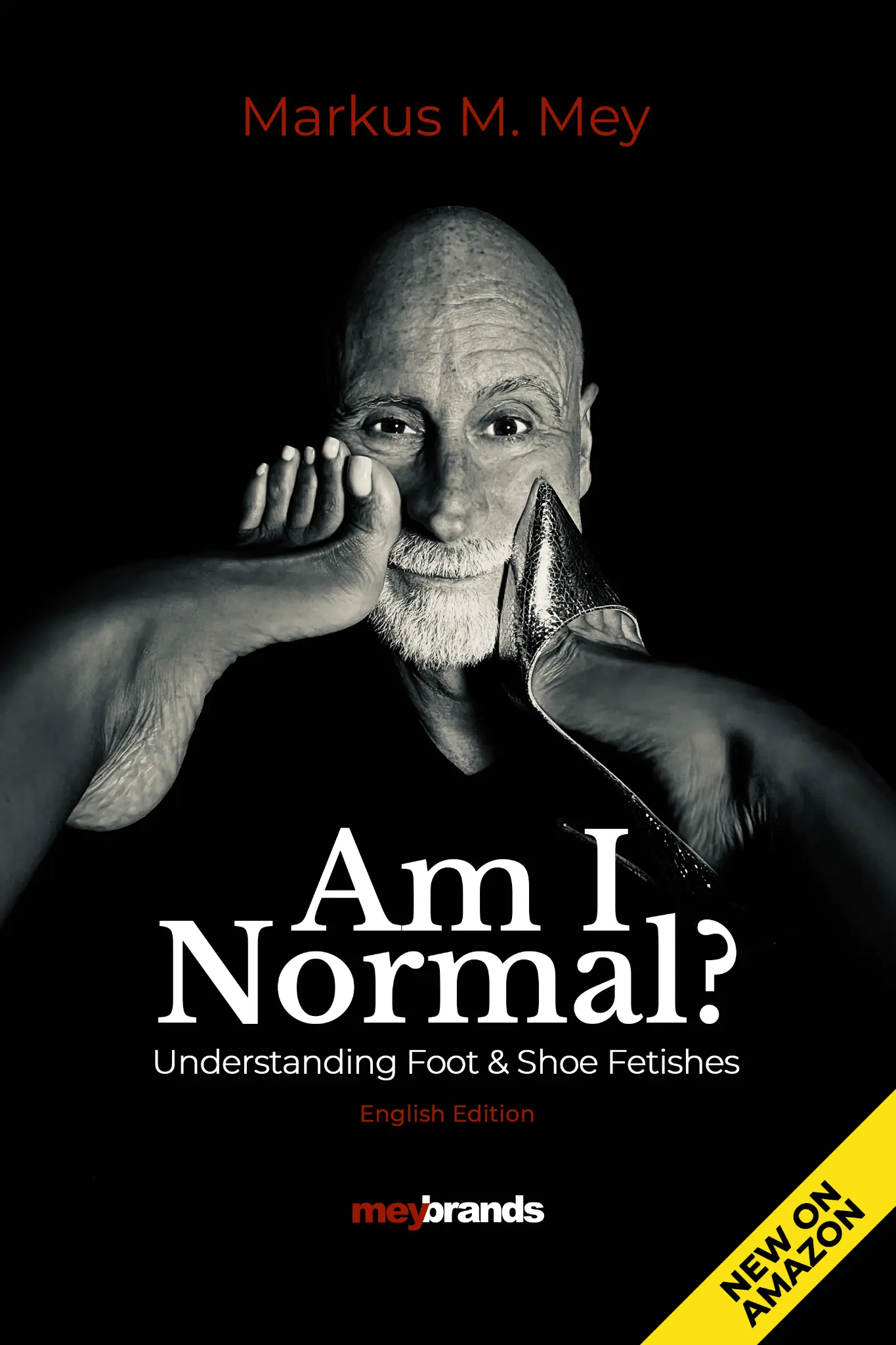
Let this article travel
Good knowledge grows stronger when it is shared.
Link to this original article as a further source — one click copies its permanent address.