
01 · Sexuality & Parenting
Introduction
No. Nothing about the future can be inferred from an early interest in feet or shoes. Research cannot reliably trace the emergence of a sexual preference in an individual back to particular experiences, let alone predict it. As parents, you therefore do not need to draw any conclusions from it; you may remain calm. This text is addressed to you as parents.
02 · Sexuality & Parenting
Why the connection seems so plausible
Many adults with a foot or shoe fetish say that they noticed it at a young age. Anyone reading such accounts can easily get the impression that every early interest is a precursor. That impression is misleading.
Such accounts arise in retrospect. Adults tell their story from their present-day perspective, and in the process early scenes acquire a meaning that they may not have had at the time. The many children who were likewise interested in shoes and later did not develop a fetish, by contrast, do not tell such stories. They appear in no accounts.
03 · Sexuality & Parenting
What research says about it
A systematic review from 2025 examined 47 theories on the emergence of unusual sexual interests. The best-substantiated ones assume that several processes interact and that the cause cannot be reliably reconstructed in an individual case. There are no longitudinal studies that follow children into adulthood and observe whether an early interest becomes a fetish.
Moreover, what fascinates children about shoes or feet usually has very simple reasons: colours, sounds, materials, playing with their parents’ large shoes. It has nothing to do with sexuality in the adult sense.
04 · Sexuality & Parenting
My own story
My mother once told me that when I was one or two years old, I shuffled down the hallway in her much-too-large, slender-heeled shoes. She took the shoes away from me then because she was worried that I might break the heel. I do not know whether that scene has anything to do with my later fetish. Many children play with their parents’ shoes, and for the vast majority it remains an entirely ordinary childhood game.
Nor do I believe that my mother could have foreseen or influenced anything at the time, whether by taking the shoes away or by allowing it. That is precisely what I want parents to take away: you do not have to control anything here.
05 · Sexuality & Parenting
What you can and cannot do
A few principles help you remain calm:
- Do not interpret it. A childlike interest is a childlike interest. It does not need an adult interpretation.
- Do not monitor. Constant observation makes children insecure and can create precisely the shame you want to avoid.
- Do not try to steer it. You can neither prevent nor encourage a later sexual preference.
- Set boundaries in dealings with others. Other people’s feet and shoes belong to them. Touching or taking them is permitted only with permission, as with everything else.
- Remain open. Above all, it is important that your child can later come to you with any questions.
06 · Sexuality & Parenting
What children really need
Instead of watching for a particular interest, it is worth keeping the bigger picture in view. Children need relaxed, age-appropriate support for their development, including with regard to their own bodies. They need to know that their bodies belong to them and that they may say no. And they need adults with whom no question is embarrassing. Anyone who has that is well equipped for every later development.
07 · Sexuality & Parenting
And what if it does?
If your child does in fact develop a foot or shoe fetish as an adolescent or adult, that is no cause for concern. Since 2022, the World Health Organization has no longer listed fetishism as a separate diagnosis. I myself have lived with my fetish for decades, am married, and have a family. What helps young people most is the feeling of being accepted by their parents, regardless of what their sexuality looks like.
08 · Sexuality & Parenting
When you should seek advice
If your child’s interest is very intense, clearly restricts them in everyday life, coincides with other developmental abnormalities, or if your child repeatedly crosses other people’s boundaries, talk to their paediatrician or a parenting and family counselling service. Also pay attention to how adults interact with your child. If someone shows conspicuous interest in your child’s feet or wants to take photographs, take it seriously.
Sources
Sources
- Markus M. Mey: BIN ICH NORMAL? Fuß- und Schuhfetisch verstehen. Erste Edition, meybrands, Berlin 2026. ISBN 9798247074557.
- Schippers, E. E., Hoogsteder, L. M. & de Vogel, V. (2025): Theories on the Etiology of Deviant Sexual Interests: A Systematic Review. Sexual Abuse 37(1). doi:10.1177/10790632241271308
- World Health Organization: ICD-11 for Mortality and Morbidity Statistics, Paraphilic disorders (6D30–6D36), Release 2025-01. icd.who.int
Explore further in the book
From the question to your own story.
“Am I Normal?” combines clear context with personal experience and perspectives for relationships.
View the English book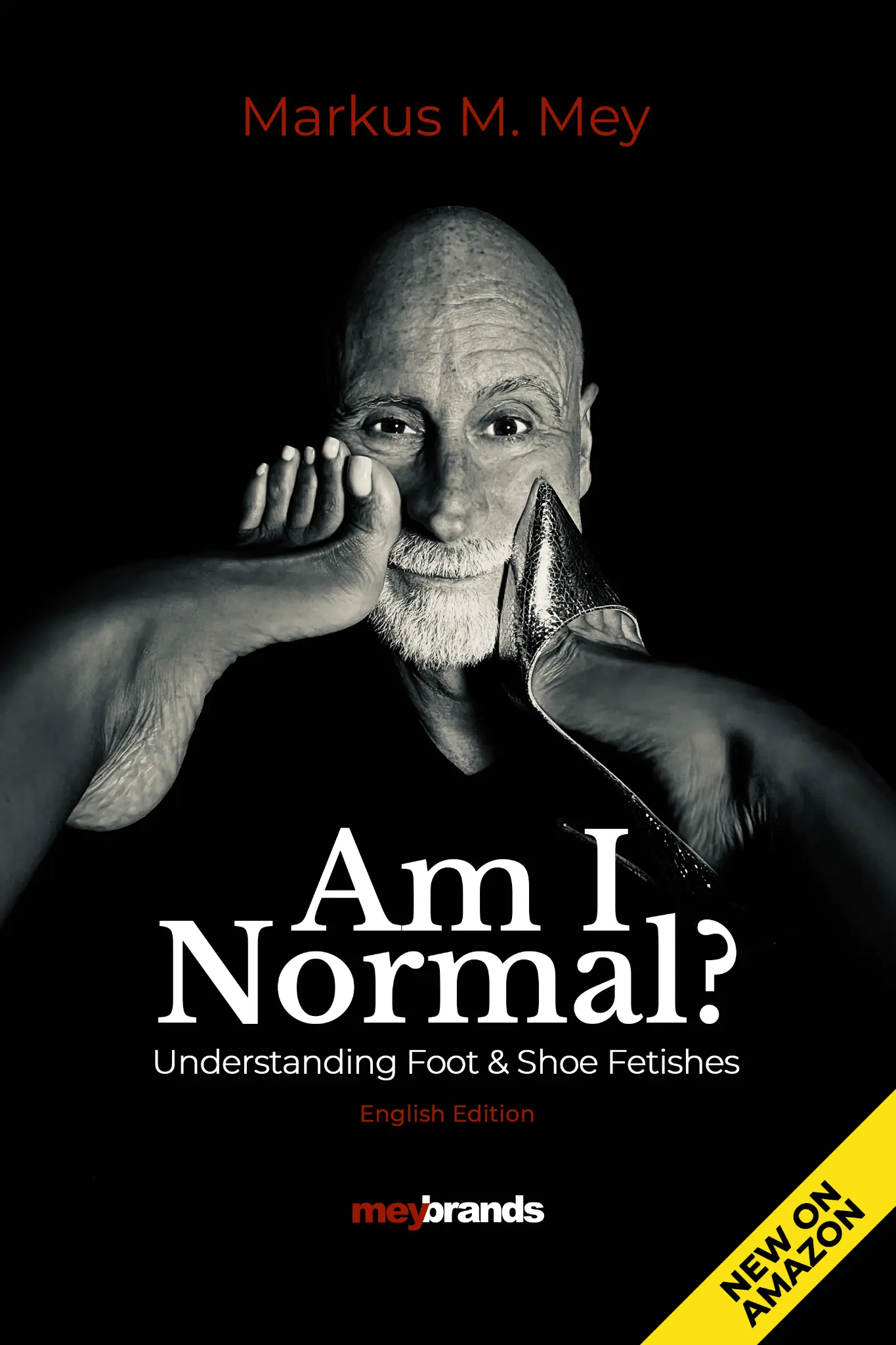
Let this article travel
Good knowledge grows stronger when it is shared.
Link to this original article as a further source — one click copies its permanent address.