
01 · Sexuality
Introduction
A preference expands sexuality, a kink is an umbrella term for sexual expressions that are not everyday, and a fetish is a particular fixation of arousal on an object or body part. None of these terms describes an illness. Knowing them can help you talk about your own sexuality without needlessly pathologising yourself. A brief guide through the terms.
02 · Sexuality
An overview of the terms
The following overview sorts out the most important terms that come up around foot and shoe fetishes. The boundaries are fluid, and not everyone uses the words in exactly the same way:
- Term: Preference. What it means: Something that enriches sexuality but is not necessary. Example: You enjoy foot massages and find beautiful feet appealing.
- Term: Kink. What it means: A colloquial umbrella term for sexual preferences and practices that are not everyday. Example: Role-playing, dominance and surrender, fetishes.
- Term: Fetish. What it means: A stable fixation of arousal on an object or body part, often with a central function. Example: Shoes or feet are an important route to pleasure for you.
- Term: Paraphilia. What it means: A technical term for a persistent, unusual sexual interest. Example: It is used in specialist literature and does not yet describe a disorder.
- Term: Paraphilic disorder. What it means: A clinical term when marked distress, serious risks, or lack of consent are added. Example: It is assigned only by specialists after careful assessment.
03 · Sexuality
Preference
In my book, I describe a preference as something that expands sexuality. It is pleasant, but not strictly necessary. Anyone who likes beautiful feet or enjoys massaging their female partner’s feet has a preference. If feet do not play a role on one occasion, they lack nothing.
04 · Sexuality
Kink
The English word “kink” has also become widespread in German in recent years. It is a loose umbrella term for sexual preferences and practices beyond what is considered usual. This includes fetishes, but also role-playing or play involving dominance and surrender. Many people find “kink” agreeable because the word has no medical connotation. It is now also used in research, for example in studies on the experiences of kink-oriented people in healthcare.
05 · Sexuality
Fetish
A fetish is more stable than a preference. It usually accompanies people over a long period, and a particular stimulus takes on a special function in arousal. In a foot fetish, this is the foot; in a shoe fetish, the shoe. For some, the fetish is one additional stimulus among many; for others, it is a central route to pleasure. Incidentally, the word comes from the Portuguese “feitiço,” which means something like magic. In specialist literature, a foot fetish is also called podophilia.
06 · Sexuality
Paraphilia and paraphilic disorder
In the specialist field, paraphilias are discussed when it comes to persistent, unusual sexual interests. The American Psychiatric Association (APA) clearly distinguishes between a paraphilia and a paraphilic disorder. Most people with such interests do not have a mental disorder.
The World Health Organization goes a step further. Since 2022, it has no longer listed fetishism as a separate diagnosis in ICD-11. A diagnosis is considered only when someone clearly suffers from their pattern of arousal, there is a serious risk of injury, or others are affected without their consent.
07 · Sexuality
Why word choice matters
Words shape how we see ourselves. Anyone who has had terms such as “perversion” or “disorder of sexual preference” in mind for years sees themselves differently from someone who speaks of a preference or a kink. These old terms come from diagnostic catalogues that are no longer valid today. In the former ICD-10, fetishism was indeed still listed under code F65.0 among disorders of sexual preference. Anyone searching the internet today often encounters precisely these outdated classifications first.
At the same time, the word “fetish” is used very broadly in everyday life. People speak of a fashion fetish or a technology fetish when someone particularly likes something. That has nothing to do with sexual arousal.
08 · Sexuality
Which word suits you?
You decide that for yourself. The terms are tools, not judgements. Someone who says “preference” emphasises that it is one part of sexuality among many. Someone who says “kink” places themselves in a diverse community. Someone who says “fetish” identifies precisely the role a particular stimulus plays. I myself now speak openly about my foot and shoe fetish because that word describes most accurately for me what I experience.
The important thing is that you do not let anyone impose a word on you that makes you smaller than you are. Terms such as “perverse” or “sick” do not belong here. They come from a time when science still mixed sexuality with the moral ideas of its time.
Sources
Sources
- Markus M. Mey: BIN ICH NORMAL? Fuß- und Schuhfetisch verstehen. Erste Edition, meybrands, Berlin 2026. ISBN 9798247074557.
- American Psychiatric Association (2013): Paraphilic Disorders. DSM-5 Fact Sheet. psychiatry.org
- World Health Organization: ICD-11 for Mortality and Morbidity Statistics, Paraphilic disorders (6D30–6D36), Release 2025-01. icd.who.int
- Giami, A. (2015): Between DSM and ICD: Paraphilias and the Transformation of Sexual Norms. Archives of Sexual Behavior 44(5). doi:10.1007/s10508-015-0549-6
- Waldura, J. F. et al. (2016): Fifty Shades of Stigma: Exploring the Health Care Experiences of Kink-Oriented Patients. Journal of Sexual Medicine 13(12). doi:10.1016/j.jsxm.2016.09.019
Explore further in the book
From the question to your own story.
“Am I Normal?” combines clear context with personal experience and perspectives for relationships.
View the English book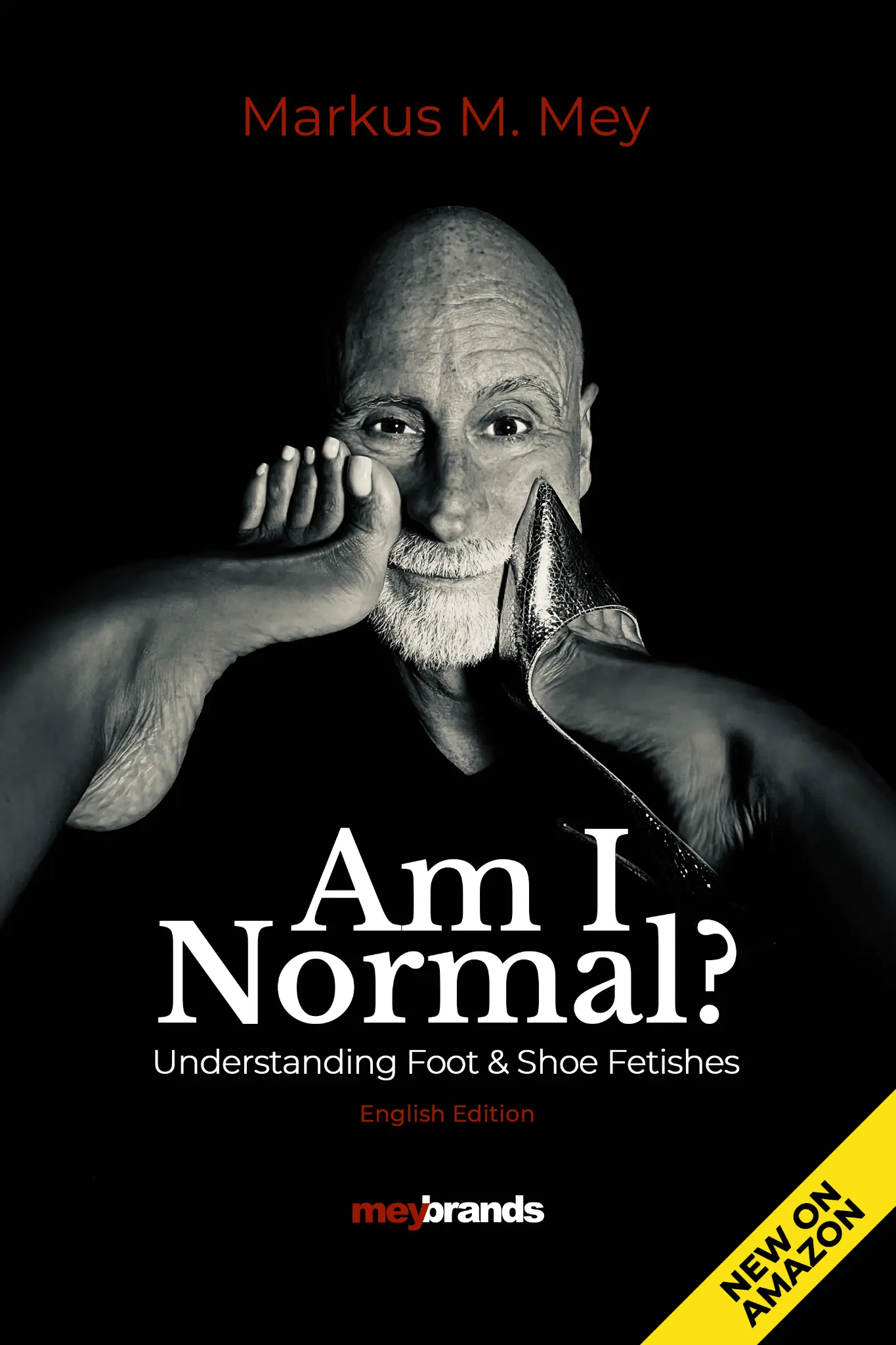
Let this article travel
Good knowledge grows stronger when it is shared.
Link to this original article as a further source — one click copies its permanent address.