
01 · Sexuality & Therapy
Introduction
Taking the first step is often the hardest part, and it can be very simple. You do not have to find the perfect words or tell everything straight away. A short phone call or an email is enough for the first contact. And in the first conversation, a single sentence is often enough to put the subject on the table. Everything else develops from there.
02 · Sexuality & Therapy
Before the first contact
Before getting in touch, it helps to become clear about three things for yourself. Feel free to write down a few key points:
You do not have to show these notes to anyone. But they help you not to lose the thread in the conversation when you are very anxious.
- What exactly is troubling me? Is it the fetish itself, the shame, the secrecy, a conflict in the relationship, or the feeling of losing control?
- How long has this been the case? Was there a trigger, or did it build up slowly?
- What do I want? More calm, more clarity, a better way of dealing with my female partner, less shame?
03 · Sexuality & Therapy
The first contact
Many people already struggle with the first email because they do not know how much they should write. Yet very little is enough. You do not even have to mention the fetish in it yet. A message could look something like this:
“Hello, I am seeking support with an issue relating to sexuality and partnership. Do you have experience with sexual preferences such as fetishes? I would like to arrange an appointment for an initial consultation.”
Asking about experience is not impolite. It helps you find someone from the outset with whom you do not have to explain or justify yourself. In Germany, the appointment service on 116 117 also arranges appointments for a psychotherapeutic consultation.
04 · Sexuality & Therapy
The first session
The first conversation is mostly about getting to know one another. The professional wants to understand why you have come and what is on your mind. You decide how quickly you get to the heart of the matter. Some people start directly with the fetish; others first start with something that is easier to say out loud.
A few possible ways to begin:
At the beginning, you do not have to tell every detail of your fantasies. A good professional will ask what they need to know, and you may say at any time if something still feels too close to home.
- “I am here because something is troubling me that I have hardly spoken about with anyone so far.”
- “It is about my sexuality. I have a shoe fetish, and lately it has been troubling me.”
- “I would like to talk about my relationship first. My foot fetish plays a part in it.”
05 · Sexuality & Therapy
Goals you can name
Many people believe that the aim of therapy has to be to get rid of the fetish. That is rarely realistic and often not necessary at all. In my experience, you cannot simply switch off a fetish. But you can learn to deal with it well. Possible goals may therefore look quite different:
- less shame and more self-acceptance
- a more open conversation with your female partner
- a better way of dealing with thoughts that intrude
- more clarity about what is actually moving you
06 · Sexuality & Therapy
And your female partner?
If the fetish is troubling you mainly in your relationship, you can also arrange joint appointments later. Many professionals offer couple consultations or can refer you to couples or sex therapy. At the start, however, it is completely fine to come alone first and sort out for yourself what is troubling you.
07 · Sexuality & Therapy
If the first conversation feels strange
It is completely normal to be nervous the first time. You may blush; you may not find the words. Therapists know this. Before psychotherapy actually begins, there are also trial sessions in which you check together whether working together is a good fit. If you do not feel comfortable, you may keep looking. That is not a failure, but part of the process.
08 · Sexuality & Therapy
My experience
When my wife and I were stuck some years ago, I described my situation very openly over many conversations to a psychologist who knew a great deal about fetishes and BDSM. Being this open took courage. But it was the prerequisite for her being able to open up a new perspective on my sexuality for me. The courage was worthwhile.
Sources
Sources
- Markus M. Mey: BIN ICH NORMAL? Fuß- und Schuhfetisch verstehen. Erste Edition, meybrands, Berlin 2026. ISBN 9798247074557.
- Kassenärztliche Bundesvereinigung: Terminservicestellen 116 117. 116117.de
Explore further in the book
From the question to your own story.
“Am I Normal?” combines clear context with personal experience and perspectives for relationships.
View the English book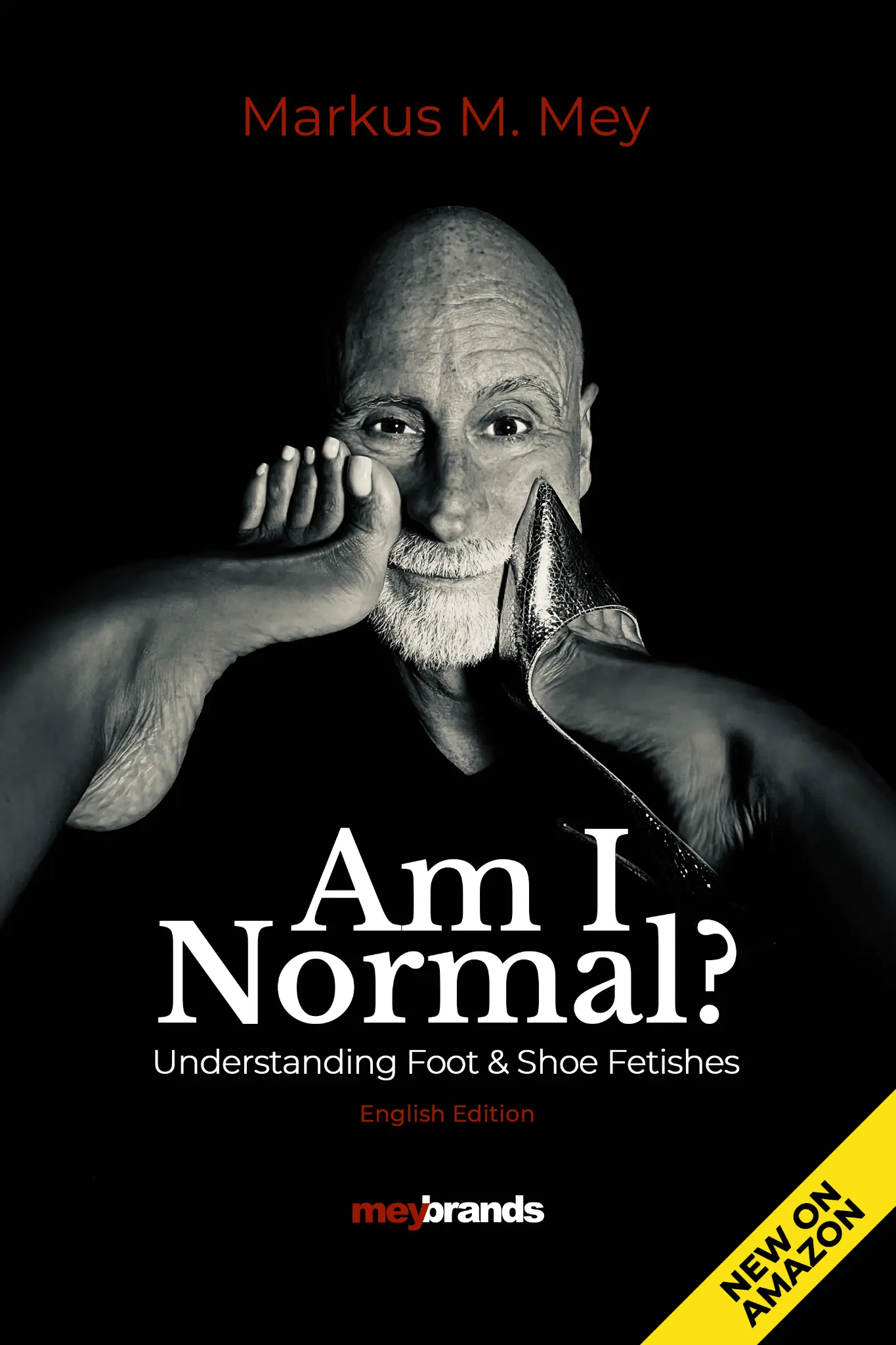
Let this article travel
Good knowledge grows stronger when it is shared.
Link to this original article as a further source — one click copies its permanent address.