
01 · Fetishes
Introduction
There is no precise figure, but you are certainly not alone in having this focus. Shoes and boots are among the most visible topics when people talk about fetishes online. Their frequency, however, says nothing about you as a person. Whether a fetish is rare or widespread has nothing to do with your worth, your health, or your capacity for relationships.
02 · Fetishes
Why there is no reliable figure
To know how many people have a shoe or boot fetish, one would need a large, representative survey that asks precisely about it. No such study exists to this day. Population studies on unusual sexual interests, for example from the Canadian province of Québec, the Czech Republic, or the Canton of Zurich, usually group fetishes into broad categories. Shoes and boots do not appear in them as a separate figure.
In addition, one would have to distinguish very carefully what is being asked about. Someone who has found boots arousing once is different from someone who regularly has corresponding fantasies, and that in turn is different from someone who actively practises their fetish.
03 · Fetishes
What the available data show
A study by Claudia Scorolli and colleagues from 2007 offers an indication. The team analysed 381 online discussion groups about fetishes. Feet and associated objects such as shoes and socks together formed the most visible individual category there. This shows how present the subject is online. However, it cannot be used to determine how many people in the population have a shoe fetish, because groups are not people.
Large fetish platforms also show how connected this world is. At the beginning of 2014, an analysis counted more than 500,000 European profiles on just one such platform. This, too, says nothing about prevalence in the population, but it does say something about the number of people who engage with fetishes.
04 · Fetishes
What I have observed myself
As an experiment, I ran an Instagram profile for two years in which I presented myself as a heterosexual man with dominant inclinations and a pronounced boot fetish. Of the roughly 1,600 genuine followers, around 1,500 were men, predominantly homosexual, along with several dozen heterosexual people. During that period, exactly three women with a genuine sexual shoe or boot fetish contacted me.
This is not a study, but a personal observation. It nevertheless showed me how many men feel drawn to boots, across all sexual orientations.
05 · Fetishes
Boots and the effect they have
It does not surprise me that boots in particular appeal to so many people. Boots appear substantial, powerful, and present. They encase the leg, change the way one walks, and make posture visible. For many people with a shoe fetish, they are therefore closely linked to the interplay of dominance and surrender. That does not have to be the case, but it explains why boots play a special role in many people's fantasies. And even among boot lovers, preferences differ greatly, from riding boots and over-the-knee boots to cowboy boots.
06 · Fetishes
What frequency says about you
Nothing decisive. Whether a fetish is rare or widespread describes only how many other people feel similarly. It says nothing about your character, your maturity, or your ability to love. Normality is a statistical term, and it carries little weight in personal experience. Since 2022, the World Health Organization has also no longer listed fetishism as a diagnosis in its own right.
Far more important than the question of how many there are is the question of how you feel about your fetish. Can you accept it as part of yourself? Do you live it in a way that all those involved agree to?
07 · Fetishes
Why people nevertheless feel alone
The fact that many people with a shoe or boot fetish feel alone is mainly because hardly anyone speaks openly about it. The silence of others then looks like their absence. The internet has changed that a great deal. Today, people with similar preferences can find each other and realise that they are by no means the only ones. For many, precisely this experience is a great relief.
Sources
Sources
- 1. Markus M. Mey: BIN ICH NORMAL? Fuß- und Schuhfetisch verstehen. Erste Edition, meybrands, Berlin 2026. ISBN 9798247074557.
- 2. Scorolli, C. et al. (2007): Relative prevalence of different fetishes. International Journal of Impotence Research 19(4), 432–437. doi:10.1038/sj.ijir.3901547
- 3. Fay, D. et al. (2016): An Exploration of Fetish Social Networks and Communities. Advances in Network Science. doi:10.1007/978-3-319-28361-6_17
- 4. Joyal, C. C. & Carpentier, J. (2017): The Prevalence of Paraphilic Interests and Behaviors in the General Population: A Provincial Survey. Journal of Sex Research 54(2). doi:10.1080/00224499.2016.1139034
- 5. Bártová, K. et al. (2021): The Prevalence of Paraphilic Interests in the Czech Population. Journal of Sex Research 58(1). doi:10.1080/00224499.2019.1707468
- 6. Baier, D. (2024): Paraphilic Interests in the Swiss Population: Results of a Representative Survey in the Canton of Zurich. Journal of Psychosexual Health 6(2). doi:10.1177/26318318241255783
- 7. World Health Organization: ICD-11 for Mortality and Morbidity Statistics, Paraphilic disorders (6D30–6D36), Release 2025-01. icd.who.int
Explore further in the book
From the question to your own story.
“Am I Normal?” combines clear context with personal experience and perspectives for relationships.
View the English book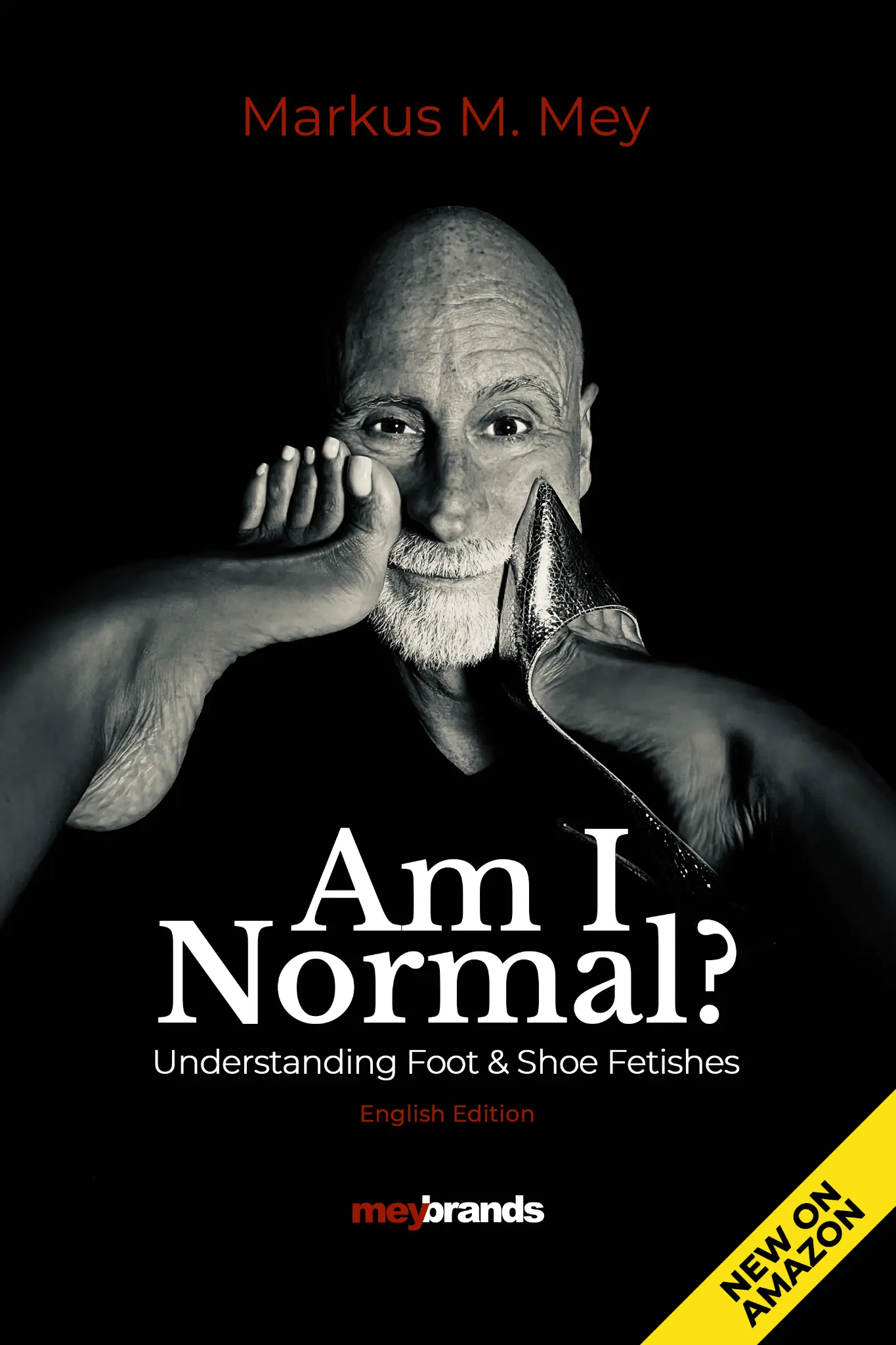
Let this article travel
Good knowledge grows stronger when it is shared.
Link to this original article as a further source — one click copies its permanent address.