
01 · Sexual Health
Introduction
In a detailed conversation with a qualified professional, not with an online test. A diagnosis arises from your entire life situation, not from the question of what arouses you. And for most people with an unusual sexual interest, the outcome in the end is: no mental disorder.
02 · Sexual Health
Why self-diagnoses so often lead people astray
Anyone who searches online for their fetish quickly comes across terms that sound official and final. They often come from ICD-10, the older version of the World Health Organization’s diagnostic catalogue, in which fetishism was still listed under code F65.0 as a disorder of sexual preference. Many online tests also ask only whether something arouses you. Yet that is precisely what says the least about a disorder.
Sexuality research distinguishes very precisely between interest, fantasy, behaviour, distress and a clinical diagnosis. A test that measures only the first level cannot answer the question of the last.
There is also something very human involved. When we think about ourselves, feelings and personal experiences always become mixed in. Especially with a topic laden with shame, it is difficult to look at oneself soberly. That is exactly what an outside perspective is for.
03 · Sexual Health
What the manuals say today
In Germany and in most countries, professionals use two major classifications as their reference points.
The World Health Organization’s ICD-11 has been in force since 1 January 2022. Fetishism is no longer a diagnosis in its own right there. At most, where preferences are pursued alone or consensually, a category for other paraphilic disorders may apply. The condition is that a person suffers significantly because of their pattern of arousal, not merely because others reject it, or that there is a serious risk of injury.
The DSM-5 of the American Psychiatric Association still includes fetishistic disorder, explicitly also in relation to body parts such as feet. But the same applies here: the preference alone is not enough. There must be marked distress or substantial impairments in everyday life, work or relationships.
04 · Sexual Health
How an assessment usually proceeds
There is no blood test or brain scan for a fetish. The assessment is above all a conversation, often over several appointments. It typically involves questions such as these:
You do not have to lay out every detail of your fantasies. A good professional asks about what they need to know. It can help to make a few notes beforehand: What exactly is troubling me, since when, in which situations, and what do I want from the conversation?
Questionnaires are sometimes added. In the case of sexual functioning problems such as erectile dysfunction, a medical examination is also part of the process, because age, medication, stress or health-related causes may also be behind them.
- How long has the preference been present, and how has it developed?
- How much space does it take up in everyday life, and does it feel controllable?
- How do you feel about it, and where might any distress come from?
- What role does it play in your relationship?
- Do other people consent when you act on it?
- Are there other burdens, such as low mood, anxiety or physical complaints?
05 · Sexual Health
Who can carry out this kind of assessment
Possible contacts include physicians with training in sexual medicine, psychotherapists with a focus on sex therapy, or sexual-medicine outpatient clinics available at some university hospitals. A general practitioner can also be a first step and make a referral.
It is important to find someone who understands the topic and does not judge. In a survey of people from the San Francisco region with kink and fetish interests, participants wanted exactly that: practitioners with whom they could speak openly without being shamed. Feel free to ask at the very first contact whether the person has experience with fetishes.
06 · Sexual Health
What the outcome can be
For many people, the outcome is above all a relief. They learn that their preference is not an illness and can stop monitoring themselves. Sometimes it turns out that something else is actually causing distress, such as shame, a relationship crisis or a depressive phase. And in some cases there is in fact a need for treatment. Then it is good to know about it. If the relationship is the main issue, it may also make sense to bring your female partner to a joint appointment.
When I sought advice some years ago from a female psychologist who knew fetishes and BDSM well, I was above all looking for clarity. I got it, and from a perspective I would not have arrived at on my own.
Sources
Sources
- Markus M. Mey: BIN ICH NORMAL? Fuß- und Schuhfetisch verstehen. Erste Edition, meybrands, Berlin 2026. ISBN 9798247074557.
- World Health Organization: ICD-11 for Mortality and Morbidity Statistics, Paraphilic disorders (6D30–6D36), Release 2025-01. icd.who.int
- American Psychiatric Association (2013): Paraphilic Disorders. DSM-5 Fact Sheet. psychiatry.org
- Kafka, M. P. (2010): The DSM Diagnostic Criteria for Fetishism. Archives of Sexual Behavior 39(2). doi:10.1007/s10508-009-9558-7
- Giami, A. (2015): Between DSM and ICD: Paraphilias and the Transformation of Sexual Norms. Archives of Sexual Behavior 44(5). doi:10.1007/s10508-015-0549-6
- Waldura, J. F. et al. (2016): Fifty Shades of Stigma: Exploring the Health Care Experiences of Kink-Oriented Patients. Journal of Sexual Medicine 13(12). doi:10.1016/j.jsxm.2016.09.019
Explore further in the book
From the question to your own story.
“Am I Normal?” combines clear context with personal experience and perspectives for relationships.
View the English book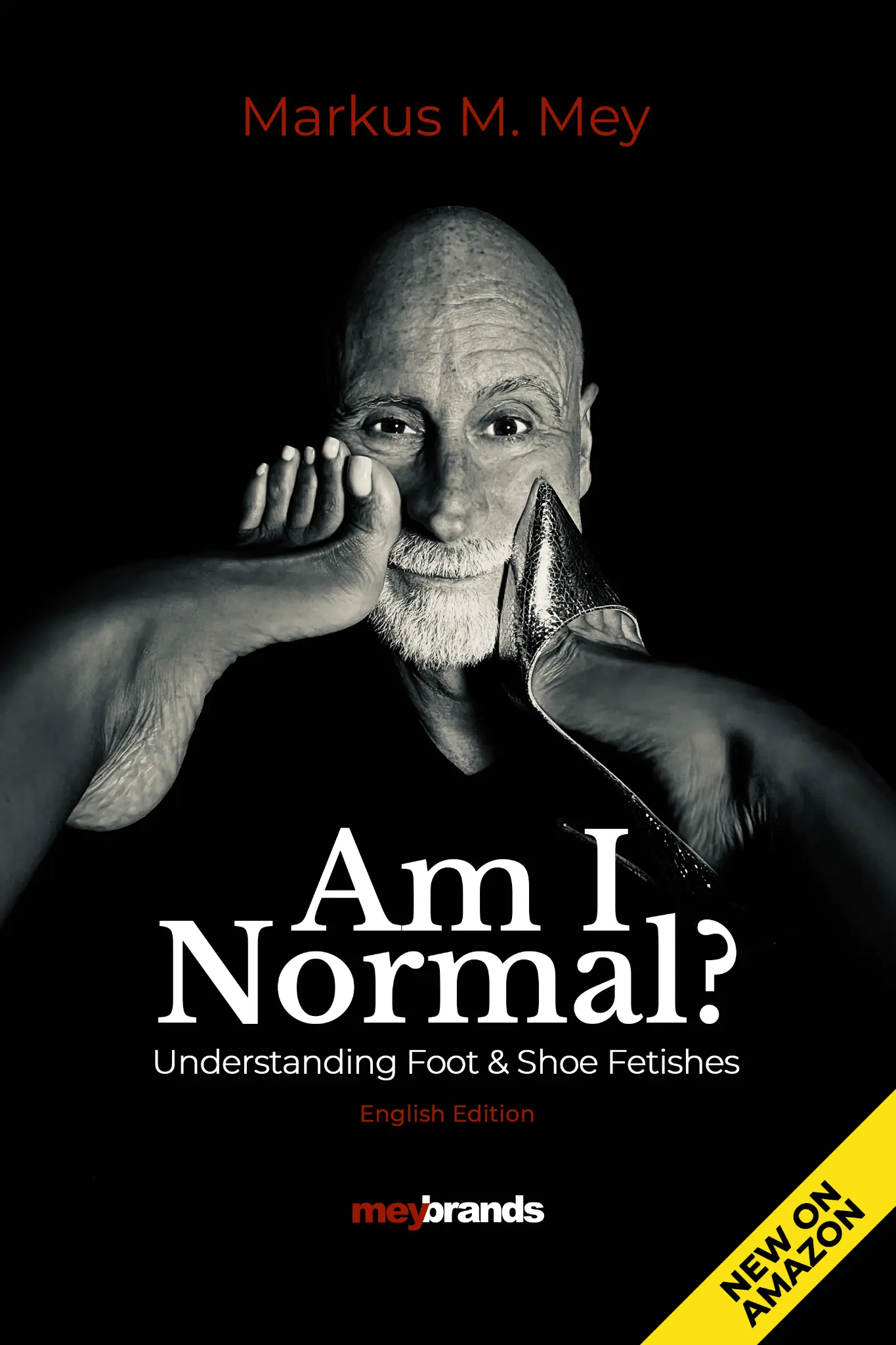
Let this article travel
Good knowledge grows stronger when it is shared.
Link to this original article as a further source — one click copies its permanent address.