
01 · Sexuality
Introduction
You do not need to be ashamed, and that does not make you strange. Even so, shame is a feeling that very many people with a fetish know well. You rarely get rid of it by pushing it away. It becomes easier when you understand where it comes from and counter it with something.
02 · Sexuality
I love my fetish
I deliberately put it that plainly: I have lived with my foot and shoe fetish for over forty years, and I love it. It has shaped me as a photographer, enriched my relationships, and brought me into conversation with countless people.
That does not mean that I do not know shame. When, at 19, I first cautiously tried to hint at my fetish to the girlfriend I had at the time, she reacted with irritation, and I never mentioned the subject to her again. The question of whether there was something wrong with me did preoccupy me in my younger years. At some point, I stopped asking myself that question.
03 · Sexuality
Where shame comes from
Shame feels very personal. Yet it is largely learned, and it has a long history.
For centuries, church sexual morality shaped the Western view of the body. Under the influence of Plato’s philosophy and later of Church Fathers such as Augustine, the body was considered driven by urges and pleasure was regarded as suspect. What is interesting is how little this has to do with the Bible itself. In the Song of Songs, two lovers celebrate each other with great sensuality, without any moral restriction. Hostility to pleasure came only later.
When science began to classify sexuality systematically around 150 years ago, these moral ideas flowed directly into its categories. Fetishism was declared an illness. Science has since corrected this judgment. Yet it still has an effect in our minds.
Finally, there are personal experiences: the first irritated reaction, the joke among friends, the distorted portrayals in films. Anyone who sees their fetish only through these images adopts other people’s judgments and directs them against themselves.
04 · Sexuality
Shame is not the same as guilt
The two can be distinguished like this: guilt relates to something one has done. Shame relates to what one is. That is precisely why shame is so hard to bear. It does not say, “That was wrong,” but rather, “There is something wrong with you.”
With a fetish that you live out alone or consensually, there is no guilt, because you harm no one. What remains is shame, and it is directed at something you did not choose. No one consciously decides what arouses them.
05 · Sexuality
Shame reaches into the body
Shame does not stay in the mind. Anyone who experiences their fantasies as wrong or embarrassing holds them back inwardly, even during sex. The body often reacts to such internal prohibitions just as strongly as to external ones. For many men with a fetish, this shows up as a drop in arousal, up to and including erection problems, even though they desire their female partner. Conversely, a more relaxed way of dealing with one’s own fetish can also change quite a lot physically.
06 · Sexuality
What helps against shame
In my experience, these steps help above all:
- Speak about it. Shame thrives on silence. Just one person who knows and does not judge you changes a great deal.
- Knowledge. Since 2022, the World Health Organization has no longer listed fetishism as a separate disorder. Distress that arises solely from rejection by others explicitly does not make a preference a disorder.
- Separate. Your fetish describes how your arousal works. It does not describe your character, your values, or your capacity to love.
- Do not compare yourself. Neither with others nor with an ideal image of how sexuality is supposedly meant to be.
- Find like-minded people. For many, it is an enormous relief to realise that they are not alone with their preference.
- Seek support. If shame determines your life, a conversation with a professional in sex therapy or psychotherapy can make a great difference.
07 · Sexuality
What remains
Shame rarely disappears overnight. Yet it grows quieter the more often you experience that the catastrophe it paints for you does not happen. I wish every person with a foot or shoe fetish may someday reach the point at which they can say: This is part of me, and that is a good thing.
Sources
Sources
- Markus M. Mey: BIN ICH NORMAL? Fuß- und Schuhfetisch verstehen. Erste Edition, meybrands, Berlin 2026. ISBN 9798247074557.
- World Health Organization: ICD-11 for Mortality and Morbidity Statistics, Paraphilic disorders (6D30–6D36), Release 2025-01. icd.who.int
- Giami, A. (2015): Between DSM and ICD: Paraphilias and the Transformation of Sexual Norms. Archives of Sexual Behavior 44(5). doi:10.1007/s10508-015-0549-6
Explore further in the book
From the question to your own story.
“Am I Normal?” combines clear context with personal experience and perspectives for relationships.
View the English book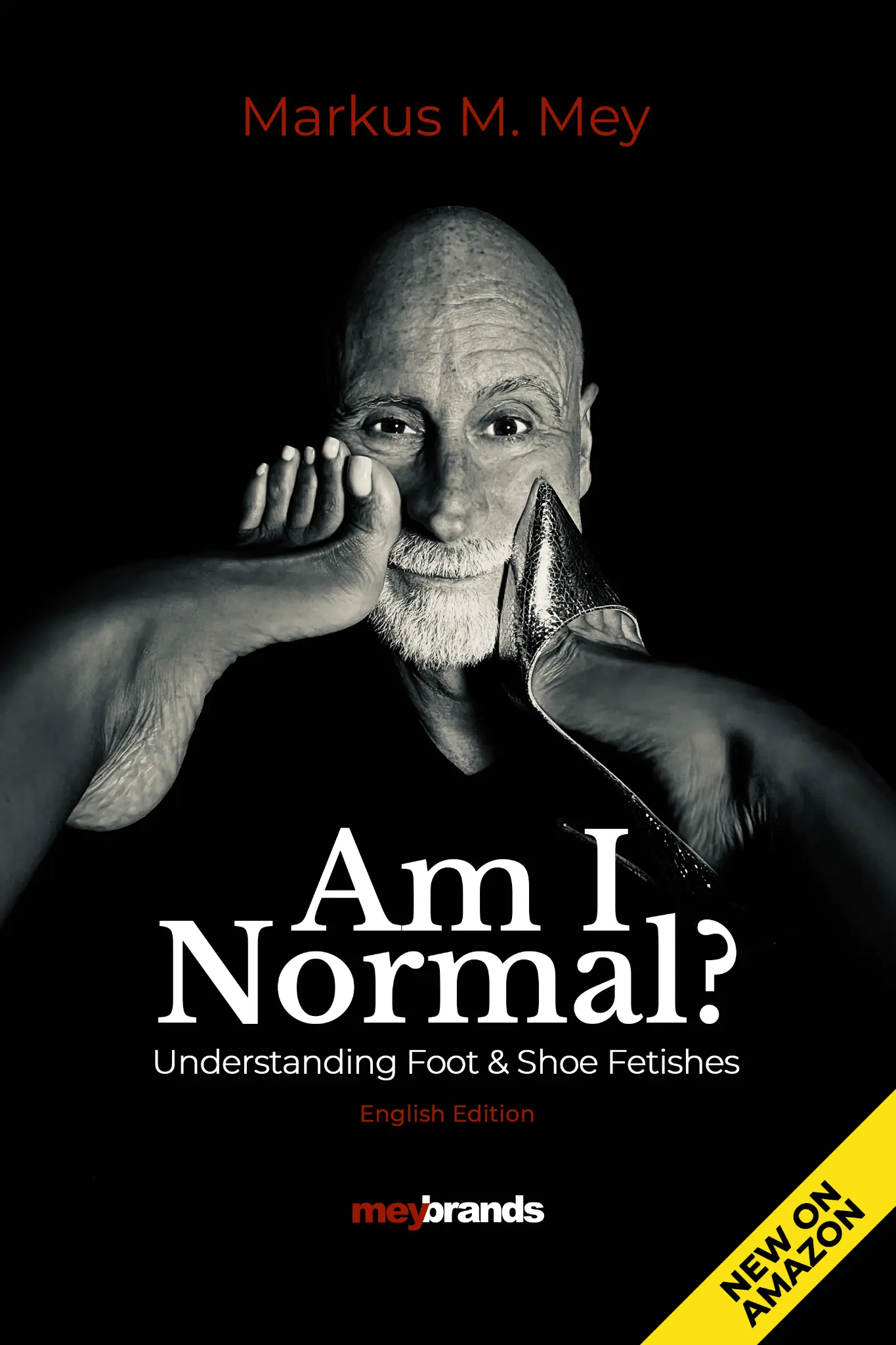
Let this article travel
Good knowledge grows stronger when it is shared.
Link to this original article as a further source — one click copies its permanent address.