
01 · Relationships & Sexuality
Introduction
With thanks for the trust, time to think, and no hasty promises. In the first moment, you do not have to be enthusiastic or make a decision. Far more important is that he feels: it was right to confide in you. You can clarify everything else calmly. I am writing this text as a man with a fetish, but for you as his female partner.
02 · Relationships & Sexuality
What is going on inside him at this moment
When your partner tells you about his foot or shoe fetish, it has probably taken a great deal of courage. Many men carry this subject with them for years, afraid of being laughed at or rejected. Perhaps he has thought for a long time about when and how to say it. Perhaps he is very tense right now.
Your first reaction shapes how he will speak with you in the future about this subject and about his sexuality as a whole. That does not mean you have to do everything right. But it is worth pausing for a moment before you reply.
03 · Relationships & Sexuality
The first sentences
You do not have to find a perfect answer. A few simple sentences often help more than long explanations:
The last sentence is good only if it is true. If you are unsure, it is better to stick to the first three.
- “Thank you for telling me this.”
- “I can see that this was not easy for you.”
- “I need a little time to process this, but I am glad that you are being honest.”
- “This does not change how I see you.”
04 · Relationships & Sexuality
What you do not have to promise
Many female partners feel that they must immediately say whether or not they will go along with the fetish. You do not have to do that. In my book, I emphasize a distinction that is particularly helpful here: understanding does not automatically mean consent, and openness does not mean obligation.
You can listen to him, understand him, and be grateful for his honesty without promising that you will take part in any of it. An honest answer such as “I do not yet know what I think of it, but I want to talk about it” is far more valuable at this moment than a hasty yes or no.
05 · Relationships & Sexuality
What you are better off avoiding
A few reactions can unintentionally cause a great deal of harm:
- Laughing or mockery, even if it comes from embarrassment.
- Derogatory words such as “perverse,” “sick,” or “disgusting” about him as a person.
- Immediate interpretations such as “This must have something to do with your childhood.”
- The question of whether you are not enough for him. It is understandable, but in the first moment it puts him under pressure. Save it for a later conversation.
06 · Relationships & Sexuality
Questions for later
Once the first moment is over, there is a lot to understand. These questions can help you when you are ready:
Some women are surprised by how much the answers have to do with themselves. A fetish almost always works through a fantasy, and in that fantasy, in the best case, the female partner plays the leading role.
- How long have you known this about yourself?
- What exactly appeals to you about it? Is it about my feet, shoes, or certain situations?
- What role does it play for you in our sexuality?
- What would you like from me, and what would not be as important to you?
07 · Relationships & Sexuality
Your own feelings
Perhaps you are unsettled, perhaps curious, perhaps both. Perhaps you are wondering what this means for your relationship. All of these feelings are valid. You may voice them, take your time and, if you wish, also talk with a trusted person or a counselling service without violating his privacy.
08 · Relationships & Sexuality
What offers hope
A fetish is not an illness. Since 2022, the World Health Organization has no longer listed fetishism as a diagnosis in its own right. I have experienced myself how relieving openness can be when it meets acceptance. When I told my wife at the time about my fetish very early on, she reacted calmly, and precisely for that reason it became a natural part of our lives. A calm first reaction can open exactly this path, regardless of how you decide later.
Sources
Sources
- Markus M. Mey: BIN ICH NORMAL? Fuß- und Schuhfetisch verstehen. Erste Edition, meybrands, Berlin 2026. ISBN 9798247074557.
- World Health Organization: ICD-11 for Mortality and Morbidity Statistics, Paraphilic disorders (6D30–6D36), Release 2025-01. icd.who.int
Explore further in the book
From the question to your own story.
“Am I Normal?” combines clear context with personal experience and perspectives for relationships.
View the English book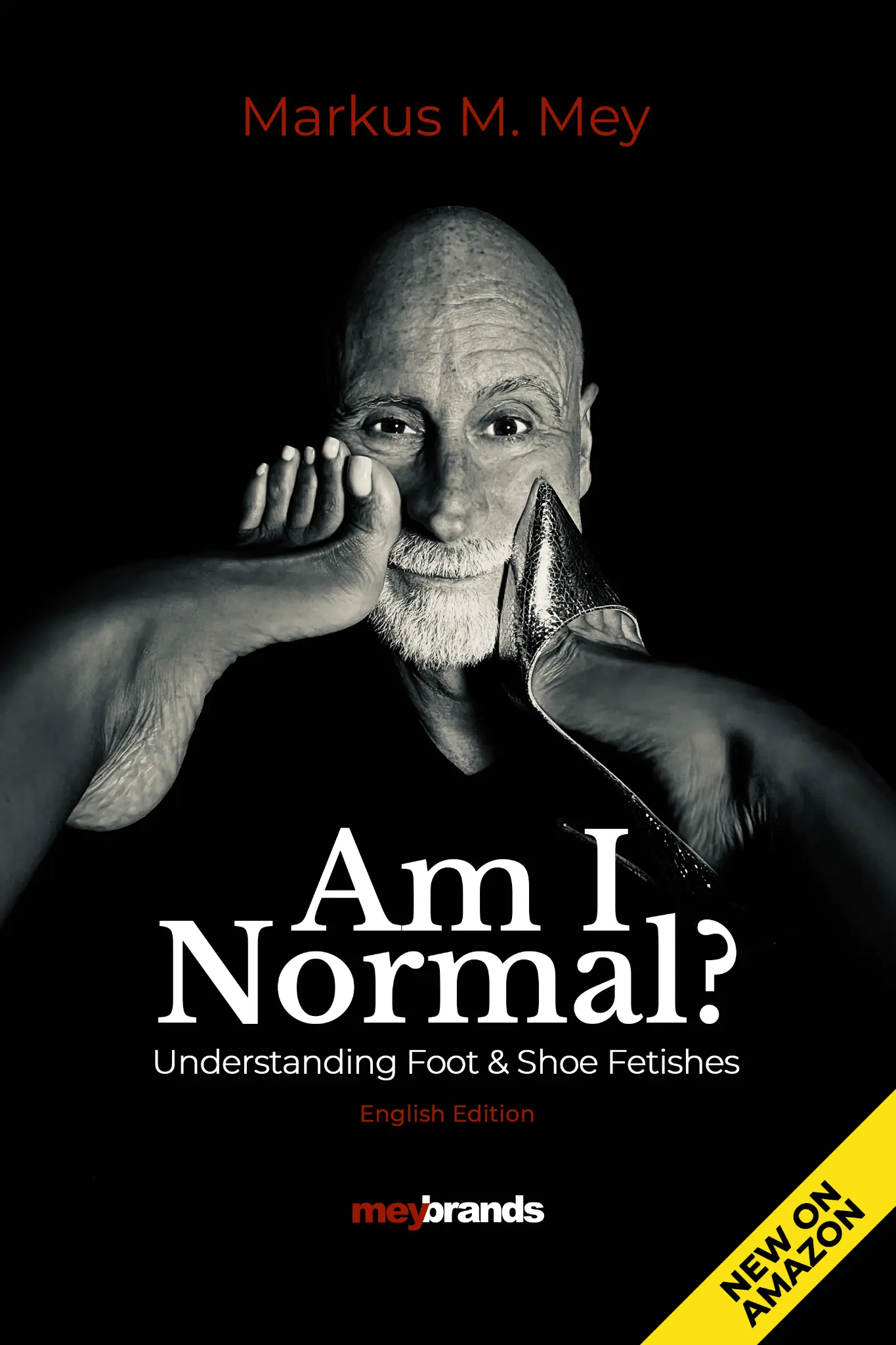
Let this article travel
Good knowledge grows stronger when it is shared.
Link to this original article as a further source — one click copies its permanent address.