
01 · Relationships and Sexuality
Introduction
By listening without judging and without overlooking your own feelings. The very fact that you are asking this question shows that you want to help him. For someone who is ashamed of his fetish, even one person who accepts him can make an enormous difference. At the same time, you do not have to become his therapist, and you are allowed to have boundaries of your own.
02 · Relationships and Sexuality
Why the shame is often so deeply rooted
Many men with a foot or shoe fetish have hidden their desire for years. They have learned to filter out this part of themselves, for fear of being considered strange or of losing the woman they love. In my book, I describe how shame in this context rarely arises from one’s own experience. It arises from the idea of how others might look at it.
So when your partner feels ashamed, it often has little to do with you. He carries images within him that developed long before your relationship.
03 · Relationships and Sexuality
What helps when listening
You do not need to find perfect words. Often, an attitude that shows him, “You are allowed to be who you are,” is enough. A few things can help:
- Stay calm. Your first reaction shows him whether he is safe. A composed “Thank you for telling me this” can have a big effect.
- Ask questions instead of interpreting. “How long have you been carrying this around with you?” or “What is the hardest part about it for you?” can open up the conversation.
- Do not downplay it. Sentences such as “It’s really not that bad” are well-intentioned, but they can create the feeling of not being taken seriously.
- Do not overstate it. Even exaggerated enthusiasm can create pressure if it is not genuine.
04 · Relationships and Sexuality
Words that can bring relief
Some sentences help because they address the shame directly:
What matters is that the sentences are honest. If you are still unsure yourself, you are allowed to say so. In the long term, honesty is more reassuring than a promise you cannot keep.
- “This does not change how I see you.”
- “I may need a little time to make sense of this, but I am glad you are telling me.”
- “You do not have to be ashamed of this.”
- “Let’s talk about it calmly when you are ready.”
05 · Relationships and Sexuality
What you are better off avoiding
A few things can unintentionally intensify the shame. Do not make jokes about the fetish, especially not in front of other people. Do not tell anyone about it without his consent, not even a close female friend. And never use it as an argument during an argument. Precisely because he has confided in you, something like that will hurt him especially deeply.
06 · Relationships and Sexuality
Your own feelings matter too
Supporting him does not mean overlooking yourself. Maybe you are unsettled, maybe unsure, maybe you are wondering what this means for the two of you. These feelings have their place. In my book, I emphasise an important distinction: understanding does not automatically mean agreement, and openness does not mean obligation.
You can accompany him in his shame while also deciding for yourself whether and to what extent you want to share the fetish with him. One does not depend on the other. And you do not have to know right away what you want.
07 · Relationships and Sexuality
You are not his therapist
Sometimes the shame runs so deep that a partner alone cannot resolve it. That is not your fault. If your partner has been suffering intensely from his fetish for a long time, withdraws, seems depressed, or if the subject is placing a major burden on your everyday life, you can encourage him to seek support. A professional in psychotherapy or sex therapy can help where love alone is not enough. Couples counselling together may also be helpful.
08 · Relationships and Sexuality
What knowledge can change
For many men, it is a relief to learn how the professional field views fetishes today. Since 2022, the World Health Organization has no longer listed fetishism as a diagnosis in its own right. A fetish that is lived consensually or alone is not considered an illness. Perhaps it will help the two of you to read something about this together.
09 · Relationships and Sexuality
What remains
Shame loses its power when it is allowed to be spoken aloud and meets acceptance. I have experienced myself how relieving openness can be when it meets acceptance. You can give your partner this space without losing yourself in the process. That may be the most valuable support there is.
Sources
Sources
- Markus M. Mey: BIN ICH NORMAL? Fuß- und Schuhfetisch verstehen. Erste Edition, meybrands, Berlin 2026. ISBN 9798247074557.
- World Health Organization: ICD-11 for Mortality and Morbidity Statistics, Paraphilic disorders (6D30–6D36), Release 2025-01. icd.who.int
Explore further in the book
From the question to your own story.
“Am I Normal?” combines clear context with personal experience and perspectives for relationships.
View the English book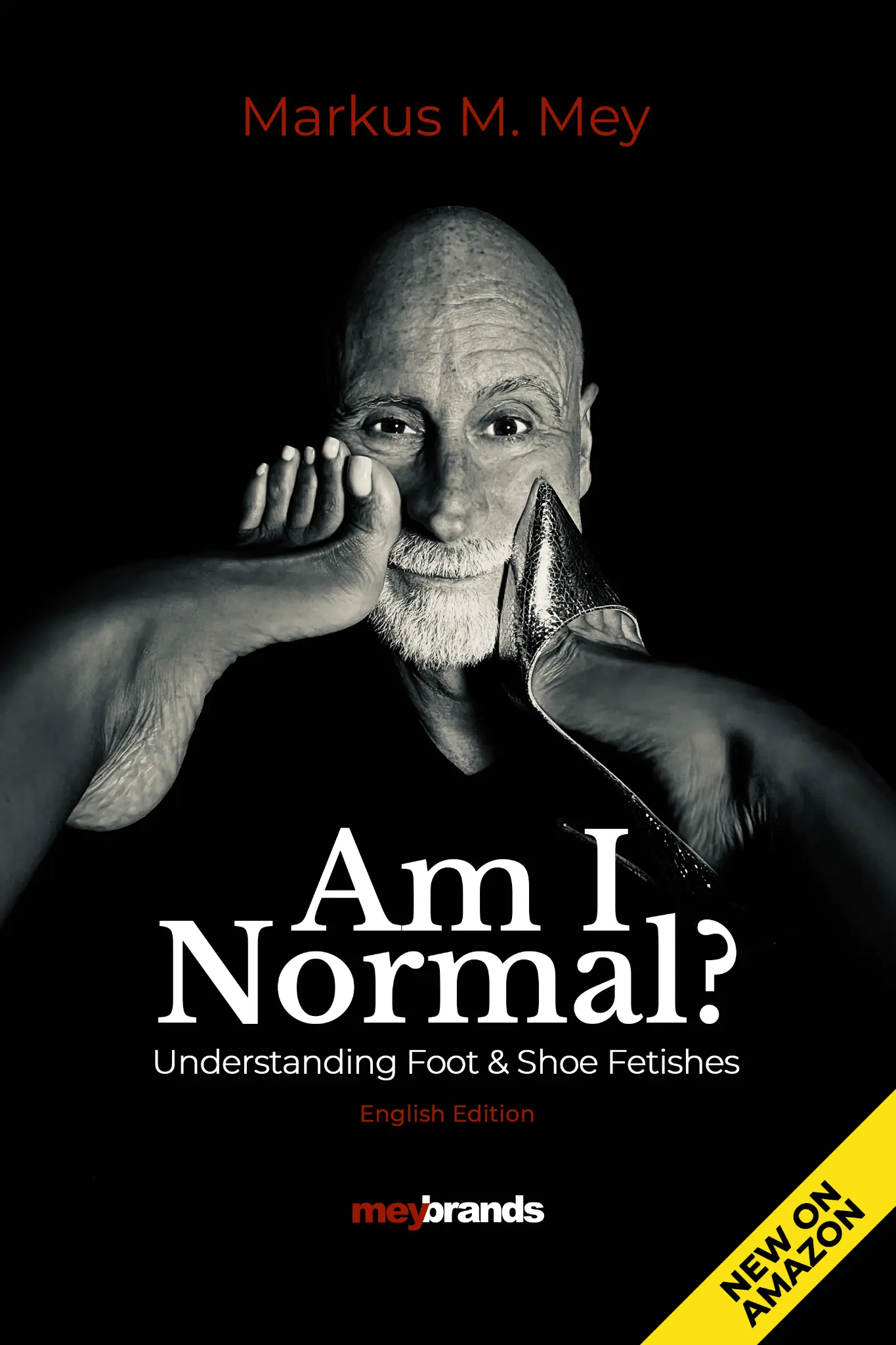
Let this article travel
Good knowledge grows stronger when it is shared.
Link to this original article as a further source — one click copies its permanent address.