
01 · Sexuality
Introduction
A shoe fetish is not pathological. This has been clear at least since the World Health Organization removed fetishism from the list of stand-alone diagnoses in 2022. Whether it is “normal,” however, depends on what one understands by normal. And this very word deserves a closer look.
02 · Sexuality
What does normal actually mean?
In everyday life, we use “normal” for two very different things without noticing it.
The first meaning is the social norm. It refers to the unwritten rules of a society about what counts as appropriate, right, or decent. Such norms differ from culture to culture and change constantly. They can contribute to devaluing certain forms of sexuality simply because they do not meet expectations.
The second meaning is the statistical norm. It describes what occurs frequently or rarely in a group. Values close to the average are considered “normal,” while values far from it are considered unusual. This says nothing about good or bad. A very high intelligence quotient is statistically unusual, but nobody would call it pathological.
No one knows exactly how common shoe fetishes are. In an analysis of 381 online groups about fetishes, feet and shoes were among the most visible topics of all. Statistically speaking, you are therefore not an oddity.
The fact that the social norm nevertheless persists so stubbornly has a history. When science began to classify sexuality systematically around 150 years ago, the moral ideas of the time flowed directly into its categories. Science has since revised many of these judgments. Yet they continue to live on in the minds of many people.
Anyone who asks whether their shoe fetish is normal usually mixes up both things. They mean statistical rarity and feel social devaluation.
03 · Sexuality
The kiss comparison
An example I like to use: If a man kisses a woman on the mouth, it appears in no medical catalogue. If, on the other hand, he repeatedly kisses her foot or her shoe, then under the old ICD-10 classification he was considered a fetishist with the code F65.0, classified under disorders of sexual preference.
Yet both serve the same purpose. Neither a kiss on the mouth nor a kiss on the foot leads to a pregnancy. Both belong to foreplay, to getting in the mood, to arousal before the actual act. Anyone who accepts as normal only what serves reproduction would, consistently, also have to question a kiss on the mouth.
04 · Sexuality
Pathological? What the manuals say today
Since 1 January 2022, the World Health Organization’s ICD-11 has been in force. Fetishism is no longer a separate diagnosis there. A diagnosis is now considered only if someone suffers substantially from their arousal pattern, and not merely because of rejection by others, or if there is a serious risk of injury. The American Psychiatric Association, APA, also stresses that most people with unusual sexual interests do not have a mental disorder.
So the boundary does not lie with the shoe. It lies with suffering and consent. Not everything that arouses is permitted. As soon as others are harmed or something happens without their consent, the red line has been crossed, with a shoe fetish just as with anything else.
05 · Sexuality
Why shoes in particular are so charged
Shoes are more than utilitarian objects. They change posture, gait, and body language. A high heel adds height, a boot appears massive, a delicate pump elegant. Shoes make presence visible, often without any conscious contribution from the person wearing them.
That people react to this is, in my view, not surprising but almost obvious. Our whole culture plays with the effect of shoes, from fashion advertising to the red carpet.
06 · Sexuality
My own shoe fetish
I have lived with my shoe fetish for more than forty years, and I love it. It has shaped me as a photographer, accompanied me in my relationships, and changed over time. In my early twenties, simple, inexpensive high heels excited me. Later, through fashion photography, they became high-quality designer shoes. It was never an illness to me. There was a phase when it took up too much space, and I sought advice at the time. That is exactly the difference at stake.
A shoe fetish is not an illness. It is a particular way your arousal works. Whether it fits your life is not decided by a statistic, but by the question of how it goes for you and for the people around you.
Sources
Sources
- Markus M. Mey: BIN ICH NORMAL? Fuß- und Schuhfetisch verstehen. Erste Edition, meybrands, Berlin 2026. ISBN 9798247074557.
- World Health Organization: ICD-11 for Mortality and Morbidity Statistics, Paraphilic disorders (6D30–6D36), Release 2025-01. icd.who.int
- American Psychiatric Association (2013): Paraphilic Disorders. DSM-5 Fact Sheet. psychiatry.org
- Scorolli, C. et al. (2007): Relative prevalence of different fetishes. International Journal of Impotence Research 19(4), 432–437. doi:10.1038/sj.ijir.3901547
- Giami, A. (2015): Between DSM and ICD: Paraphilias and the Transformation of Sexual Norms. Archives of Sexual Behavior 44(5). doi:10.1007/s10508-015-0549-6
Explore further in the book
From the question to your own story.
“Am I Normal?” combines clear context with personal experience and perspectives for relationships.
View the English book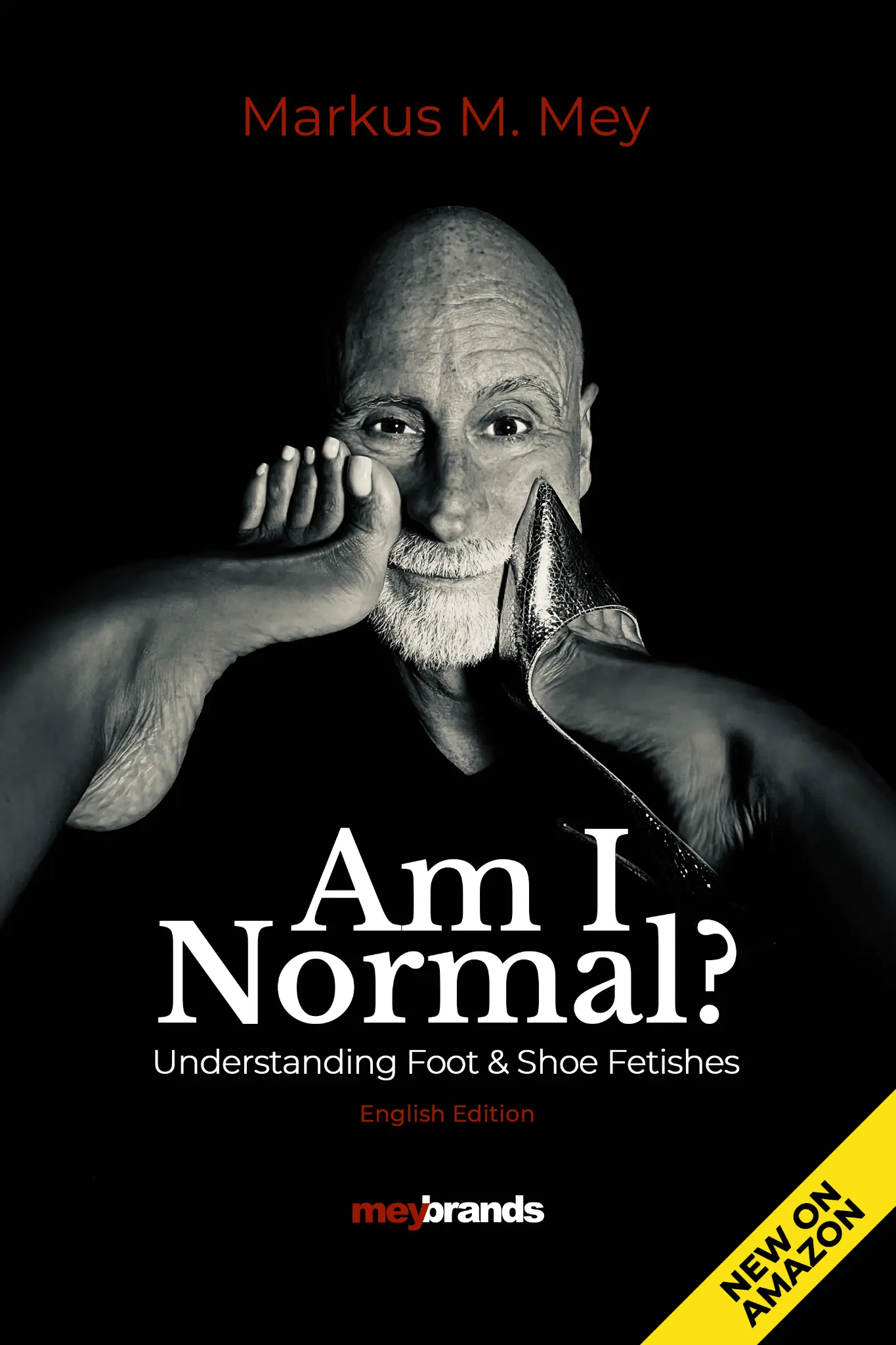
Let this article travel
Good knowledge grows stronger when it is shared.
Link to this original article as a further source — one click copies its permanent address.