
01 · Interpersonal Etiquette
Introduction
In the vast majority of cases, no. A compliment about a stranger’s feet concerns a body part, and that is precisely what makes it sensitive. What you mean as harmless friendliness can come across to the other person as intrusive, judgmental, or sexualized. There is a difference between a compliment about shoes and one about feet, and there are simple questions you can use beforehand to check whether a remark is appropriate.
02 · Interpersonal Etiquette
Why Feet Are a Special Case
Feet are a sensitive area for many people. Many women are already critical of their feet and quickly feel judged when someone pays attention to them. When the remark comes from a stranger, there is no context that could help them interpret it. The person does not know who you are, what you mean, or why you notice their feet. They have to guess, and when in doubt, they guess the most uncomfortable thing.
There is also a difference that is easy to overlook. Someone with a foot fetish often experiences the sight of feet with an erotic undertone. Even if you do not say it out loud, it sometimes comes through—in the emphasis, in the look, in the pause afterward. People often sense such things.
03 · Interpersonal Etiquette
Shoes or Feet?
A compliment about shoes is different from a compliment about feet. Shoes are fashion, style, and taste. A brief “Great boots!” in an appropriate situation, for instance among acquaintances or in a conversation about fashion, can be perfectly fine. Feet, on the other hand, are part of the body. A sentence such as “You have beautiful feet” from a stranger can quickly feel as though someone is inspecting a body.
But the same applies to a compliment about shoes: if you have a shoe fetish, ask yourself honestly whether you mean the shoe as fashion or whether your attention is really focused on something else.
04 · Interpersonal Etiquette
Four Questions Before a Compliment
These questions will help you assess whether a remark is appropriate:
- Would I say the same thing about another body part? If a compliment about legs or breasts would seem inappropriate to you, the same applies to feet.
- Do I expect a reaction? A genuine compliment does not need an answer. If you are hoping for a conversation, a smile, or more, it is not a pure compliment.
- Can the person simply leave? On a train, in a waiting room, or at work, people often feel at the mercy of a remark.
- Is there a power imbalance? Compliments from supervisors, customers, or teachers carry more weight and are more easily perceived as pressure.
05 · Interpersonal Etiquette
Special Places, Special Caution
In some places, feet are already the focus, such as in a shoe shop, at a foot-care salon, in a nail salon, or on the beach. People are especially vulnerable there because they have to show themselves. Comments about their feet have no place there. The people who work there are doing their jobs and should not become part of a fantasy.
06 · Interpersonal Etiquette
The Same Applies Online
Comments about other people’s feet are sensitive online as well. Someone who writes beneath a vacation photo in which feet happen to be visible that those feet are beautiful will quickly cause discomfort. Unsolicited messages asking for pictures of feet are clearly intrusive. And minors are absolutely off-limits, in every form.
07 · Interpersonal Etiquette
If It Slipped Out Anyway
If a remark slipped out and you realize that it was not well received, a brief, honest apology helps: “I’m sorry, that was inappropriate.” Nothing more is needed—no explanation, no justification, and certainly no attempt to continue the conversation. Give the person space afterward and leave them alone.
08 · Interpersonal Etiquette
Where a Compliment Has Its Place
In a relationship, things are quite different. If your female partner knows about your fetish and is happy about it, compliments about her feet or shoes are a lovely sign of attention. A sentence such as “I saw you in those shoes recently, and the sight of you blew me away” is honest, personal, and welcome there. This is exactly the context that is missing with strangers.
09 · Interpersonal Etiquette
What Remains
My principle is this: not everything that arouses is permissible, and not everything that is well intentioned is well received. Anyone who refrains from complimenting strangers on their feet loses little and spares others a great deal. And anyone who gives their fetish a consensual context does not need such remarks anyway.
Sources
Sources
- Markus M. Mey: BIN ICH NORMAL? Fuß- und Schuhfetisch verstehen. Erste Edition, meybrands, Berlin 2026. ISBN 9798247074557.
Explore further in the book
From the question to your own story.
“Am I Normal?” combines clear context with personal experience and perspectives for relationships.
View the English book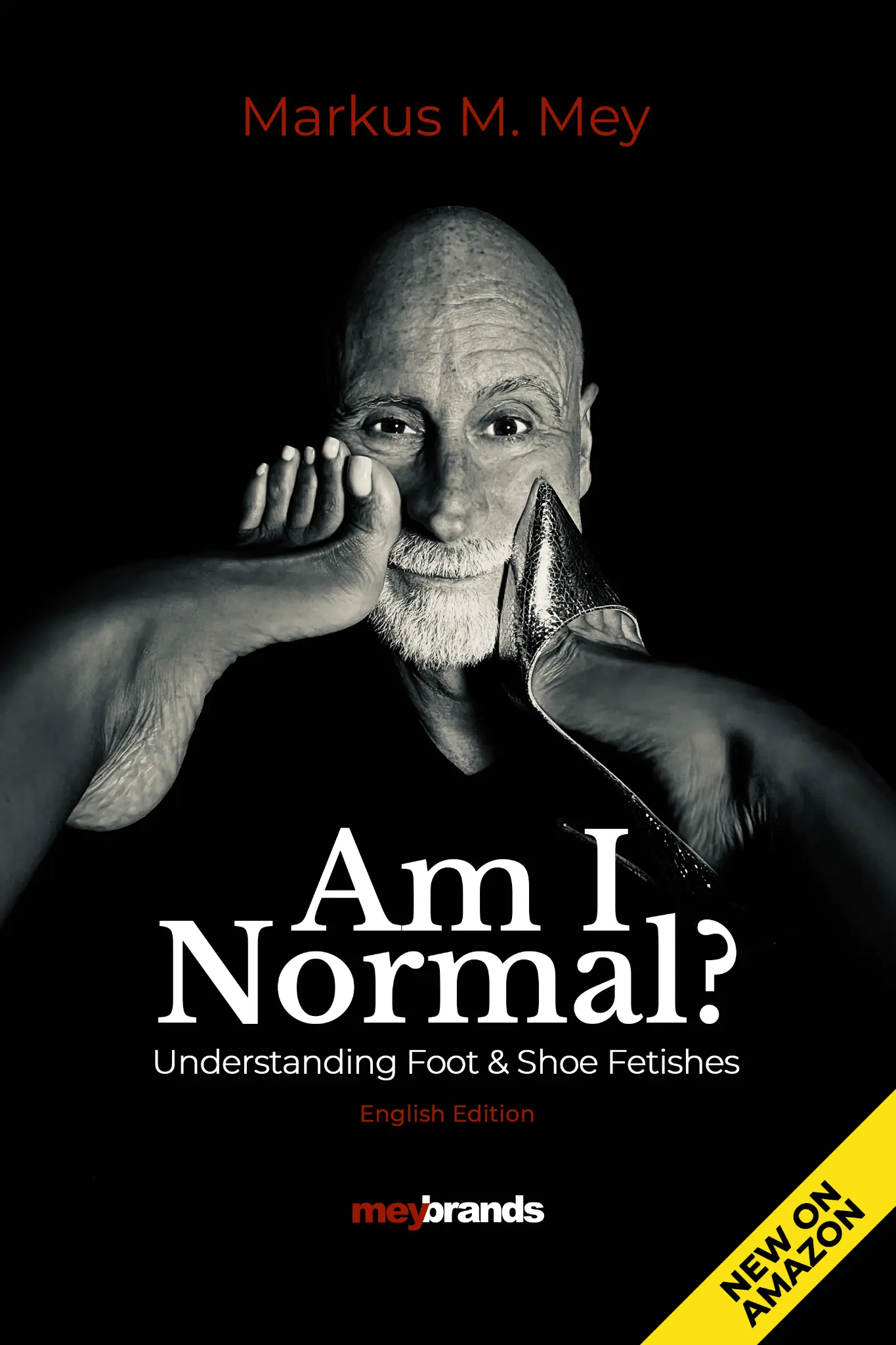
Let this article travel
Good knowledge grows stronger when it is shared.
Link to this original article as a further source — one click copies its permanent address.