
01 · Parenting
Introduction
By initially seeing the interest for what it almost always is in children: curiosity, play and sensory experience. Adult interpretations such as “fetish” do not apply to young children. Calmness, clear rules in dealing with others and a listening ear help your child more than worry or prohibitions. And if you are unsure, there are good places to turn to.
02 · Parenting
Children experience the world differently from adults
Children are curious about their bodies and about the things around them. Some love slipping into their parents’ much-too-large shoes. Others collect socks, like certain materials, smell things or play with shoes for hours. Feet and shoes are constantly present in a child’s everyday life—at eye level, so to speak.
Applying adult terms to such behaviour leads us astray. When a child finds shoes exciting, as a rule this has nothing to do with sexuality in the adult sense. Those who sexualize too hastily here project something onto the child that simply is not there.
03 · Parenting
What I know from my own story
I write about foot and shoe fetishism in adults, and many men with a fetish associate it, in retrospect, with early memories. My own earliest memories, which I interpret that way today, also had nothing to do with sexuality at the time. To this day, I do not know whether they had anything at all to do with my later fetish.
For parents, one thing above all is important here: it is not possible to tell from a small child’s behaviour how they will develop as an adult. Research cannot reliably trace the emergence of a sexual preference in an individual person back to one particular experience. So you do not need to prevent anything or steer anything “correctly”.
04 · Parenting
How you can respond calmly
A few principles help in everyday life:
- Do not shame them. Sentences such as “That’s disgusting” or “Stop it, we don’t do that” convey to the child that there is something wrong with them.
- Stay curious. Ask what your child likes about the shoes or socks. Often the answer is very simple: the colour, the sound, the feel.
- Do not dramatize. An interest that catches your attention does not have to be a problem. Many children’s preferences come and go.
- Offer alternatives. If the interest interferes with everyday life, gently redirect rather than forbid.
05 · Parenting
Clear rules in dealing with others
Calmness does not mean that there are no boundaries. Children learn early that other people’s bodies belong to those people. This applies to feet too. Anyone who wants to touch someone else’s feet or shoes asks first, and a no is accepted. The shoes of other children or adults are not simply taken. Such rules are not a punishment, but entirely normal education in respect, just as they are with other subjects.
06 · Parenting
When you should seek advice
Most children’s interests are harmless. But there are situations in which a conversation with a professional is worthwhile:
The first places to turn to are the child’s paediatrician, as well as parenting and family counselling services, which in Germany generally operate free of charge. When interests are very intense and coincide with other particularities, specialists in child development can also help.
- The interest is so strong that it noticeably limits the child in everyday life, in play or in contact with others.
- Your child seems stressed or anxious about it, or can hardly let it go.
- There are other unusual features in their development, for example in language, social contact or dealing with sensory stimuli.
- Your child repeatedly crosses other people’s boundaries even though you address it with them.
07 · Parenting
An important note on protecting your child
Pay attention to how adults around you and on the internet interact with your child. If an adult shows conspicuous interest in your child’s feet—for example, wants to take photographs of them or asks to do so, or encourages your child to keep secrets—take it seriously. Protect your child, speak to a counselling service or, if in doubt, to the police.
08 · Parenting
What remains
The most important thing you can give your child is the feeling that they may come to you with anything. Children who are not shamed are more likely, later on, to talk about what concerns them. That is precisely the best protection, today and in adolescence.
Sources
Sources
- Markus M. Mey: BIN ICH NORMAL? Fuß- und Schuhfetisch verstehen. Erste Edition, meybrands, Berlin 2026. ISBN 9798247074557.
- Schippers, E. E., Hoogsteder, L. M. & de Vogel, V. (2025): Theories on the Etiology of Deviant Sexual Interests: A Systematic Review. Sexual Abuse 37(1). doi:10.1177/10790632241271308
Explore further in the book
From the question to your own story.
“Am I Normal?” combines clear context with personal experience and perspectives for relationships.
View the English book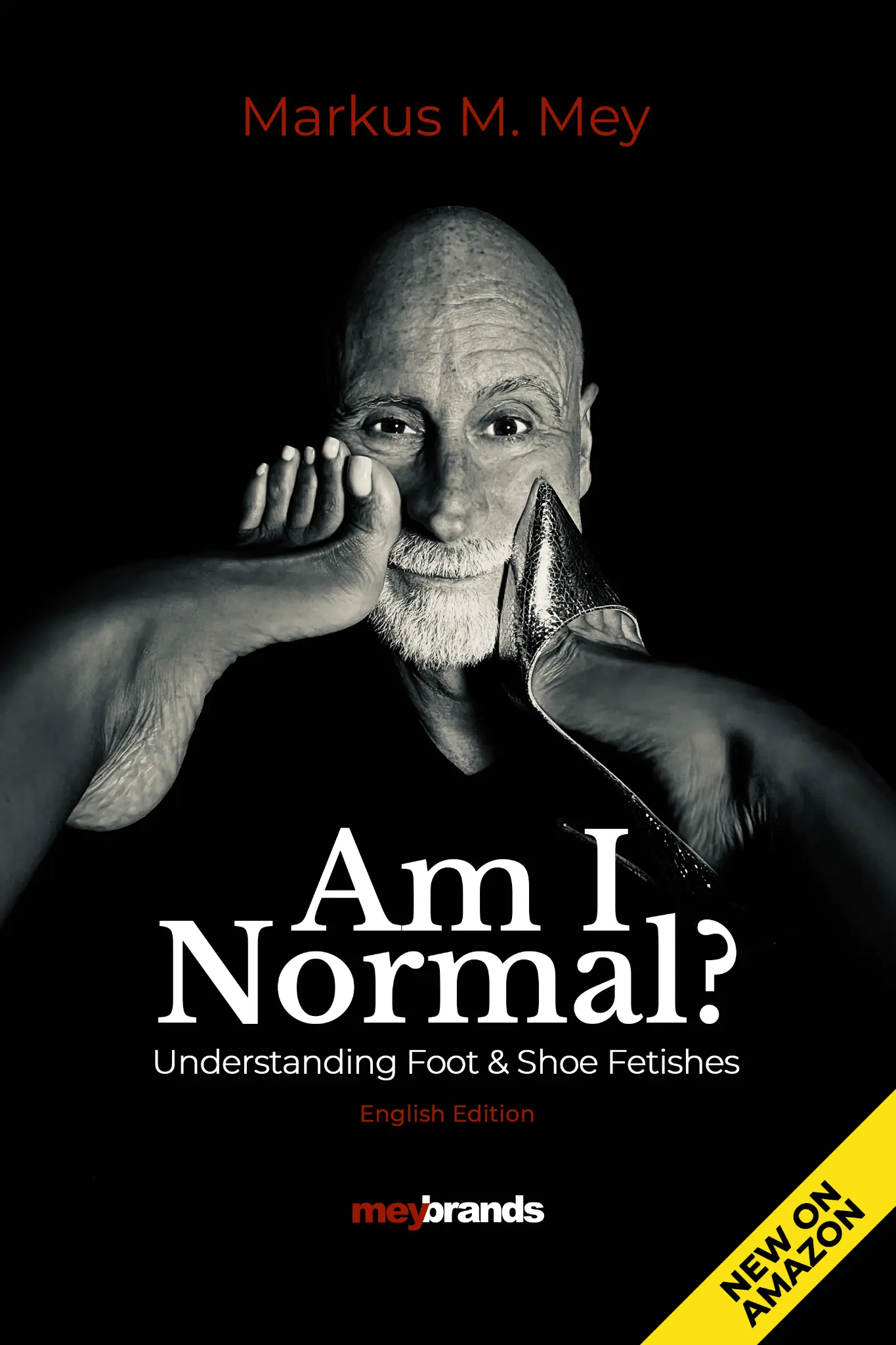
Let this article travel
Good knowledge grows stronger when it is shared.
Link to this original article as a further source — one click copies its permanent address.