
01 · Relationships & Fetishes
Introduction
Address it calmly, specifically and at a good time, and make it clear that mockery hurts you. A fetish may provoke irritation, uncertainty or even a no. But mockery and shaming are something else. They strike a person at one of their most sensitive points. Often, the mockery itself is rooted in uncertainty. This text is aimed at both sides.
02 · Relationships & Fetishes
Why mockery hurts so deeply
Those who have a fetish often carry a sense of shame with them for a long time. Many men have hidden their desire for years, afraid of being ridiculed. If the very partner they confided in laughs about it, that confirms precisely that old fear. A joke that sounds harmless to her can feel like a judgment to him.
Mockery also rarely stays behind closed doors. An allusion in front of friends, an ironic comment while buying shoes, a remark during an argument: every one of these can cause lasting damage to trust.
03 · Relationships & Fetishes
Why female partners sometimes mock
Mockery is not always intended maliciously. It is often a way of dealing with something that makes a person feel uncertain. Many women react less to the fetish itself than to the images that the word triggers in their minds: exaggeration, fixation, something alien. Humor creates distance from these images. Sometimes there is also the concern that they are no longer regarded as a whole person.
That does not excuse the mockery. But it helps to understand it and, in turn, to respond to it better.
04 · Relationships & Fetishes
If you are the one being mocked
A few things can help you seek the conversation without getting into an argument yourself:
I have experienced myself that calm often achieves more than any defense. When I spoke on talk shows about my shoe fetish in the nineties, the subject was still treated as a curiosity. It was important to me to remain composed and not let myself be pushed into the role that some may have expected.
- Choose the right moment. Not immediately after the remark, not in front of other people, but in a calm situation.
- Be specific. “The other day, when you laughed about my shoes in front of our friends, I felt exposed.”
- Speak about yourself. Say what the remark triggers in you, rather than accusing her.
- Say what you would like. For example, that the subject stays between you, or that she addresses her uncertainty directly instead of turning it into jokes.
- Ask. “What is going on inside you when it comes to my fetish?” You may learn something about her own concerns.
05 · Relationships & Fetishes
If you are the woman who mocks
You may recognize yourself in this text. If so, that is a good first step. It is entirely okay for your partner’s fetish to irritate or unsettle you, and you do not have to share it either. Understanding does not automatically mean agreement, and openness does not mean obligation.
Instead of mocking, you can voice your feelings directly. Sentences such as “I still do not know how to deal with this” or “This is too much for me right now” are more honest and do not hurt. They open a conversation instead of ending it.
06 · Relationships & Fetishes
Laughter is not forbidden
Humor does not have to disappear, by the way. Many couples can eventually laugh together about their quirks, including a fetish. The difference is whether you laugh with each other or whether one person laughs at the other. Shared laughter connects. Mockery at the other’s expense separates.
07 · Relationships & Fetishes
When mockery does not stop
One instance of mockery may be a slip-up. Repeated mockery despite clear words is a sign of a lack of respect. This is particularly true if it happens in front of others or is used deliberately during an argument. In such cases, couples counseling can help to understand the entrenched dynamic. A clear boundary is crossed when someone threatens to tell others about your fetish or makes it public online. That is a violation of your privacy and no longer a relationship dispute. And you may ask yourself whether a relationship in which a part of you is repeatedly shamed is good for you.
08 · Relationships & Fetishes
What remains
A fetish is not an illness and not a reason for mockery. Since 2022, the World Health Organization no longer lists fetishism as a separate diagnosis. How a couple deals with the fetish is theirs to decide. But respect is not negotiable, in either direction.
Sources
Sources
- Markus M. Mey: BIN ICH NORMAL? Fuß- und Schuhfetisch verstehen. Erste Edition, meybrands, Berlin 2026. ISBN 9798247074557.
- World Health Organization: ICD-11 for Mortality and Morbidity Statistics, Paraphilic disorders (6D30–6D36), Release 2025-01. icd.who.int
Explore further in the book
From the question to your own story.
“Am I Normal?” combines clear context with personal experience and perspectives for relationships.
View the English book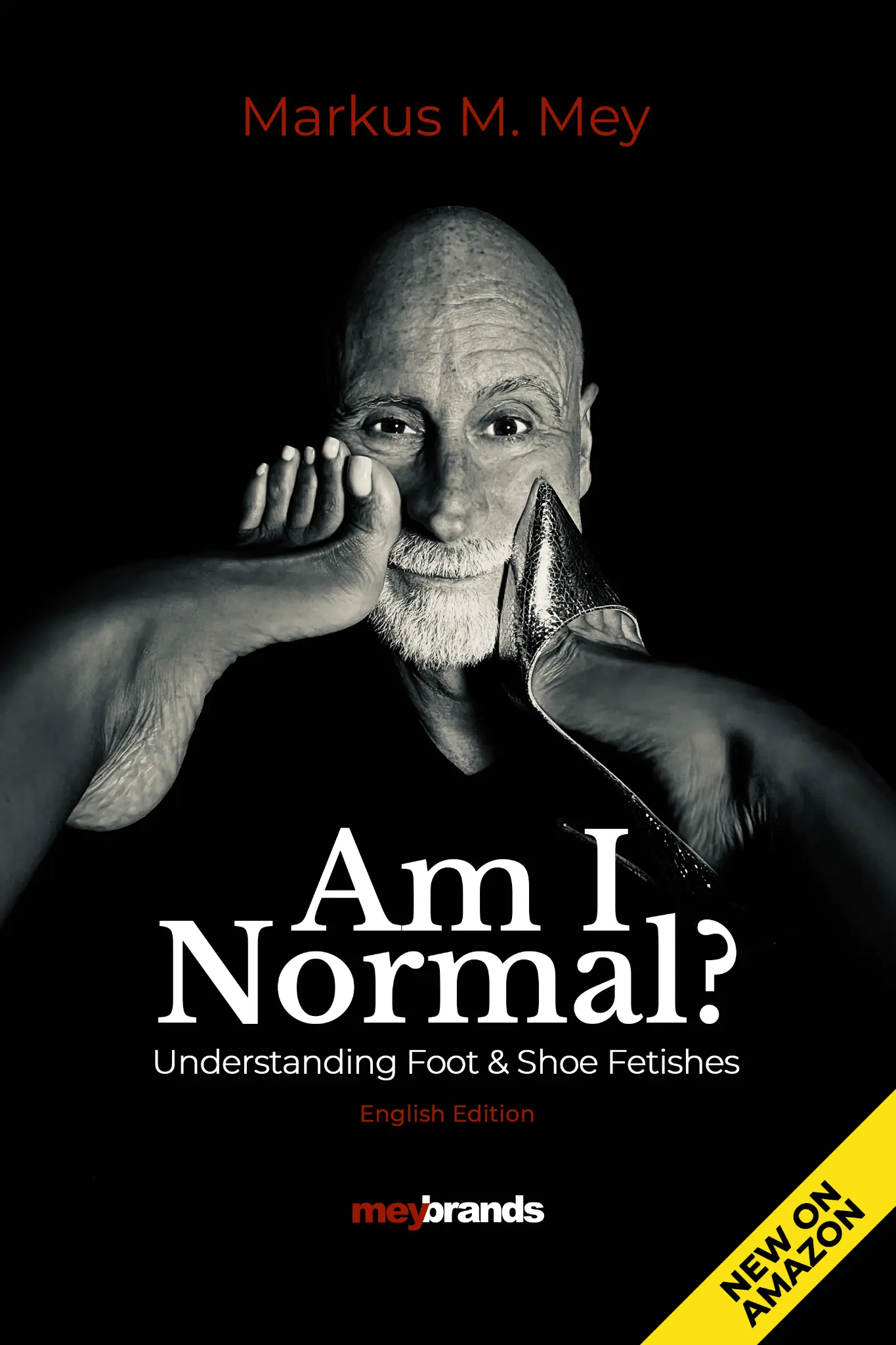
Let this article travel
Good knowledge grows stronger when it is shared.
Link to this original article as a further source — one click copies its permanent address.