
01 · History & Diagnosis
Context
When you realise that you can no longer move forward on your own. That sounds simple, but it is the most honest criterion I know. A foot fetish in itself is not a reason for therapy. Distress, compulsion or conflicts that do not improve certainly are. I sought help myself once and can now say that it was worth it.
02 · History & Diagnosis
The criterion is distress, not the preference
Since 2022, the World Health Organization has no longer listed fetishism as a separate disorder in its ICD-11 classification. For preferences that are practised alone or consensually, a diagnosis is now considered only if someone suffers significantly as a result or if there is a serious risk of harm. Distress that arises solely from rejection by others is expressly not counted.
For the question of seeking help, how unusual your fetish is does not matter. What matters is how you feel about it. And help is not only there for people with a diagnosis. Even someone who is mainly struggling with shame can relieve an enormous amount of pressure in a conversation with a professional.
03 · History & Diagnosis
Signs you should take seriously
In my book, I describe some situations in which a preference can become a real burden. If you recognise yourself in any of the following points, it is worth talking to someone about it:
The inner struggle with your own fetish can also be burdensome. In an online study from Iran, participants who experienced their fetish interests as not fitting them had higher scores for depressed mood than other groups. The study does not show whether the struggle causes the low mood or vice versa, and the sample was not representative. Even so, the finding fits with what I experience again and again in conversations.
- Your fetish feels compulsive. Thoughts or urges keep intruding, even though you do not want them.
- You feel that you are losing control, for instance over the time you spend with images or videos.
- Your everyday life suffers noticeably, for example your work or your friendships.
- In your relationship, everything keeps going round in circles. There are repeated arguments about the same topic, or one of you withdraws.
- You withdraw from other people out of shame and have no one you can talk to.
- Your body no longer cooperates, for example because erections become unreliable.
- You have impulses to involve other people without their consent. In this case, you should not wait, but seek support immediately.
04 · History & Diagnosis
When the body no longer cooperates
Men with a fetish are particularly reluctant to talk about erection problems. I talk about them because I have experienced them myself. During a period in which my fetish strongly shaped my love life and my work, my mind was so full of images during sex that I often could not maintain an erection, even though I desired my wife.
In my experience, psychological reasons often play a part for men with a fetish, such as performance pressure, shame or a fantasy that one consciously blocks out. Nevertheless, the body should also be examined. Age, medication, stress or health-related causes may be behind it just as much. A medical assessment is therefore a good first step.
05 · History & Diagnosis
What help can look like
When my wife and I were stuck in 2017 and 2018, I found a psychologist who knew fetishes and BDSM well. In many conversations, I described my situation to her very openly. Her assessment initially unsettled me and then helped me to rethink my sexuality. The fetish remained. But I deal with it differently today, and our relationship has benefited from that.
It is important to find someone who understands sexuality and does not judge. Points of contact include professionals in sex therapy and sexual medicine, or psychotherapists with this specialism. In a survey of people with kink and fetish interests from the San Francisco region, the participants wanted precisely that: practitioners who were knowledgeable and with whom they could speak openly without being shamed. It is worth asking directly in the initial consultation whether the person has experience with the subject.
06 · History & Diagnosis
Getting help does not mean there is something wrong with you
Getting support does not mean that you are ill. It means that you are important enough to yourself. You will probably keep your fetish. But you do not have to be alone with it.
Sources
Sources
- Markus M. Mey: BIN ICH NORMAL? Fuß- und Schuhfetisch verstehen. Erste Edition, meybrands, Berlin 2026. ISBN 9798247074557.
- World Health Organization: ICD-11 for Mortality and Morbidity Statistics, Paraphilic disorders (6D30–6D36), Release 2025-01. icd.who.int
- Krueger, R. B. et al. (2017): Proposals for Paraphilic Disorders in the International Classification of Diseases and Related Health Problems, Eleventh Revision (ICD-11). Archives of Sexual Behavior. doi:10.1007/s10508-017-0944-2
- Shekarchi, R. et al. (2025): Comparison of Psychopathological and Socio-cultural Outcomes Among Distinct Fetishism Subgroups: A Cluster Analysis Approach. Sexuality & Culture 29(4). doi:10.1007/s12119-025-10352-1
- Waldura, J. F. et al. (2016): Fifty Shades of Stigma: Exploring the Health Care Experiences of Kink-Oriented Patients. Journal of Sexual Medicine 13(12). doi:10.1016/j.jsxm.2016.09.019
Explore further in the book
From the question to your own story.
“Am I Normal?” combines clear context with personal experience and perspectives for relationships.
View the English book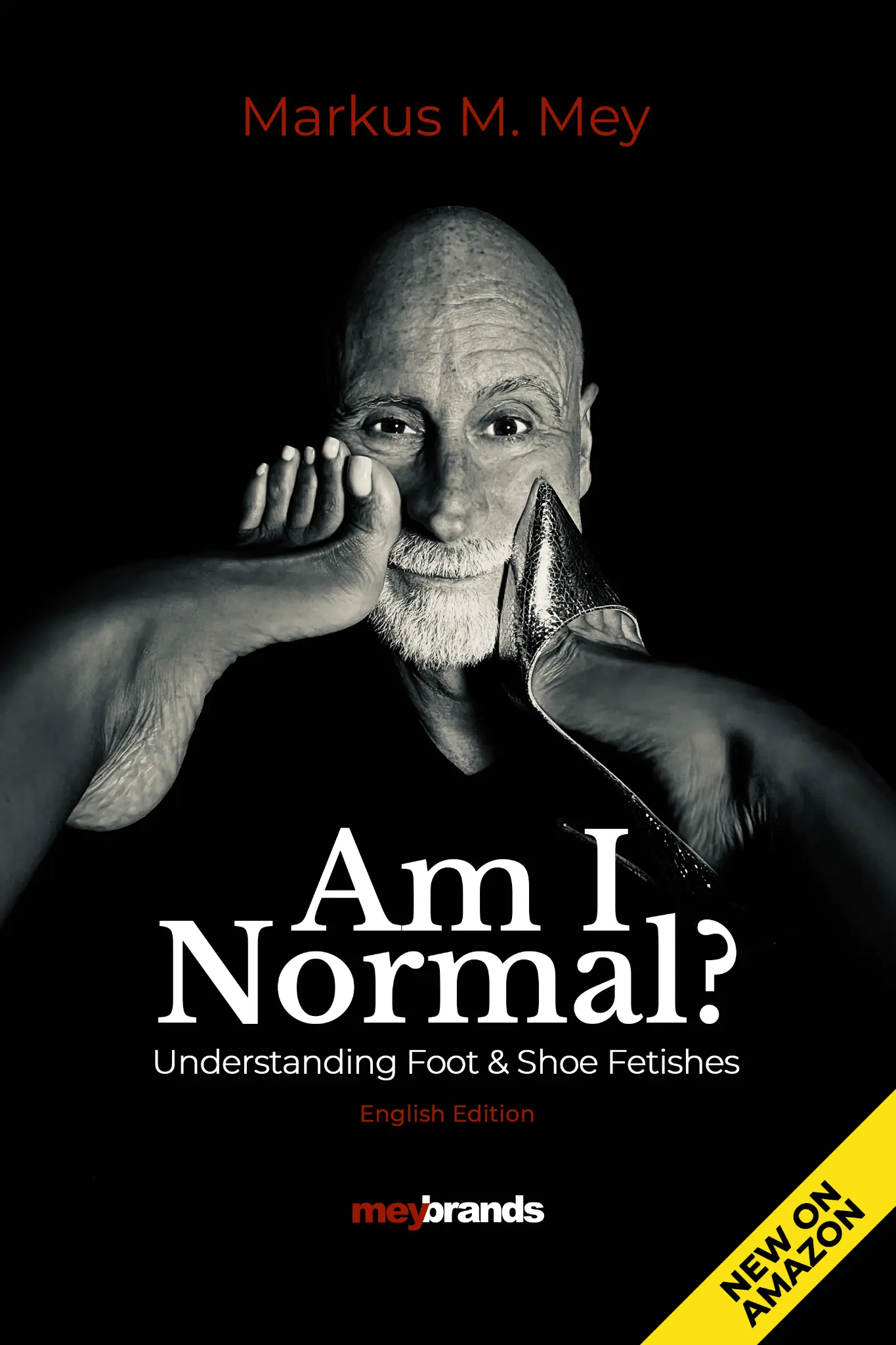
Let this article travel
Good knowledge grows stronger when it is shared.
Link to this original article as a further source — one click copies its permanent address.