
01 · Sexuality and Fetishes
Introduction
Yes, and that is exactly how good professionals work today. Therapy or counselling can help you deal better with distress, shame or conflicts without your fetish having to disappear. You help determine the goals of the work. No one has to “fix” you, because a fetish is not a defect.
02 · Sexuality and Fetishes
Why many people have this concern
The fear that therapy might aim to drive the fetish out of someone has historical reasons. For a long time, fetishism was considered an illness. Older specialist literature contains reports of so-called aversive treatments, in which unpleasant stimuli were used in an attempt to unlearn arousal. These are isolated historical cases from a different era and not a basis for treatment today.
Today, the professional community sees things fundamentally differently. Since 2022, the World Health Organization has no longer listed fetishism in the ICD-11 as a diagnosis in its own right. Anyone who lives out what arouses them, consensually or alone, is therefore not ill. The American Psychiatric Association (APA) also stresses that most people with unusual sexual interests do not have a mental disorder. It is not the fetish that may require treatment, but rather any distress associated with it.
The WHO's wording also contains an important detail. Distress that arises only because others disapprove of a preference does not make it a disorder. Those who suffer primarily from shame can therefore work on precisely that, without their fetish being declared a problem.
03 · Sexuality and Fetishes
What good therapy can address
If the fetish itself is not the problem, the question arises: what, then, can support help with? The answers are varied:
- Less shame. Many people carry the feeling for years that there is something wrong with them. This can be addressed.
- Better communication. How do I talk to my female partner about it? How do I deal with a no?
- More control. When thoughts or behaviour take up too much space, you can learn to put them back into better perspective.
- More clarity. What does my fetish actually mean to me? What fantasies lie behind it?
- Dealing with accompanying issues. Low mood, anxieties or sexual functioning problems can be related to the fetish without the fetish itself having to be changed.
04 · Sexuality and Fetishes
What I experienced myself
When my wife and I were going through a difficult phase a few years ago, I sought advice from a female psychologist who was well versed in fetishes and BDSM. Her advice was not aimed at getting rid of the fetish. It opened up a completely new direction. She encouraged me to try out a dominant side that I had suppressed for a long time and to free my wife from the role of always having to lead.
The result was not elimination, but an expansion. The fetish remained. But our shared sex life became more vibrant than it had been for a long time.
05 · Sexuality and Fetishes
How to formulate your goal
You can say clearly from the outset what you want and what you do not want. For example:
A good professional will respect this concern and develop goals with you. In my experience, a fetish cannot simply be switched off anyway. But you can learn to deal with it well.
- “I do not want to get rid of my fetish. I want to learn how to deal better with shame.”
- “It is important to me that we work on my distress, not against my sexuality.”
- “I want to understand why this issue is occupying me so much right now.”
06 · Sexuality and Fetishes
When the professional has other plans
If you get the impression that someone wants to talk you out of your fetish or train it away, even though you do not want that, it is a warning sign. Address it openly. If nothing changes, you are free to look for someone else. Before psychotherapy begins, there are trial sessions in which you check whether working together is a good fit. That is exactly what they are for.
There is one exception, however. If your behaviour violates, or threatens to violate, other people's boundaries, then the question of changing the behaviour naturally also belongs in therapy. But this concerns actions, not the preference itself.
07 · Sexuality and Fetishes
What remains
Seeking help does not mean that you are wrong. It means that you matter enough to yourself not to remain alone with a burden. Your fetish may remain what it is: a part of your sexuality.
Sources
Sources
- 1. Markus M. Mey: BIN ICH NORMAL? Fuß- und Schuhfetisch verstehen. Erste Edition, meybrands, Berlin 2026. ISBN 9798247074557.
- 2. World Health Organization: ICD-11 for Mortality and Morbidity Statistics, Paraphilic disorders (6D30–6D36), Release 2025-01. icd.who.int
- 3. American Psychiatric Association (2013): Paraphilic Disorders. DSM-5 Fact Sheet. psychiatry.org
- 4. Kunjukrishnan, R., Pawlak, A. & Varan, L. R. (1988): The Clinical and Forensic Psychiatric Issues of Retifism. Canadian Journal of Psychiatry 33(9). doi:10.1177/070674378803300907
Explore further in the book
From the question to your own story.
“Am I Normal?” combines clear context with personal experience and perspectives for relationships.
View the English book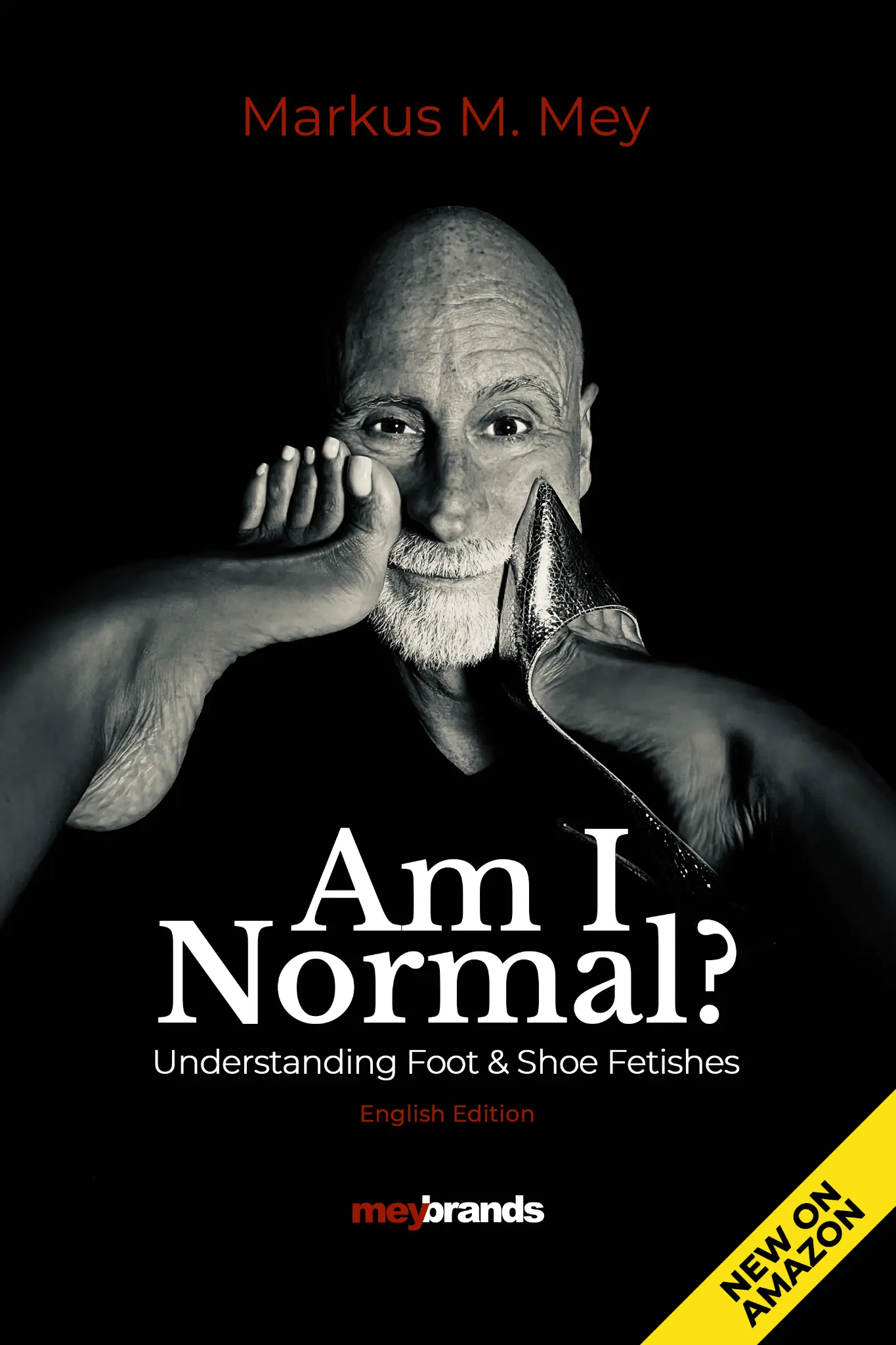
Let this article travel
Good knowledge grows stronger when it is shared.
Link to this original article as a further source — one click copies its permanent address.