
01 · Sexuality
Introduction
Both are possible, and you do not have to call yourself a fetishist at all. A term can be relieving because it gives you language and shows you that you are not alone. But it can also be limiting if you start to define yourself exclusively through it. Whether a label helps you depends on how you use it.
02 · Sexuality
What a label can do
For many people, it is a great relief finally to have a word for something they were unable to name for a long time. A term can:
- Provide clarity. You understand better what is going on inside you and can distinguish it from other things.
- Create connection. Anyone who has a word for their preference can more easily find people who feel similarly.
- Make conversations easier. With a term, it is quicker to explain to a partner or a professional what it is about.
- Reduce shame. Something that has a name often feels less threatening than something unnamed.
03 · Sexuality
When a label can become a burden
Likewise, a term can create pressure. Some people feel that by using the word “fetishist” they have to take on a whole package of expectations: particular preferences, particular practices, a particular self-image. Others feel devalued by the word because in everyday language it is often associated with clichés.
In my book, I also describe a fallacy that can create a great deal of pressure. Anyone who declares their fetish to be the core of their identity makes it larger than it is. Every change, every phase with less desire, every rejection then becomes a threat to one's own self-image. Anyone who defines themselves exclusively through their fetish quickly experiences loss as an identity crisis.
04 · Sexuality
A tool, not a judgment
I understand terms as tools. They should serve you, not the other way around. A label describes one part of your sexuality, not your whole person. You can use it when it benefits you and set it aside when it limits you.
Research, too, distinguishes very precisely between several levels: an interest in a stimulus, fantasies about it, actual behaviour, and the way someone describes themselves. Self-understanding is therefore a separate level. Anyone with a strong interest in feet does not have to call themselves a fetishist. And anyone who does call themselves that does not have to share every variation associated with the word.
How little a label says about the strength of a preference is shown by studies by Giselle Rees and Justin Garcia. The majority of people who ascribed an object fetish to themselves stated that they could be aroused and sexually active even without their fetish object. The respondents had volunteered themselves, so this is not representative. But it shows that very different experiences are hidden under the same word.
05 · Sexuality
There is more than one word
If “fetishist” does not suit you, there are other options. You can speak of a preference, a kink, a passion for feet or shoes. Or you can forgo a label altogether and simply describe what you like. Each of these options is legitimate.
06 · Sexuality
How I approach it myself
Today, I speak openly about my foot and shoe fetish because, for me, this word most accurately describes what I experience. I have found it helpful in conversations, in relationships, and in my work. But it is only one part of who I am. I am also a husband, father, photographer, author, and much more.
07 · Sexuality
Questions to help you decide
If you are unsure whether a label suits you, these questions may help:
- Do I feel relieved by the word, or rather constrained?
- Does it help me speak with others, or do I not need it for that at all?
- Does it describe one part of me, or do I feel that it defines all of me?
- Would I still find it fitting in a few years?
08 · Sexuality
What remains
A label is an option, not an obligation. It can help you understand yourself and connect with others. But it must never make you smaller than you are. The more important question, after all, is not what you call yourself, but how you live with your sexuality.
Sources
Sources
- Markus M. Mey: BIN ICH NORMAL? Fuß- und Schuhfetisch verstehen. Erste Edition, meybrands, Berlin 2026. ISBN 9798247074557.
- Rees, G. & Garcia, J. R. (2017): All I Need is Shoe: An Investigation into the Obligatory Aspect of Sexual Object Fetishism. International Journal of Sexual Health 29(4). doi:10.1080/19317611.2017.1309483
Explore further in the book
From the question to your own story.
“Am I Normal?” combines clear context with personal experience and perspectives for relationships.
View the English book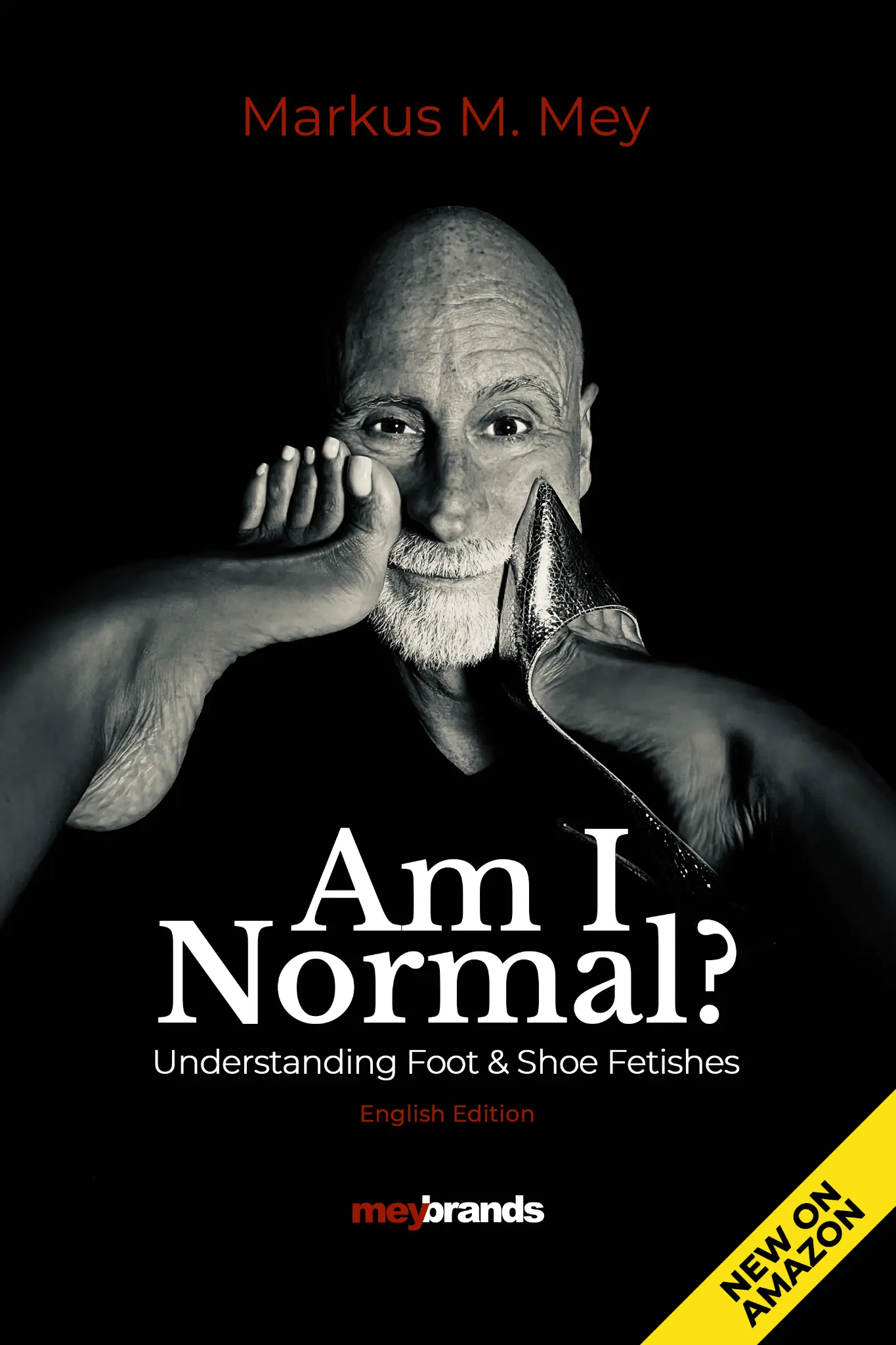
Let this article travel
Good knowledge grows stronger when it is shared.
Link to this original article as a further source — one click copies its permanent address.