
01 · Relationships & Sexuality
Introduction
A no does not need a long explanation or guilt. Being open to your partner’s fetish is an invitation, not an obligation. If you feel pressured, that is already a sign that a boundary is being touched. Naming that boundary is not selfish. It is the prerequisite for intimacy to be possible at all.
02 · Relationships & Sexuality
Understanding Does Not Mean Agreeing
In my book, one distinction is especially important to me: understanding does not automatically mean agreement, and openness does not mean obligation. You can understand what arouses your partner, you can respect it, and you can still decide that you do not want to take part in certain things. One does not rule out the other.
03 · Relationships & Sexuality
Why Guilt Is So Loud
Feelings of guilt often arise from good intentions. You want him to be happy. You are afraid of disappointing him or even losing him. Perhaps you also have the impression that a “good” partner must fulfill her partner’s wishes.
A thought that I describe in my book as a thinking error helps here. We expect that two people who love each other must also be an exact sexual match. They rarely are. His arousal is not your responsibility. You are not responsible for fulfilling every one of his fantasies, any more than he has to fulfill every one of yours.
04 · Relationships & Sexuality
I Know How Easily Pressure Arises
I write this from personal experience too, although from the other side. For years, I saw a dominant “queen” in my wife and at times expected her to immerse herself ever more deeply in a world she did not want at all. I did not notice her own needs enough in the process. We both became dissatisfied.
I say this because pressure in relationships often does not arise maliciously. It arises when one person is so occupied with their own wishes that they overlook the other person’s signals. That makes it all the more important for you to make those signals clear.
05 · Relationships & Sexuality
How to Recognize Pressure
Pressure is not always loud. These patterns are warning signs:
- He keeps asking after you have said no.
- He withdraws, sulks, or withholds affection when you do not go along with it.
- He says things such as “If you really loved me …”.
- He compares you with other women who are supposedly more open.
- He makes sex or the relationship conditional on you catering to his fetish.
06 · Relationships & Sexuality
How You Can Put Boundaries into Words
Boundaries become easier when you prepare the words in advance. For example:
You do not have to justify your no. A brief explanation can help him understand you, but it is not the price of admission for your right to say no.
- “I do not want that.”
- “One thing is okay for me; the other is not.”
- “Not today. Let’s talk calmly about it another time.”
- “I need time to think about it.”
- “I feel that I am being reduced to my feet right now, and I do not want that.”
07 · Relationships & Sexuality
Boundaries Are Allowed to Move
A boundary is not a lifelong commitment. You are allowed to try something and later realize that it does not do you good. You are allowed to say yes to a small part and no to the rest. And you are allowed to change your mind, in either direction. Couples can find a way in which the fetish has a place without either person having to bend themselves out of shape. Some deliberately keep it in the background, and that is legitimate too.
08 · Relationships & Sexuality
When Pressure Becomes Coercion
There is one boundary that is not negotiable. If your partner pressures you despite your no, intimidates you, or urges you into sexual acts, this is no longer a relationship conflict but violence. Then you need outside support. In Germany, you can reach the “Violence against Women” helpline around the clock, free of charge and anonymously, on 116 016. For men, there is the “Violence against Men” helpline on 0800 1239900.
09 · Relationships & Sexuality
What Remains
Setting boundaries is not an attack on your partner. It is a gift to your relationship, because intimacy arises only where both people feel safe. A partner who loves you will respect your no, even if it disappoints him.
Sources
Sources
- Markus M. Mey: BIN ICH NORMAL? Fuß- und Schuhfetisch verstehen. Erste Edition, meybrands, Berlin 2026. ISBN 9798247074557.
- Hilfetelefon Gewalt gegen Frauen. hilfetelefon.de
- Hilfetelefon Gewalt an Männern. maennerhilfetelefon.de
Explore further in the book
From the question to your own story.
“Am I Normal?” combines clear context with personal experience and perspectives for relationships.
View the English book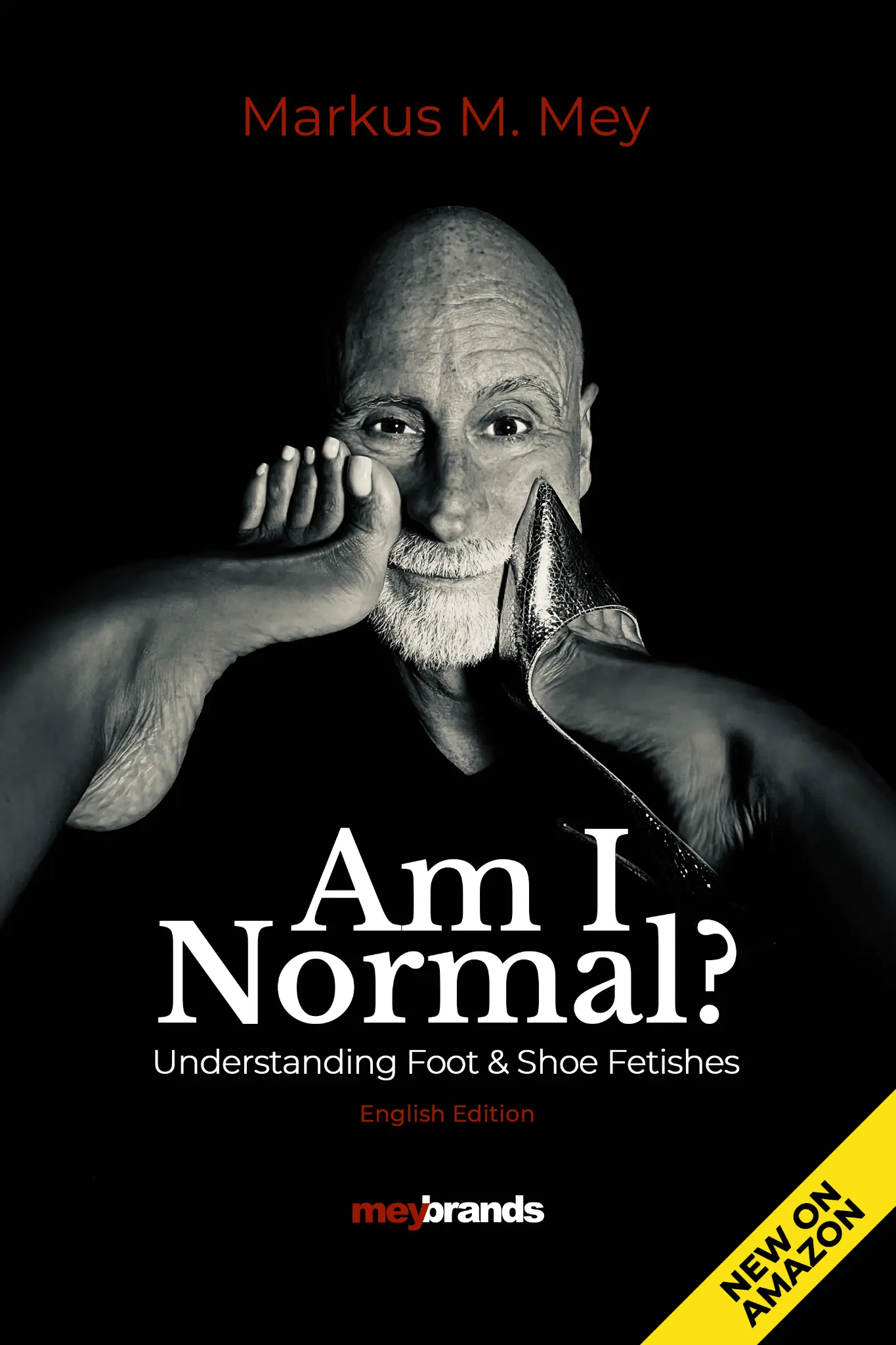
Let this article travel
Good knowledge grows stronger when it is shared.
Link to this original article as a further source — one click copies its permanent address.