
01 · Sexuality and Well-being
Introduction
You do not have to justify yourself in order to get help. It is enough to say that something is weighing on you. Shame and secrecy are often harder to bear than the fetish itself, and that is exactly where support can begin. The first step is smaller than it may feel right now.
02 · Sexuality and Well-being
A cycle that drives itself
Anyone who is ashamed of their fetish can easily get caught in a pattern that drives itself. You feel ashamed of what arouses you, so you keep it secret. Secrecy makes you lonely, and in loneliness the pressure grows. At some point the fetish feels compulsive; you act it out in secret, and afterwards the shame is even greater than before. Then there is the constant effort of hiding it: deleting histories, finding excuses, always making sure that nobody notices anything. All of that takes energy that is then lacking elsewhere.
In my book, I describe where the strain in such cases often comes from. Usually not from the fetish itself, but from the feeling of being alone with it. And shame rarely arises from one's own experience. It arises from the idea of how others would look at it. Anyone who understands this sees a way out that does not consist of getting rid of the fetish. It consists of ending the isolation.
03 · Sexuality and Well-being
My path was different, yet I know the pressure
I was fortunate to be able to live openly with my shoe fetish as a young man. As a photographer, I published high-heel series for years, magazines reported on me, and I appeared on talk shows. As an artist, people are more likely to grant you an idiosyncrasy, and a shoe fetish is among the less conspicuous ones.
That does not mean that I do not know the pressure. During one phase of my life, the fetish had taken up so much space that it became a burden for my wife and me. So I know what it feels like when something that does you good suddenly becomes too much. And I know how much it changes things to talk about it with someone who knows about it.
04 · Sexuality and Well-being
No justification necessary
Many people hesitate to seek help because they think they first have to explain why their behaviour is actually okay. You do not have to do that. A good professional wants to understand you, not exonerate or judge you.
One simple sentence is enough to begin: “I experience my shoe fetish as compulsive, I keep a lot secret, and it is weighing on me.” Everything else will emerge in the conversation.
One detail from the World Health Organization's classification is helpful here. Distress that arises solely because others reject a preference does not make it a disorder. So you do not automatically receive a diagnosis when you speak about your shame. Incidentally, in an online study from Iran, it was precisely those who experienced their fetish interests as not fitting them who had higher scores for depressive mood. The direction of cause and effect remains open. However, the finding shows how distressing inner conflict can be.
05 · Sexuality and Well-being
Where you can start
It does not have to be the big step right away. These options are available:
And if you notice that your behaviour violates or could violate other people's boundaries, for example through secret photographs or unwanted touching, then do not wait. Seek professional support immediately.
- A trusted person. A good friend, a female friend, your partner. A single person who knows can break through the isolation.
- A professional. Psychotherapy, sex therapy, or sexual medicine. Ask directly in the first consultation whether the person has experience with fetishes.
- Your family doctor. As a first point of contact who can refer you, and for physical questions, for example if your erection becomes unreliable.
- Sharing with like-minded people. Online forums and communities can bring relief because you realise that you are not alone. But make sure that they do you good and do not increase the pressure further.
06 · Sexuality and Well-being
What can change
You will probably keep the fetish itself. What can change is the role it plays in your life. Many men describe that it retains its effect but loses its dominance as soon as they accept it as part of their sexuality, instead of defining themselves through it or hiding it. Shame and secrecy are not laws of nature. They can be reduced step by step, and that begins with a single open conversation.
Sources
Sources
- Markus M. Mey: BIN ICH NORMAL? Fuß- und Schuhfetisch verstehen. Erste Edition, meybrands, Berlin 2026. ISBN 9798247074557.
- World Health Organization: ICD-11 for Mortality and Morbidity Statistics, Paraphilic disorders (6D30–6D36), Release 2025-01. icd.who.int
- Shekarchi, R. et al. (2025): Comparison of Psychopathological and Socio-cultural Outcomes Among Distinct Fetishism Subgroups: A Cluster Analysis Approach. Sexuality & Culture 29(4). doi:10.1007/s12119-025-10352-1
Explore further in the book
From the question to your own story.
“Am I Normal?” combines clear context with personal experience and perspectives for relationships.
View the English book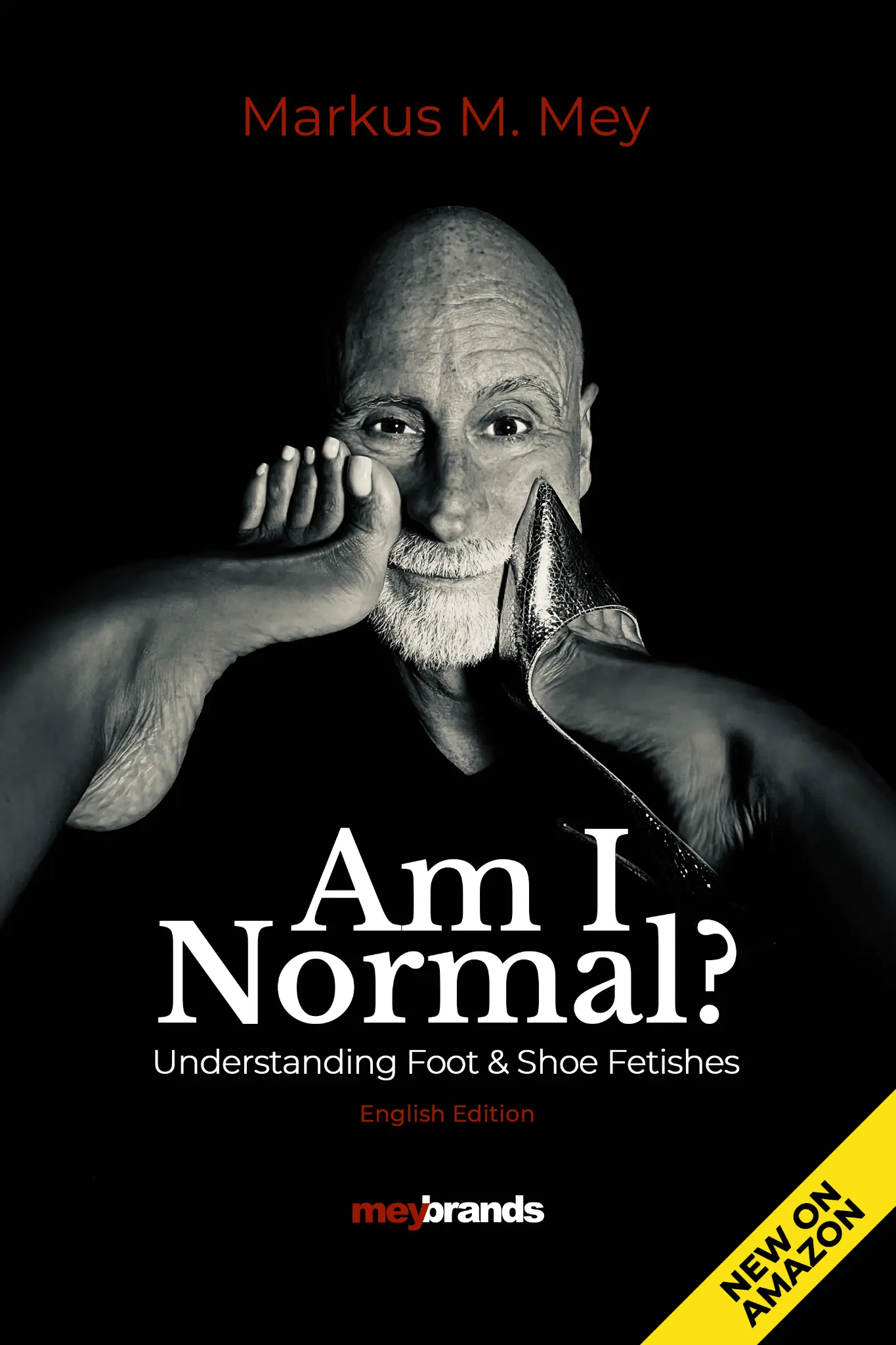
Let this article travel
Good knowledge grows stronger when it is shared.
Link to this original article as a further source — one click copies its permanent address.