
01 · Relationships and Sexuality
Introduction
Openly, but with an honest look at both: what you miss and what did not work. If a female partner shared your fetish, or at least supported it, losing her is twice as hard. You miss the person and, at the same time, a part of your sexuality that you were able to live out with her. It is understandable that thoughts of this are persistent. But there are ways to sort them out without idealizing the past.
02 · Relationships and Sexuality
Why these particular memories are so powerful
Memories connected with arousal often become especially deeply ingrained. In my book, I describe sexuality using the image of the Libidose, a kind of container in which everything that arouses us collects. It contains not only feet or shoes, but also people and experiences.
An example from the book: Ben, a man with a pronounced foot fetish, still thinks of his former partner, who left him, when masturbating two years after the breakup. She has become an integral part of his Libidose. This is not unusual. Once something is in it, it cannot simply be consciously removed.
03 · Relationships and Sexuality
Why it is so easy to idealize what has been lost
After a breakup, memory often shows above all the beautiful moments: the evenings when she wore your favorite shoes, the closeness, the feeling of being accepted with your fetish. The conflicts that may also have existed, on the other hand, quickly fade.
A fetish adds a particular fear: Will I ever find someone again who shares this with me? That fear makes the past bigger than it was and the future smaller than it needs to be.
04 · Relationships and Sexuality
How you can talk about it
It helps not to let the thoughts keep circling in your head alone. A few options:
Be mindful of whom you open up to. Mutual friends are often not the right people to talk to, because they are connected to both of you and intimate details might otherwise unintentionally get around. You owe your former partner the same discretion that she owes you.
One question can help keep you from slipping into idealization: Do I miss this person, or do I mainly miss what I was able to live out with that person? Both are valid. But they are two different kinds of loss.
- With a trusted person. You do not have to tell every detail. It is enough to say that you miss not only the woman, but also the openness you experienced with her.
- With a professional. In counselling or therapy, you can talk about everything without shame, including the sexual aspects of your grief.
- With yourself. Write down what you miss. And next to it, write down what did not fit. Both sides belong to the truth.
05 · Relationships and Sexuality
What you are better off not doing
A few things tend to prolong rumination rather than help. This includes contacting your former partner again because of your fetish, for example to ask for photos or a meeting. That puts both of you in a difficult position.
And one point is non-negotiable: intimate photos or videos created during your relationship do not belong to you alone. They must never be shared or published without her consent. If you have not made another agreement, it is fair to delete them or at least stop looking at them if they keep setting you back.
06 · Relationships and Sexuality
What happens over time
The Libidose is not rigid. Some contents remain for years; others lose importance or disappear entirely on their own. Fantasies and people that occupied me in my youth no longer play any role at all today. I did not consciously replace them. They simply faded while new things were added.
That takes time, and you cannot force it. But you can encourage it by giving your life new content: new encounters, new experiences, and perhaps, one day, a new relationship in which you talk openly about your fetish from the start.
07 · Relationships and Sexuality
When you should seek support
If the thoughts are still just as strong after many months, if they determine your everyday life, or if grief turns into persistent low mood, it makes sense to talk with a psychotherapist or another psychotherapy professional. Breakup pain is not a weakness, and nobody has to carry it alone.
Sources
Sources
- Markus M. Mey: BIN ICH NORMAL? Fuß- und Schuhfetisch verstehen. Erste Edition, meybrands, Berlin 2026. ISBN 9798247074557.
Explore further in the book
From the question to your own story.
“Am I Normal?” combines clear context with personal experience and perspectives for relationships.
View the English book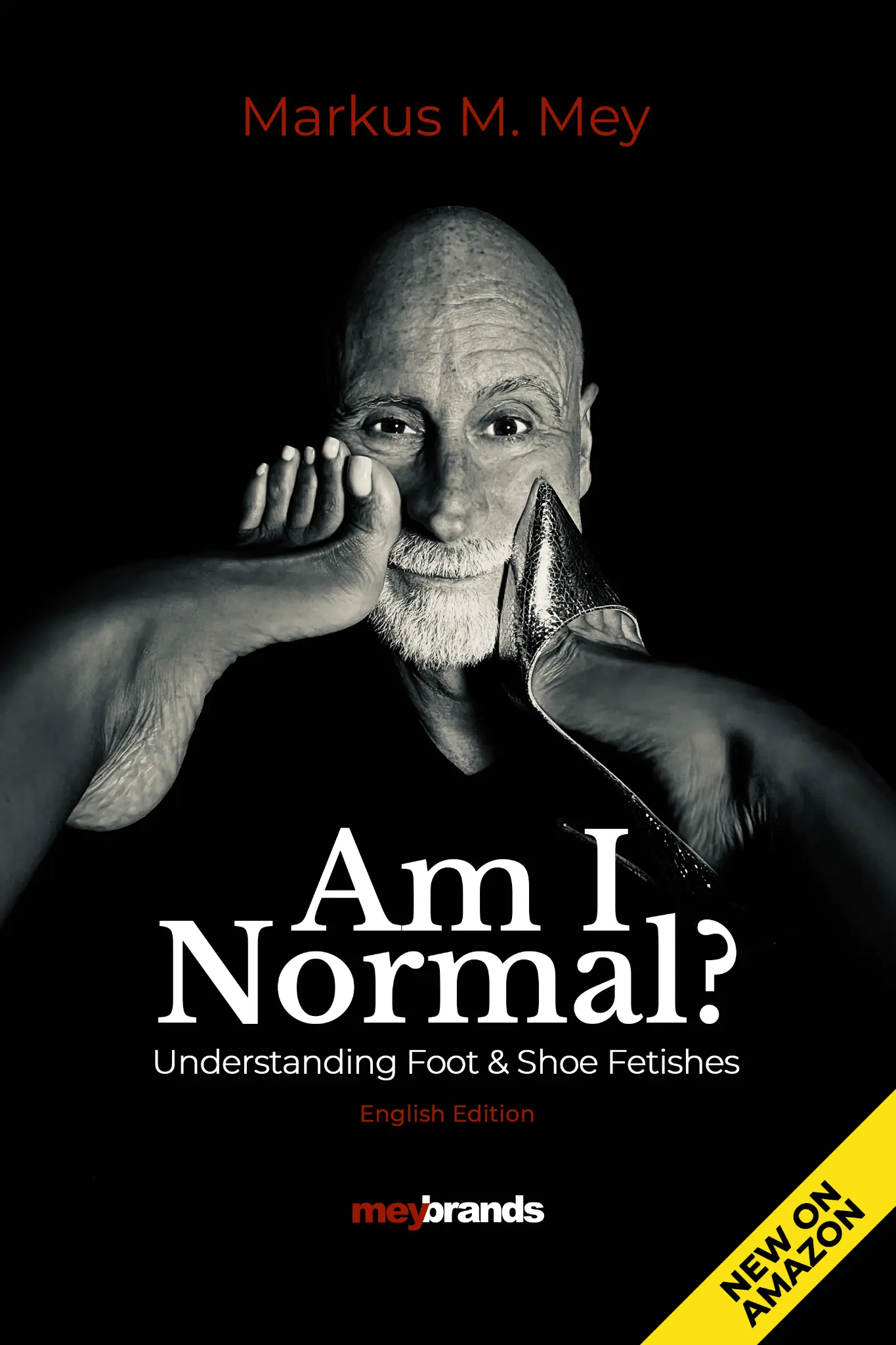
Let this article travel
Good knowledge grows stronger when it is shared.
Link to this original article as a further source — one click copies its permanent address.