
01 · Sexuality and everyday life
Introduction
Forcing yourself to look away rarely works. It is more helpful to understand what is actually happening in your mind when your gaze lingers on feet. Then you can adjust a few levers in everyday life. And if the distraction seriously restricts your life, getting outside support is the right next step.
02 · Sexuality and everyday life
Summer, office, subway
Feet and shoes are everywhere. In summer you see bare feet in sandals on every corner, at the office a heel bobs beneath the desk, on the subway someone in high heels is standing right in front of you. For people without a fetish, that is background. For you, it can be a constant signal.
That takes effort, especially if at the same time you are trying not to let anything show. Many men with a fetish learned early on to hide exactly this part of themselves. The distraction then becomes doubly exhausting: once because of the stimulus itself and once because of the constant monitoring to make sure no one notices.
03 · Sexuality and everyday life
What happens in the mind
After more than forty years with my own fetish, I know that looking at a foot or a shoe is only the beginning. The stimulus is a trigger. What really holds you is the little story your mind tells about it in fractions of a second: a posture, a gesture, an idea of what that woman could do with those shoes.
Knowing this helps. You can hardly avoid the sight itself in everyday life. But you can learn to notice the story that has just been triggered and let it move on. Those who instead try to suppress every glance with all their might tend, in my experience, to create inner resistance. The stimulus does not become smaller as a result.
04 · Sexuality and everyday life
When shoes were almost everywhere
There was a phase in my life when I could hardly avoid my fetish, and that was partly my own choice. I worked as a photographer for over twenty years, often with high heels as a subject; later, video productions were added. My fetish had become woven into not only our love life but also my working life. At some point my mind was so full of images that I could no longer switch off even in the bedroom.
What helped me then was a conversation with an experienced psychologist. She opened up a new perspective on my sexuality, and that also changed the role the fetish plays in my life. It has remained. But it no longer determines everything.
05 · Sexuality and everyday life
Levers for everyday life
In my experience, there are a few things that can noticeably reduce the pressure:
- Notice rather than judge. When your gaze lingers, soberly acknowledge that it is happening right now. Shame and self-reproach are more likely to keep the cycle going.
- Give the fetish a place. Consider where it may consciously have room, in your relationship or in your own fantasy. In my experience, what has a fixed place intrudes less in everyday life.
- Review the input. Anyone who spends a long time every day looking at images or videos on the subject gives it more and more weight in their mind. As adults, we influence through repetition which content gains significance in our sexuality.
- Strengthen other things. Sport, friendships, projects—everything that genuinely interests you. The fuller your life is, the less room remains for a constant theme.
- Talk about it. With your partner, a good friend, or a professional. What you carry around alone often becomes bigger than it is.
06 · Sexuality and everyday life
When it is more than a distraction
In everyday language, people quickly say “compulsive.” In professional terms, however, that means something different from a strong preference. If the thoughts are truly tormenting you, if you avoid certain places, can hardly concentrate at work anymore, or feel that you are losing control over your behaviour, you should discuss this with a professional in psychotherapy or sexual medicine.
I want to name one boundary clearly. Secretly photographing strangers’ feet or touching them without being asked is intrusive, no matter how harmless it may feel in the moment. If you notice that your urge is heading in this direction, please seek support immediately.
The World Health Organization, too, does not base a diagnosis on the preference itself, but on significant distress. A good professional can distinguish whether a fetish, something else, or both lie behind the distraction. And they can help you make your everyday life freer again without having to fight against a part of yourself.
Sources
Sources
- Markus M. Mey: BIN ICH NORMAL? Fuß- und Schuhfetisch verstehen. Erste Edition, meybrands, Berlin 2026. ISBN 9798247074557.
- World Health Organization: ICD-11 for Mortality and Morbidity Statistics, Paraphilic disorders (6D30–6D36), Release 2025-01. icd.who.int
Explore further in the book
From the question to your own story.
“Am I Normal?” combines clear context with personal experience and perspectives for relationships.
View the English book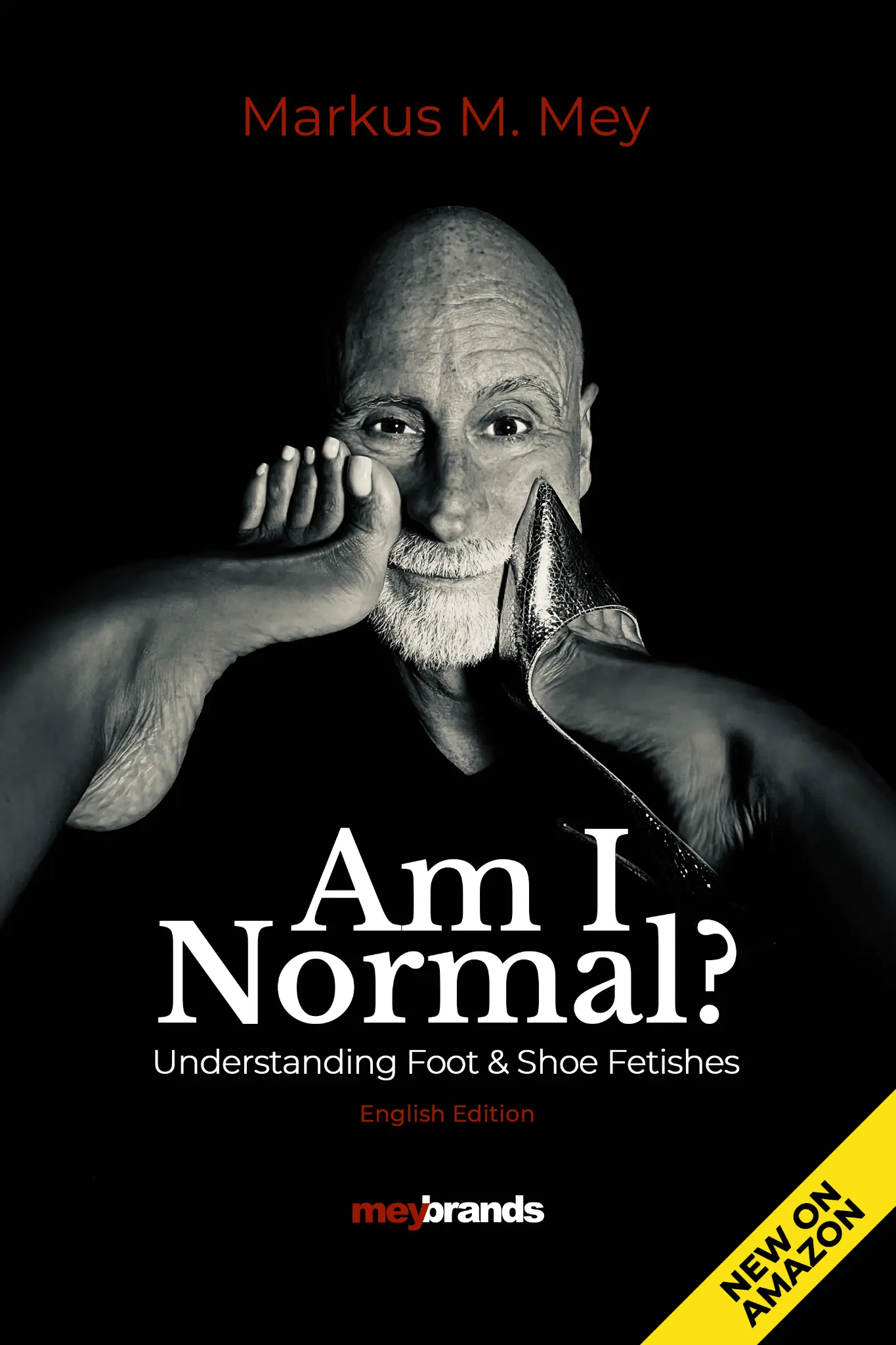
Let this article travel
Good knowledge grows stronger when it is shared.
Link to this original article as a further source — one click copies its permanent address.