
01 · Relationships & Sexuality
Introduction
You are allowed to reject it. The important thing is simply that you express your rejection as your feeling and not as a judgment of him. Disgust is a real reaction that you do not have to argue yourself out of. How you talk about it, however, makes a big difference: for him, for you, and for your relationship. I am writing this text as a man with a fetish, but for you, as his female partner.
02 · Relationships & Sexuality
Disgust is a legitimate feeling
Just as no one chooses what arouses them, no one chooses what repels them. If you feel disgust when you think about certain forms of foot fetishism, that is neither prudishness nor narrow-mindedness. Some preferences, such as those involving the smell of feet, are in fact difficult for outsiders to understand. Your feeling is allowed to exist.
03 · Relationships & Sexuality
The difference between “that” and “you”
There is a major difference between two sentences that sound similar at first glance. “I find that disgusting” describes your reaction to an action. “You are disgusting” or “You are perverted” is a judgment of an entire person.
The first sentence sets a boundary. The second one hurts. Many men with a fetish already carry a deep fear of being seen as repulsive. A judgment of their person confirms exactly this fear and can have a lasting effect, even if it was said in the heat of the moment.
04 · Relationships & Sexuality
Phrases that reject without devaluing
These formulations can help you stay clear without shaming him:
In my book, I emphasize a distinction that helps here: understanding does not automatically mean agreement, and openness does not mean obligation. You can respect his preference and still say no.
- “This is not for me. I do not want this.”
- “I notice that it repels me. That has nothing to do with you as a person.”
- “I understand that it is important to you. I still cannot take part in it.”
- “I need time to make sense of this. Please let’s talk about it calmly later.”
05 · Relationships & Sexuality
When it is not only about disgust, but also about strain
Sometimes it is less the fetish itself that bothers you than what it triggers in your relationship. Perhaps it takes up too much space, perhaps you feel pressured, perhaps you feel that you are seen only as the vehicle for a stimulus. You are allowed to address that too.
When someone feels they have to function in order for the relationship to last, inner resistance often does not show itself directly, but rather as a lack of desire or withdrawal. It is better to name your strain early than to carry it for so long that it drives you both apart.
06 · Relationships & Sexuality
What he is probably feeling
If you say no or show disgust, he will be disappointed, perhaps hurt as well. That does not mean you have done anything wrong. But it can help to keep in mind how much courage it may have taken him to open up to you at all. A calm, respectful rejection makes it easier for him to accept your no without feeling rejected as a person.
And if a hurtful sentence slipped out in the first moment, you can take it back later. An honest “That was unfair of me. I meant my reaction, not you” can repair a great deal.
07 · Relationships & Sexuality
Is there any common ground?
Often, disgust relates only to certain parts of a fetish. Perhaps the bare foot bothers you, but not a beautiful shoe. Perhaps a particular form bothers you, but not a foot massage. It can be worthwhile to look more closely together at where your boundary lies. This is not about persuading you. It is about finding out whether there is an area in which you both feel comfortable.
And if there is no such area, that too is an honest answer. Some couples then deliberately keep the fetish in the background, and he lives it out on his own. Others realize that their needs are too far apart.
08 · Relationships & Sexuality
What remains
You do not have to like something just because your partner likes it. But the way you say no can protect your relationship. Anyone who sets their boundary clearly and without devaluing shows respect for themselves and for the other person.
Sources
Sources
- Markus M. Mey: BIN ICH NORMAL? Fuß- und Schuhfetisch verstehen. Erste Edition, meybrands, Berlin 2026. ISBN 9798247074557.
Explore further in the book
From the question to your own story.
“Am I Normal?” combines clear context with personal experience and perspectives for relationships.
View the English book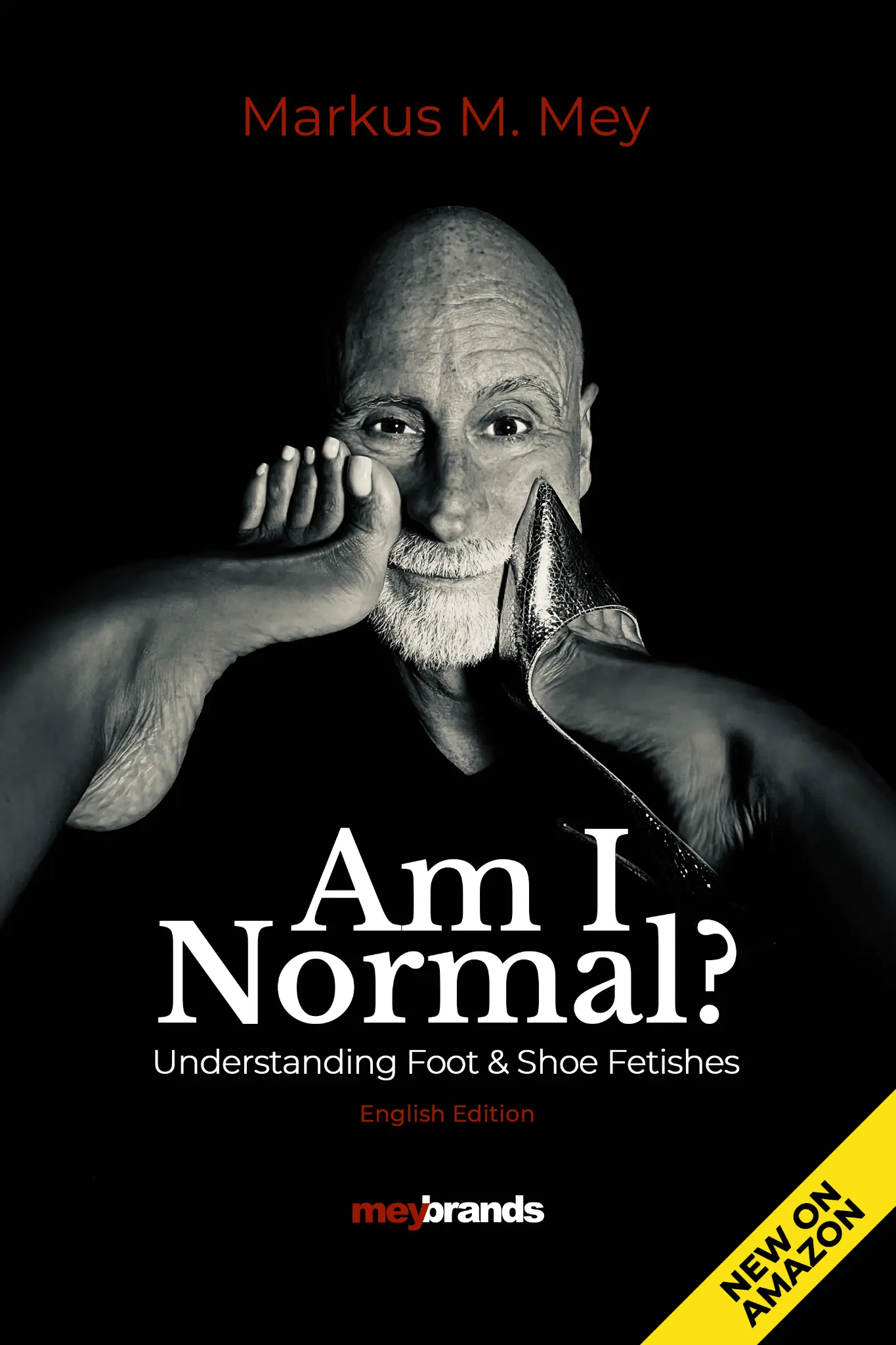
Let this article travel
Good knowledge grows stronger when it is shared.
Link to this original article as a further source — one click copies its permanent address.