
01 · Sexuality & Relationships
Introduction
Take her no seriously, react calmly in the moment, and later try to understand quietly what lies behind it. A no is not the end of the conversation, but it is not a basis for negotiation either. How you react often determines whether your partner continues to feel safe and whether the two of you can talk openly about the subject at all.
02 · Sexuality & Relationships
In the moment of her no
The moment when she says no is often the most sensitive one. You may be disappointed, perhaps hurt. Even so, a calm reaction helps most. A few sentences that respect her no without making it dramatic:
What you are better off not doing in that moment: asking why not, explaining how important it is to you, or visibly letting your disappointment spoil the mood. All of this turns a no into a negotiation, and she feels that.
- “Okay, that’s all right.”
- “Thank you for telling me honestly.”
- “Let’s do something else.”
03 · Sexuality & Relationships
Quiet pressure is pressure too
Pressure does not have to be loud. Sometimes it appears in small things: a sigh, a cutting remark, a pair of shoes that is “coincidentally” in the bedroom, withdrawing after her no. She picks up on such signals, even if you do not send them consciously.
I know from my own experience how easily this can happen. For years I expected my wife to take on a role she did not want at all, and I paid too little attention to her own needs. We both became dissatisfied. Only when I stopped demanding that role from her did something between us change for the better.
04 · Sexuality & Relationships
Later: understand what lies behind it
A no often has reasons that are not visible at first. With a little distance and in a calm situation, you can gently ask what is on her mind—not to persuade her to change her mind, but to understand her. Possible reasons include:
Sometimes it becomes apparent that a clarifying conversation makes some of her concerns smaller. Sometimes it does not. Both are all right.
- The concern about being reduced to something. Many women fear that they are no longer meant as a whole person.
- Insecurity about their own feet. For many women, feet are among the parts of their bodies that they struggle with especially.
- Aversion or disgust. This is legitimate and deserves respect.
- Images in her mind. Often a partner reacts less to the fetish itself than to the idea she has of it.
05 · Sexuality & Relationships
Bring it up once, not again and again
A no does not mean the subject is taboo forever. But it does mean that you should not keep bringing it up. An open conversation after some time is all right, for example by asking whether anything has changed for her or whether there are small things she would feel comfortable with. If she remains of that view, that is where it stands.
06 · Sexuality & Relationships
What you do with your disappointment
Your disappointment is justified, but it is your responsibility, not hers. Talk about it with a friend, write down what is on your mind, or seek support from a professional if it weighs heavily on you. Your fetish does not have to disappear. You can live it out on your own, in your fantasies or through masturbation. Some couples consciously leave a fetish in the background, and that is a legitimate path.
07 · Sexuality & Relationships
Closeness in other ways
If one part of your sexuality currently has no shared place, it is all the more worthwhile to nurture the other parts. Tenderness, time together, shared fantasies that both of you enjoy. I call this the 50/50 rule: her wishes and preferences need room too. A relationship in which both people feel seen can also withstand differences.
08 · Sexuality & Relationships
When it remains difficult in the long term
If you notice that you greatly miss living out the fetish together over the long term, speak honestly about it rather than letting it grow. Couples counselling or sex therapy can help you clarify together how both of you can have your needs met. Sometimes it becomes apparent that there is no common middle ground. Acknowledging that too, without blaming either person, is a sign of respect.
Sources
Sources
- Markus M. Mey: BIN ICH NORMAL? Fuß- und Schuhfetisch verstehen. Erste Edition, meybrands, Berlin 2026. ISBN 9798247074557.
Explore further in the book
From the question to your own story.
“Am I Normal?” combines clear context with personal experience and perspectives for relationships.
View the English book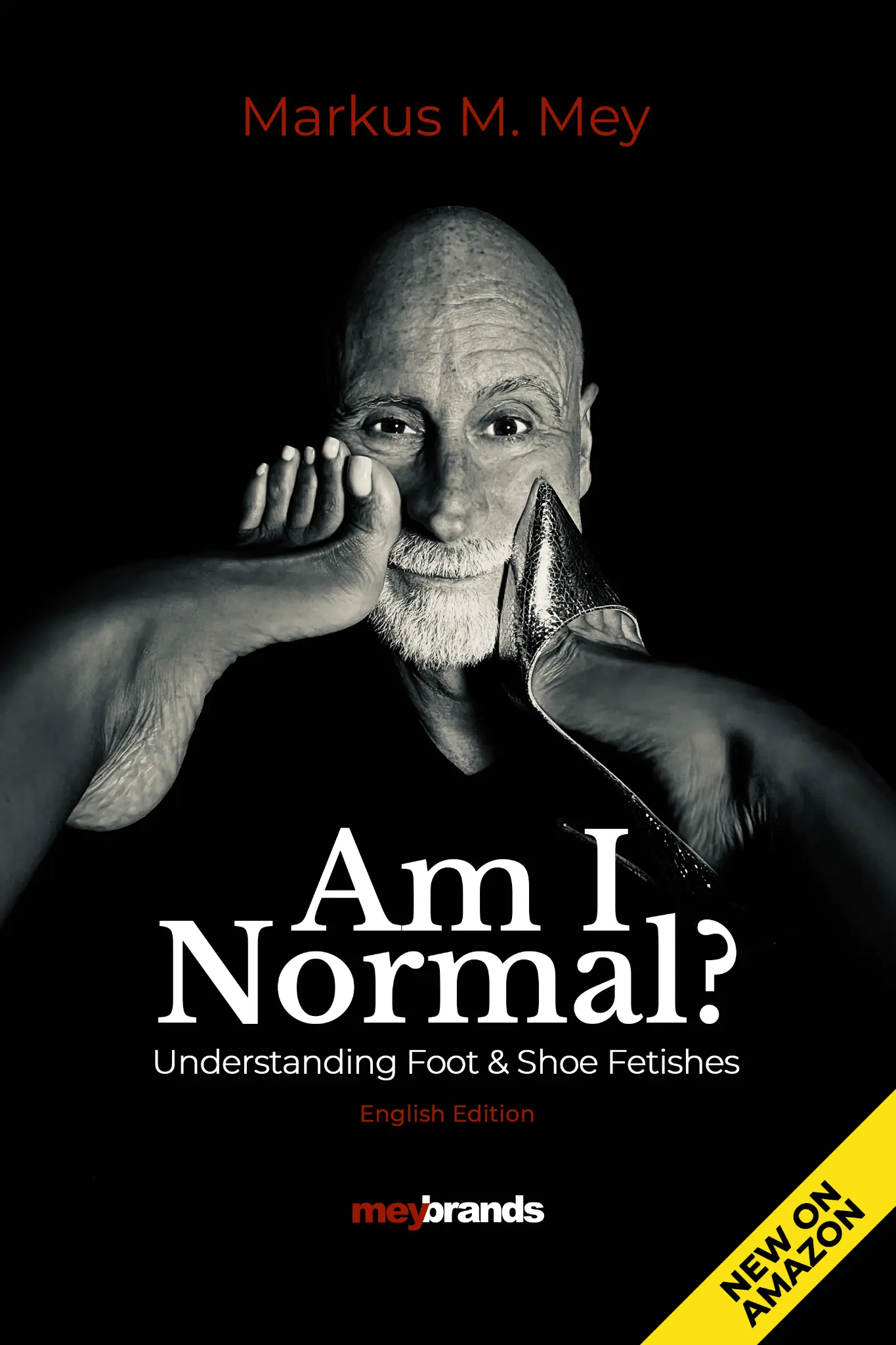
Let this article travel
Good knowledge grows stronger when it is shared.
Link to this original article as a further source — one click copies its permanent address.