
01 · Mental Health
Introduction
Whenever the thoughts are so distressing that everyday life suffers, or when boundaries are at risk. An interest by itself is no cause for concern. Distress, withdrawal, or situations in which other people are affected are. This article is aimed at young people and parents. It is not about sexuality in detail, but about when and where support can be found.
02 · Mental Health
For you, if you are a young person
Perhaps you have noticed that feet or shoes play a special role for you, and that makes you feel unsure. First: having thoughts is not bad. You do not have to act on them, and you do not have to tell anyone details if you do not want to. Many men with a foot or shoe fetish report that it already showed itself during their adolescence. That was the case for me as well. I did not speak to anyone about it at the time.
It makes sense to speak to a trusted person or a counselling service if any of these points applies to you:
Very important: if adults online ask you for photos of your feet or offer you money or gifts for them, this is a warning sign. End the contact, send nothing, and speak to a person you trust. You have done nothing wrong in such a situation, even if you have already replied.
A trusted person can be a parent, a teacher, a school social worker or someone at a counselling service. In Germany, you can reach the child and youth helpline of Nummer gegen Kummer free of charge and anonymously on 116 111. If you are thinking of harming yourself, do not wait: call them or dial 112 in an acute emergency.
- The thoughts make you very sad, anxious or ashamed, and this does not go away.
- You sleep badly, can barely concentrate at school, or withdraw from friends.
- You feel that you have to do certain things even though you do not want to.
- You notice that you might cross other people’s boundaries, for example by taking things, secretly taking photographs, or touching someone without being asked.
03 · Mental Health
For you as parents
Perhaps you have found something that worries you: a search history, missing shoes, a remark. Your first reaction is crucial in determining whether your child confides in you. A few principles help:
Clinical case reports about young people with a foot fetish can be found online. Such reports describe, for example, an adolescent with autism and behaviour that caused major difficulties in his everyday life. They cannot be compared with an interest that an adolescent notices quietly for themselves.
- Stay calm. An interest that emerges in adolescence is not, in itself, an indication of a disorder. Since 2022, the World Health Organization has no longer listed fetishism as a separate diagnosis.
- Do not shame or punish. No one can do anything about thoughts and feelings. Punishments achieve one thing above all: silence.
- Ask about how they are doing, not about details. “How do you feel about it?” is more helpful than an interrogation.
- Respect privacy. Young people have a right not to have to disclose every detail of their inner life.
- State boundaries clearly. If other people are affected, for example through secret photographs or things that have been taken, this must be addressed calmly but clearly.
04 · Mental Health
Where families can find confidential help
Places to turn include educational and family counselling services, which generally work free of charge in Germany, counselling services from pro familia, and child and adolescent psychotherapists. A paediatrician or family doctor can also be a first step. For young people themselves, Nummer gegen Kummer is a low-threshold starting point.
You should act immediately if your child expresses thoughts of harming themselves, if other people’s boundaries have been violated, or if you suspect that adults are pressuring your child online to send photos or meet. In the latter case, you can also contact the police.
05 · Mental Health
What I would like to give young people and parents
An interest that emerges early is neither a flaw nor a destiny. What helps young people most is the feeling of not being alone with it and being able to talk about how they are feeling without fear. Parents who stay calm and listen are the most important support in this.
Sources
Sources
- Markus M. Mey: BIN ICH NORMAL? Fuß- und Schuhfetisch verstehen. Erste Edition, meybrands, Berlin 2026. ISBN 9798247074557.
- World Health Organization: ICD-11 for Mortality and Morbidity Statistics, Paraphilic disorders (6D30–6D36), Release 2025-01. icd.who.int
- Hodges, A., Wilder, D. A. & Ertel, H. (2020): Assessment and Treatment of a Foot Fetish Exhibited by an Adolescent With Autism. Behavior Analysis in Practice 13(4). doi:10.1007/s40617-020-00468-1
- Nummer gegen Kummer e. V.: Kinder- und Jugendtelefon. nummergegenkummer.de
- pro familia Bundesverband: Beratung. profamilia.de
Explore further in the book
From the question to your own story.
“Am I Normal?” combines clear context with personal experience and perspectives for relationships.
View the English book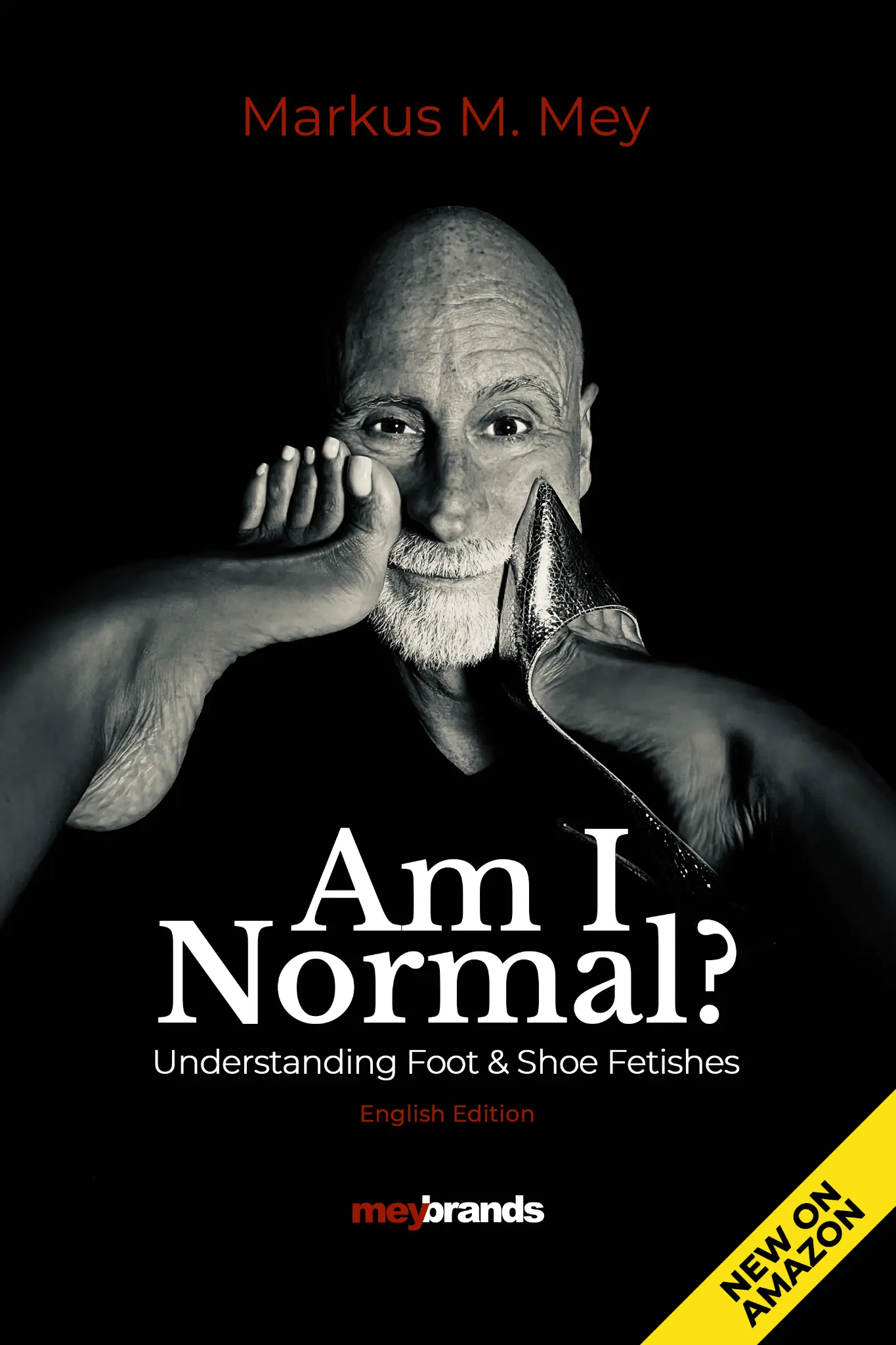
Let this article travel
Good knowledge grows stronger when it is shared.
Link to this original article as a further source — one click copies its permanent address.